
How Do Soil Conditions Affect a Foundation?
Soil conditions affect a foundation by influencing how water moves, how long moisture remains near the home, and how the ground changes as moisture levels rise and fall. Soil may become saturated, expand, shrink, compact, settle, or erode as conditions change.
Different soils respond to water in different ways. Clay-heavy soil can retain moisture and change volume, while sandy or loamy soils generally allow water to move more freely. Drainage, groundwater, drought, disturbed soil, and repeated wet-dry cycles can further change how the ground behaves around a foundation.
These conditions do not automatically mean a foundation is damaged. Understanding the relationship between soil, water, and the foundation can help homeowners recognize why drainage, moisture, and ground movement may differ from one property – or season – to another.
Three Ways to Learn About Poor Drainage
Everyone learns differently. Choose the format that works best for you.
- Browse the slide presentation
- Watch the educational video
- Read the complete guide below
Slide Presentation
Educational Video
How Soil Conditions Affect a Foundation
A foundation depends on the surrounding and underlying soil for support, but that soil is not static. Water can change both how soil behaves and how it interacts with the foundation.
As moisture conditions change, soil may:
- absorb and retain water
- become saturated
- expand or shrink
- compact or settle
- erode or wash away
These changes can influence drainage, moisture levels, soil movement, and support around the foundation. The effects vary depending on the soil composition, how much water is present, and whether conditions remain consistent or repeatedly shift between wet and dry.
This is why understanding how water moves through different soil types is an important starting point when evaluating soil conditions around a home.
How Water Changes Soil Around a Foundation
Water does more than simply pass through the ground. As soil gains or loses moisture, its drainage, volume, density, and stability can change.
The response depends on the type of soil, how much water is present, how quickly it can drain, and whether the ground repeatedly shifts between wet and dry conditions. Over time, these changes can influence both water movement and ground conditions around a foundation.
Soil Becomes Saturated
Soil becomes saturated when the spaces between its particles fill with water. Once this occurs, the ground has little remaining capacity to store additional moisture, and water must continue moving through the soil, drain elsewhere, or accumulate.
Around a foundation, prolonged saturation can keep below-grade walls and surrounding soil wet for extended periods. It can also contribute to the development of hydrostatic pressure when water accumulates around or beneath the structure.
Learn more about soil saturation and expansive clay and hydrostatic pressure around a foundation.
Clay Soil Expands and Shrinks
Clay-rich soils can change volume as their moisture content changes. When clay absorbs water, it may expand. During prolonged dry conditions, it can lose moisture and shrink.
Repeated expansion and contraction can create changing ground conditions around and beneath a foundation. The amount of movement varies with the soil composition, moisture changes, drainage, and local conditions.
These wet-dry changes are explored further in soil saturation and expansive clay.
Loose or Disturbed Soil Can Settle
Soil disturbed during excavation or construction does not always have the same density as undisturbed native ground. Backfilled or loosely compacted soil can gradually compress as particles become more tightly packed.
Water can influence this process by moving through the soil and changing the way particles settle. Over time, settlement near the foundation may create low areas, changes in grading, or uneven ground conditions that affect how surface water drains.
See soil compaction and foundation drainage for a closer look at how soil density affects water movement.
Moving Water Can Erode Soil
Water moving across or through soil can gradually carry soil particles away. This may occur during concentrated runoff, repeated heavy rainfall, drainage discharge, or other conditions that direct water through the same area.
Near a foundation, erosion can create channels, depressions, or changes in the ground surface. In some situations, continued soil loss may also alter the ground surrounding or supporting portions of the structure.
Learn more about soil erosion around foundations.
Soil Conditions That Can Increase Foundation Water Problems
Some soil conditions make it easier for water to remain near a foundation, collect at the surface, or move unpredictably through the ground. The soil does not necessarily cause the water problem by itself, but it can influence how quickly water drains and how long moisture remains around the structure.
Clay-Heavy or Slow-Draining Soil
Clay-heavy soils contain very small particles and generally allow water to move through them more slowly than coarse, sandy soils. During prolonged rainfall or repeated wet periods, moisture may remain in the surrounding ground for longer periods.
If the soil becomes saturated, additional water may contribute to pooling, persistent foundation moisture, or hydrostatic pressure around below-grade surfaces.
Learn more about how water moves through different soil types.
Compacted Soil
Compaction reduces the amount of open space between soil particles. Depending on the soil and degree of compaction, this can reduce infiltration and cause more rainfall to move across the ground as surface runoff.
Around a home, compacted areas can therefore influence where water travels and where it collects, particularly when grading or drainage already directs water toward the foundation.
See soil compaction and foundation drainage for more about this relationship.
Fill Soil and Disturbed Ground
Soil excavated and replaced during construction may behave differently from the undisturbed soil surrounding it. This fill or backfill soil can differ in density, composition, and drainage characteristics.
Those differences can create pathways where water moves or collects differently near the foundation. Fill soil may also settle over time, potentially changing the slope of the ground and how runoff drains around the home.
Learn more about fill soil vs. native soil around foundations.
Eroded or Washed-Out Soil
Concentrated runoff can gradually remove soil from areas around a foundation. As soil is displaced, low spots, channels, or changes in grading may develop and alter the way future rainfall moves across the property.
Continued erosion can therefore become a cycle: water moves through an area, removes soil, changes the drainage pattern, and creates conditions that may direct even more water toward the same location.
See soil erosion around foundations for a deeper explanation.
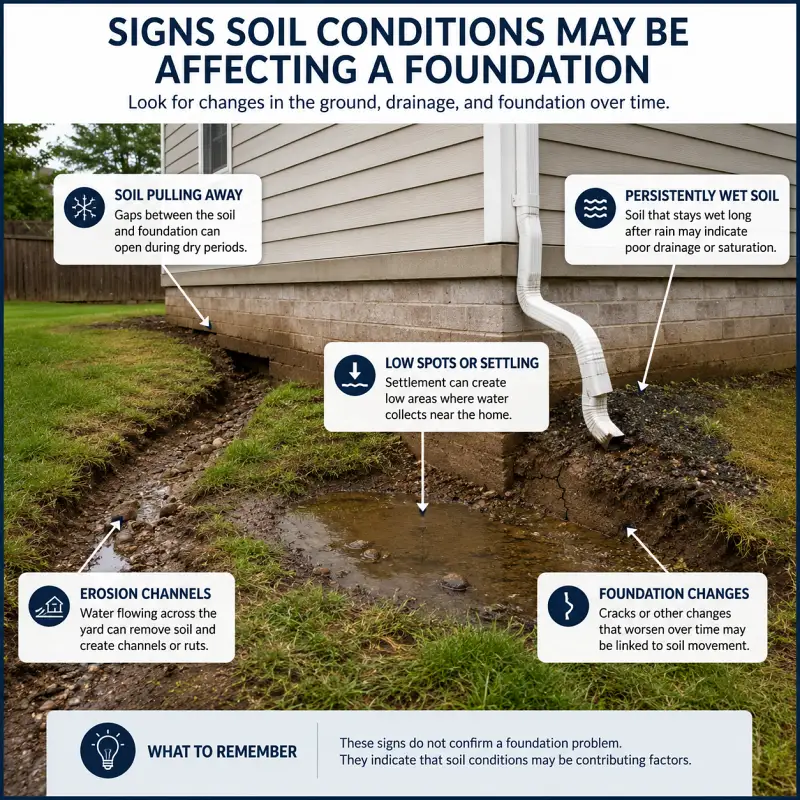
Signs Soil Conditions May Be Affecting a Foundation
Soil conditions are often easiest to recognize by looking for changes in the ground, drainage patterns, and the foundation over time. A single sign does not identify the cause, but several recurring patterns may suggest that surrounding soil conditions are contributing.
Common signs include:
- Soil pulling away from the foundation during prolonged dry periods
- Low spots or settling near foundation walls where water begins to collect
- Erosion channels or exposed soil caused by repeated runoff
- Ground that remains saturated long after rainfall has ended
- Recurring water pooling near the foundation
- Foundation cracks or other changes that appear to be progressing
The timing of these signs can provide useful clues. Conditions that appear after heavy rain, prolonged drought, or repeated wet-dry cycles may indicate that changing soil moisture is part of the larger pattern.
If structural changes are also developing, foundation damage can help explain the different signs homeowners may encounter.
Why the Same Soil Can Behave Differently Over Time
Soil around a foundation does not remain in the same condition year-round. Rainfall, drought, groundwater, drainage, irrigation, and seasonal weather patterns can all change how much moisture the ground contains.
Clay soil that is firm during a dry period may expand after prolonged rainfall. Soil that normally drains adequately may become saturated when repeated storms occur faster than moisture can drain away. Even compacted or disturbed soil can behave differently as moisture conditions change.
These repeated changes in moisture help explain why soil conditions around the same home can vary considerably over time. This relationship is especially important in soil saturation and expansive clay, where changing moisture levels can affect both water retention and soil volume.
This is why soil type alone does not determine foundation risk. What matters is the interaction between the soil, water, drainage, weather, and the structure over time.
Soil Conditions vs. Foundation Problems
A soil condition is not the same thing as a foundation problem. Clay-heavy soil, compacted ground, saturation, or erosion may exist around a home without causing structural damage.
| Soil condition | What may change | Possible effect around the foundation |
|---|---|---|
| Saturated soil | Pore spaces fill with water | Persistent moisture or increased water pressure |
| Expansive clay | Soil volume changes with moisture | Ground may expand when wet and shrink when dry |
| Compacted soil | Water infiltrates more slowly | Increased runoff or pooling |
| Loose or fill soil | Soil may compress or settle | Changes in grade or drainage patterns |
| Eroded soil | Soil particles are displaced | Low spots, channels, or loss of surrounding soil |
| Dry, shrinking soil | Soil loses moisture and contracts | Gaps or changing ground conditions near the foundation |
These conditions become more important when they change how water drains, create persistent moisture around the foundation, alter the surrounding ground, or contribute to repeated soil movement.
For example, saturated soil may increase water pressure without causing foundation movement, while shrinking or settling soil may change support beneath portions of a structure. The resulting effects depend on the severity, duration, and location of the condition, as well as the foundation itself.
Understanding this distinction can help homeowners avoid assuming that every soil or drainage issue means the foundation has been damaged.
When Soil Conditions May Indicate a Bigger Problem
Changing soil conditions deserve closer attention when they occur alongside persistent water problems or noticeable changes in the foundation or surrounding ground.
Conditions that may warrant further evaluation include:
- Foundation cracks that appear to be widening or changing
- Uneven settlement or noticeable changes in floors
- Foundation walls that appear to bow or move
- Repeated erosion or loss of soil near the foundation
- Low areas that continue to develop around the home
- Persistent water or saturated soil that does not improve during dry periods
- Several symptoms developing together or becoming more pronounced over time
The presence of one condition does not establish the cause. Foundation movement can result from multiple interacting factors, and determining why a structure is changing may require evaluating soil, drainage, moisture, and the foundation together.
If you’re seeing both changing soil conditions and structural symptoms, Is This a Serious Foundation Water Problem? can help put those warning signs into context.
“Soil conditions around a foundation are rarely defined by soil type alone. Water, drainage, weather, and changes in the ground over time all influence how that soil behaves around a home.”
— Foundation Water Guide Editorial Team
Related Questions
Homeowners learning how soil conditions affect a foundation often explore related questions about drainage, water movement, and how moisture around a home can influence foundation conditions.
Home › Foundation Water Problem Questions › Why Does My Basement Smell Musty?