
How Do I Know If My Yard Is Graded Properly?
Yard grading affects how water moves around your home, and whether it drains away from the foundation or collects near it. In a properly graded yard, the ground slopes gently away from the house, helping prevent water buildup and long-term moisture issues.
If the slope is uneven or directs water toward the home, it can lead to standing water near the foundation and increase the risk of drainage-related problems over time.
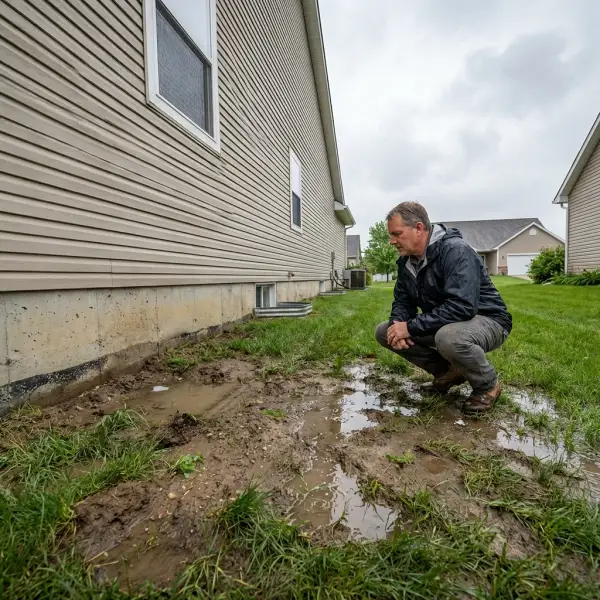
Many grading issues aren’t obvious until after heavy rain. Signs like pooling water, soil settling near the foundation, or moisture appearing inside the home can all point to problems that start with how the yard is shaped.
Understanding how to spot these early signs can help you determine whether your yard is working as it should, or if it may need closer evaluation.
Quick Signs Your Yard May Be Graded Properly
| Observation | What It May Indicate |
|---|---|
| Ground slopes away from the home | Grading may be functioning properly |
| Water pools near the foundation | Possible grading or drainage issue |
| Soil settles near foundation walls | Grade may have changed over time |
| Water flows toward the house during rain | Improper grading may be present |
| Repeated moisture near the foundation | Further evaluation may be helpful |
“A properly graded yard helps direct water away from the home. Even small changes in slope can influence where water collects and how moisture behaves around a foundation.”
— Foundation Water Guide Editorial Team
What Does Proper Yard Grading Mean?
Proper yard grading refers to how the ground slopes around your home’s foundation and how effectively that slope directs water away from the structure. In a well-graded yard, the soil gradually declines as you move away from the home, allowing rainwater and runoff to flow outward instead of collecting near the base of the foundation.
This slope doesn’t need to be dramatic, but it should be consistent enough to prevent water from lingering. When grading is working correctly, water disperses naturally across the yard or into designated drainage areas. When it’s not, water tends to settle near the home, often leading to issues like Water Pooling Around the Foundation and prolonged moisture exposure.
Why Proper Grading Around a Home Matters
The way your yard is graded plays a direct role in how water interacts with your foundation. Even small slope issues can change how water collects, flows, and absorbs into the surrounding soil. Over time, these patterns can influence both exterior conditions and what happens inside the home.
It Helps Direct Water Away From the Foundation
A properly graded yard works with gravity to move water away from the home. Instead of allowing water to sit against the foundation walls, it encourages steady outward flow, reducing long-term exposure to moisture.
It Reduces Water Pooling Near the House
When grading is correct, water doesn’t have a chance to settle near the structure. If you’re noticing puddles forming after rain or consistently damp areas along the foundation, it may indicate a slope issue similar to Water Pooling Around the Foundation.
It Helps Limit Soil Saturation Around the Structure
Soil that remains wet for extended periods can expand, shift, or lose stability. Over time, this can contribute to the types of conditions discussed in Poor Drainage Around a House Causing Foundation Problems.
It Can Reduce the Risk of Interior Water Problems
Exterior grading issues don’t always stay outside. Water that collects near the foundation can eventually find its way into basements or crawl spaces. In many cases, interior issues like Water in the Basement start with poor drainage conditions outside.
Signs Your Yard May Be Graded Properly
You don’t need specialized tools to get a general sense of whether your yard is graded correctly. A careful walk around your home, especially after rain, can reveal whether water is being handled properly.
The Ground Slopes Away From the Home
One of the clearest signs of proper grading is a gentle slope that leads away from the foundation in all directions. The transition should feel natural, not abrupt, and there should be no areas where the ground dips back toward the house.
Water Does Not Pool Near the Foundation After Rain
After a storm, water should move away from the structure rather than collect near it. If the soil dries relatively evenly and you don’t see standing water, it’s a good indication that the grading is functioning as intended.
Downspout Water Flows Away From the House
Gutter systems play a big role in grading performance. When downspouts discharge water far enough from the foundation, and the ground continues to slope away, it helps reinforce proper drainage. If not, you may need to address issues like Fixing Downspout Discharge Issues.
Low Spots Are Not Forming Near the Base of the Home
Over time, poorly graded yards tend to develop low areas where water collects. If the soil along your foundation remains level and consistent without dips or depressions, that’s a strong sign the grading is holding up.
Signs Your Yard May Not Be Graded Properly
When grading is off, even slightly, the effects usually become visible over time. Many of these signs are easiest to spot during or shortly after rainfall.
Water Collects Near the Foundation
Puddles or consistently damp soil along the base of the home are among the most obvious warning signs. This indicates that water is not being directed away effectively.
Soil Appears Sunken Along the House
Backfilled soil around a foundation often settles over time. When it does, it can create a shallow trench along the home that traps water instead of allowing it to flow away.
Water Flows Toward the Home During Rain
If you observe water moving toward the foundation during a storm, the slope may be reversed or uneven. This is one of the more serious grading issues because it actively directs water where it shouldn’t go.
Basement or Crawl Space Moisture Appears After Storms
Interior symptoms can often be traced back to exterior grading problems. If you’re seeing moisture inside, such as in Crawl Space Water Problems, it may be worth evaluating how water is behaving outside.
What Can Affect Yard Grading Over Time?
Even if your yard was properly graded when the home was built, it can change over time. Several natural and man-made factors can alter how water flows across your property.
Soil Settlement Around the Foundation
The soil placed around a new foundation is often loose and gradually compacts over time. This settling can create low areas next to the home that weren’t there originally.
Heavy Rain and Repeated Runoff
Frequent exposure to rain and surface water can slowly reshape the landscape. Over time, this can create channels, dips, or uneven slopes, especially in areas affected by Surface Runoff and Yard Drainage Problems.
Landscaping or Hardscape Changes
Installing flower beds, edging, patios, or walkways can unintentionally alter the slope of your yard. Even small changes can redirect water in ways that weren’t originally intended.
Downspout Discharge in the Wrong Area
If downspouts consistently release water too close to the foundation, they can gradually erode soil and change the grade over time, creating new drainage problems.
How to Check Whether the Grade Around Your Home Is Working
You don’t need professional equipment to evaluate your yard’s grading. A few simple observations, especially during wet conditions, can provide valuable insight.
Observe the Yard During or After Rain
The best time to evaluate grading is when water is actively moving. Watch how it flows, where it collects, and how quickly it drains away from the home.
Look for Low Areas Next to the Foundation
Walk around the perimeter of your home and look for dips, trenches, or soft spots in the soil. These areas are more likely to collect water and indicate grading issues.
Follow Where Downspouts Release Water
Trace the path of water coming from your gutters. Make sure it continues moving away from the home rather than stopping or pooling nearby.
Watch for Repeated Moisture Problems Inside
If interior moisture issues keep appearing in the same areas, they may be connected to consistent drainage problems outside. Grading is often one of the first things to evaluate.
What to Do If Your Yard Is Not Graded Properly
If you identify grading issues, there are several ways to improve how water moves around your home. The right approach depends on how severe the problem is and how water is currently behaving.
Rebuild Slope Away From the Foundation
In many cases, adding soil and reshaping the grade can restore proper drainage. The goal is to create a consistent slope that directs water away from the structure.
Address Runoff and Drainage Paths
Sometimes grading alone isn’t enough. Managing how water flows across your property may require a broader approach, such as those outlined in Foundation Drainage and Solution Paths.
Redirect Downspouts Away From the Home
Extending downspouts or redirecting discharge points can prevent concentrated water from overwhelming the grading near your foundation.
When Broader Drainage Improvements May Be Needed
If water issues are widespread or persistent, it may be necessary to look at a more comprehensive drainage strategy that addresses both grading and water flow patterns.
When Grading Problems May Need Closer Evaluation
Some grading issues are minor and can be corrected with simple adjustments, while others may point to more significant concerns. The key is recognizing when a pattern becomes consistent rather than occasional.
You may want to take a closer look if you notice:
- Repeated water pooling near the foundation after multiple rain events
- Soil that continues to settle or sink along the base of the home
- Water flowing toward the house instead of away from it
- Ongoing moisture inside, such as damp basement walls or crawl space issues
- Early signs of structural stress, like small cracks or uneven areas
If these conditions persist, it may indicate a larger drainage or foundation concern. Resources like Is This a Serious Foundation Water Problem? and Do I Need a Professional for Foundation Water Issues? can help you better understand when further evaluation may be appropriate.
Related Questions
Homeowners often have questions about drainage, grading, and how water behaves around a foundation. Exploring related topics can help you better understand both the cause of the issue and what it may lead to over time.
Frequently Asked Questions About Yard Grading and Foundation Drainage
How much slope should a yard have away from a foundation?
Can poor grading cause foundation problems?
How do I know if water is flowing toward my house?
Can grading problems develop over time?
Is standing water near a foundation always a grading problem?
Home › Foundation Water Problem Questions › How Do I Know If My Yard Is Graded Properly?