
Exterior Water Problems Around Foundations
Exterior water problems originate outside the home, where drainage, grading, and soil conditions allow water to collect near the foundation. These issues often develop gradually and may go unnoticed until interior water intrusion or foundation damage begins to appear. While symptoms are frequently seen inside the basement, the underlying cause is often external.
Understanding exterior water problems helps explain why water repeatedly returns and why addressing surface conditions is often critical to long-term prevention.
What Are Exterior Water Problems?
Exterior water problems are conditions outside a home where rainwater, surface runoff, or groundwater accumulates near a foundation instead of draining away. These situations can occur when yard grading slopes toward the home, roof drainage discharges too close to the structure, or soil remains saturated after storms.
Over time, persistent exterior moisture can increase water pressure against foundation walls and may contribute to interior water problems such as damp basements or crawl spaces.
“Many foundation water problems begin outside the home. Conditions such as poor drainage, improper grading, saturated soil, and recurring runoff can gradually increase moisture exposure around a foundation long before symptoms appear indoors.”
— Foundation Water Guide Editorial Team
Common Types of Exterior Water Problems
Exterior water problems vary depending on how water flows, collects, and interacts with the ground surrounding a home. These issues often develop gradually as drainage conditions, grading, and soil behavior allow moisture to remain near the foundation. While the specific cause may differ from property to property, many exterior water problems share common patterns that can contribute to interior moisture and long-term foundation stress.
Poor Surface Drainage
When surface water is not properly directed away from the home, it can accumulate near the foundation. This may occur due to blocked drainage paths, insufficient runoff control, or issues with surface runoff and yard drainage that allow water to collect after rainfall.
Over time, repeated surface water buildup can increase moisture levels around foundation walls. If you’re unsure whether moisture is primarily surface-driven or related to deeper soil conditions, see surface water vs. groundwater for a clearer comparison.
Improper Grading
Grading refers to how the ground slopes around a home. When soil slopes toward the foundation instead of away from it, rainwater and runoff may be directed straight toward foundation walls. In many cases, this reflects improper grading around a foundation, which can cause water to remain in contact with the structure for extended periods.
Even minor grading issues can contribute to long-term water exposure.
Soil Saturation and Water Retention
Some soil types retain water more easily than others. When soil surrounding a foundation becomes saturated, it may hold moisture against foundation walls rather than allowing it to drain away. Conditions related to soil saturation and expansive clay can increase pressure against below-grade walls and encourage water movement toward the interior.
Seasonal weather patterns often influence how long soil remains saturated.
Water Collection Near the Foundation
Water may collect near the foundation due to downspout discharge issues, landscape features, or window wells that trap runoff. Repeated exposure to standing or slow-moving water can worsen exterior water problems over time.
These conditions are often linked to recurring interior seepage.
Common Exterior Water Problems and What They May Indicate
| Exterior Condition | Often Associated With | Common Early Signs |
|---|---|---|
| Poor grading around the foundation | Water flowing toward the home instead of away from it | Pooling water or damp soil near the foundation |
| Downspout discharge issues | Concentrated roof runoff near foundation walls | Soil erosion, washout, or localized wet areas |
| High groundwater conditions | Water pressure below grade | Persistent moisture, seepage, or recurring dampness |
| Soil saturation and expansive clay | Excess moisture affecting soil behavior | Ground movement, cracking, or uneven settlement |
Why Exterior Water Problems Matter
Exterior water problems play a major role in how water interacts with the foundation. When water consistently accumulates near the foundation, it increases the likelihood of moisture entering through walls, joints, or porous materials. Even small exterior issues can contribute to interior water problems if they persist long enough.
Addressing exterior conditions is often a key step in reducing long-term water intrusion.
Water Movement Toward the Foundation
Exterior water problems often change the natural flow of water around a home. Poor drainage or improper grading can result in redirecting surface runoff toward the foundation instead of away from it. When this occurs repeatedly, water may remain in contact with foundation walls longer than intended.
This prolonged exposure increases the likelihood of moisture entering through small openings or porous materials.
Soil Saturation and Pressure Buildup
As water accumulates around the foundation, surrounding soil may become saturated. Saturated soil can hold moisture against foundation walls and increase pressure over time. In some cases, this pressure is influenced by high groundwater conditions, which keep soil consistently moist and increase the likelihood of water movement inward or exploitation of existing weaknesses in the foundation structure.
Pressure buildup is often more noticeable during prolonged wet periods or seasonal changes.
Connection to Interior Water Problems
Exterior water problems are frequently the underlying cause of interior water problems. Water that collects outside the foundation can create conditions that lead to seepage, leaks, or moisture inside basements and crawl spaces. As a result, interior water issues often persist until exterior conditions are improved.
Recognizing this connection helps explain why addressing only interior symptoms may not prevent future water problems.
Drainage Problem or Foundation Problem
Many exterior water problems begin as drainage issues, but not every moisture problem around a foundation has the same cause. Poor grading, surface runoff, clogged drainage systems and groundwater pressure can create similar symptoms, while structural foundation movement may produce many of the same warning signs. Understanding whether you’re dealing with a drainage problem or foundation problem helps you focus on the most appropriate next steps before conditions become more serious.
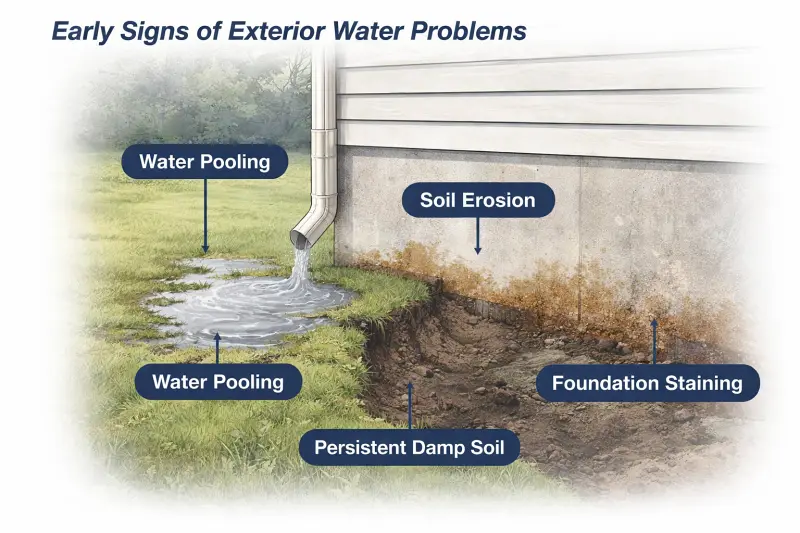
Early Signs of Exterior Water Problems
Exterior water issues are not always obvious at first. Common early indicators include:
Water pooling near the foundation after rain
Soil erosion or uneven ground near foundation walls
Damp soil that remains wet long after rainfall
Staining or discoloration on exterior foundation surfaces
Observing these signs early can help identify developing problems before they affect interior spaces.
How Exterior Problems Can Progress Over Time
Exterior water problems rarely resolve without changes to water flow or soil conditions. Continued exposure to moisture can lead to increased pressure against foundation walls, recurring interior seepage, or gradual deterioration of foundation materials.
In some cases, long-term exterior water issues may contribute to cracking, movement, or other forms of foundation damage.
Detailed Exterior Water Problem Guides
If you’re observing water accumulation or drainage concerns around your home, the following guides explain common exterior conditions that may contribute to foundation moisture.
Key Takeaways
• Exterior water problems occur when rainwater, runoff, or groundwater collects near the foundation instead of draining away.
• Poor surface drainage, improper grading, and saturated soil can increase moisture pressure against foundation walls.
• Signs outside the home may appear before interior moisture problems develop.
• Persistent exterior moisture conditions can eventually contribute to interior water intrusion or foundation damage.
Related Topics
These related sections expand on how water problems develop, how exterior conditions connect to interior intrusion, and how ongoing moisture can affect foundation stability over time.
Water entering basements or crawl spaces often reflects exterior drainage conditions around the foundation. This section explains common interior water problems such as damp basement walls, musty spaces, and recurring moisture inside the home.
Persistent exterior water problems can increase pressure against foundation walls. Over time, these conditions may contribute to cracking, movement, or other forms of foundation damage. This section explores how ongoing moisture and soil conditions may contribute to cracks, movement, or structural concerns.
If exterior moisture appears repeatedly or conditions continue to worsen, the next step is determining whether you're dealing with a drainage problem or foundation problem. Identifying the likely cause helps you choose the most appropriate solution.
Water problems often reveal themselves gradually. This section outlines common interior and exterior indicators that may signal developing foundation water issues.
Solutions for exterior water problems depend on whether the issue is related to drainage, groundwater or foundation movement. Explore common solution paths and learn how to determine whether you're dealing with a drainage problem or foundation problem.
Soil conditions, climate, groundwater levels and common foundation types vary across the country. Explore our Foundation Water Problems by State guides to understand how local conditions affect homes where you live.
Where To Go Next
If you’re trying to identify the source of exterior moisture:
If you’re learning why exterior water problems occur:
If you’re seeing signs of structural damage:
If you’re looking for solutions:
If you want to understand local conditions:
Frequently Asked Questions About Exterior Water Problems
Why does water pool near my foundation?
Water often pools near a foundation when drainage conditions prevent runoff from moving away from the home. Common contributing factors include poor grading, downspout discharge near the structure, compacted soil, or low areas where water naturally collects after rainfall.
Can poor grading cause basement leaks?
Is standing water near a foundation dangerous?
Home › Exterior Water Problems