
Wet Basement Walls: What It Usually Means and What to Do Next
Wet basement walls are one of the most common signs of foundation water intrusion. Sometimes it shows up as damp patches after a storm. Other times it’s persistent moisture, staining, or a chalky white residue on the wall.
In many homes, wet walls are caused by water collecting outside the foundation and pressing inward. The important step is identifying whether the moisture is coming from surface water, groundwater pressure, or openings in the foundation wall, because each points to a different solution path.
This guide explains what wet basement walls typically mean, what patterns to look for, and what homeowners usually do next.
What Do Wet Basement Walls Mean?
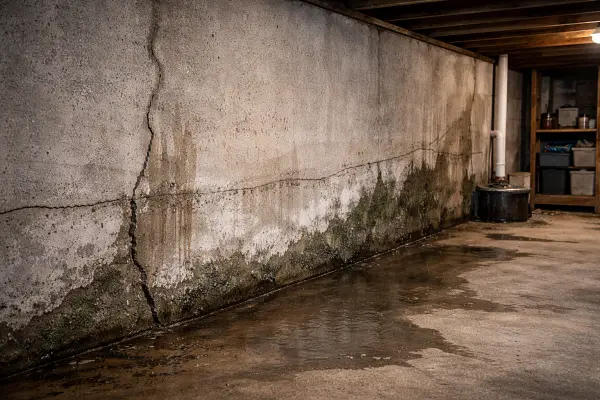
Wet basement walls occur when moisture enters basement spaces through foundation materials or accumulates on wall surfaces. This may appear as damp patches, visible seepage, or condensation forming along basement walls.
In many cases, wet walls develop when saturated soil outside the home allows moisture to move slowly through porous concrete or small openings in the foundation.
What Does a Wet Basement Mean?
Wet basement walls are often one sign of a larger moisture issue affecting the entire basement. In many homes, a wet basement means that water is entering through foundation walls, rising through the floor, or building up due to drainage or humidity conditions.
While damp walls may appear to be a surface-level issue, they are often part of a broader pattern of moisture affecting the basement environment and surrounding soil.
For a complete explanation of what a wet basement means, including causes, severity, and what to do next, see: What Does a Wet Basement Mean?
Common Wet Basement Wall Moisture Patterns
| Moisture Pattern | Often Associated With | Common Observation |
|---|---|---|
| Damp concrete walls | Hydrostatic pressure or saturated soil | Moisture appears across broad wall areas |
| Water streaks or running moisture | Wall openings or concentrated water intrusion | Visible moisture movement down the wall surface |
| White chalky residue (efflorescence) | Moisture migrating through concrete | Mineral deposits remain after moisture evaporates |
| Musty odors or humid air | Persistent basement moisture conditions | Dampness continues even without visible standing water |
| Moisture near the floor joint | Water pressure near below-grade walls or footing areas | Seepage appears where the wall meets the floor |
What “Wet Basement Walls” Usually Indicates
Basement walls get wet for two main reasons:
water is being held against the foundation from the outside, or
moisture is moving through the concrete itself due to pressure and saturation.
Even when you don’t see standing water on the floor, wet walls often mean the soil outside the basement is staying wet long enough for moisture to migrate inward.
Saturated Soil Pressing Against the Foundation
When the soil outside the foundation becomes saturated, it creates sustained pressure against below-grade walls. Concrete is not waterproof by default. Under sustained saturation, moisture can migrate through small pores and microscopic openings.
This is especially common when:
- the ground slopes toward the house
- downspouts discharge near the foundation
- the yard holds water after rain
- soil is clay-heavy and drains slowly
Wetness that appears after rain, lasts for days, and returns seasonally usually points to soil saturation rather than a one-time event.
These same exterior drainage patterns often begin with water collecting near the foundation, increasing the amount of moisture held against basement walls.
If this pattern sounds familiar, these related pages can help explain why basement walls stay wet:
Hydrostatic Pressure and Moisture Migration
Groundwater pressure (often called hydrostatic pressure) can push moisture into a basement even when the surface looks dry. When soil becomes saturated deeper below grade, that water presses inward and upward against the foundation. Hydrostatic pressure is often intensified by high groundwater conditions that keep soil saturated for extended periods.
Hydrostatic pressure is often associated with:
dampness concentrated near the bottom portion of the wall
moisture at the wall–floor joint
recurring seepage after extended precipitation
This is a “pressure problem,” not just a surface runoff problem.
Cracks, Joints, and Weak Points in the Wall
Small foundation cracks, tie-rod holes, and seam lines can become moisture pathways. Some of these openings are normal and stable, but once water repeatedly uses the same pathway, it can enlarge it over time.
Wet streaks that start at a crack line, corner, or seam often indicate that water is exploiting a specific weak point rather than migrating evenly through the wall.
What the Moisture Pattern Can Tell You
The pattern of wetness often helps narrow the likely cause.
Dampness Across a Wide Area of Wall
If a broad section of wall feels damp or looks darker, the issue is often general saturation outside the foundation. This commonly correlates with grading, downspouts, or soil conditions that hold water near the wall.
If this type of widespread dampness is present, it often helps to review how water is being managed outside the home.
Wet Streaks or Trails Running Down the Wall
Streaks can indicate a concentrated entry point, a crack, seam, or penetration, where water gets in and then runs down the interior face.
This pattern is especially common after heavy rain when water is being directed toward a specific wall area outside.
In heavier events, seepage can progress from wall dampness to standing water on the basement floor if pressure conditions continue.
White Chalky Residue (Efflorescence)
Efflorescence is a mineral deposit left behind when moisture moves through concrete or masonry and evaporates at the surface. It often looks like white powdery streaks or crust.
Efflorescence usually means:
moisture has repeatedly moved through the wall
the wall has been wet long enough for evaporation to occur
water is transporting minerals to the interior face
It does not always mean active flowing water, but it does indicate that moisture intrusion has been occurring.
Are Wet Basement Walls Serious?
Wet basement walls are not automatically a structural emergency, but they can become more concerning when moisture is persistent and pressure is sustained.
In many homes, this condition appears alongside other interior water problems, such as musty basement odors or occasional water seepage.
Ongoing saturation can contribute to:
corrosion of embedded metal in some foundation systems
increased lateral pressure against below-grade walls
conditions that support mold growth and indoor humidity problems
Signs the Issue May Be More Concerning
Consider a closer evaluation if you notice:
wet walls that persist even during dry weather
widening cracks or recurring water at crack lines
repeated seepage at the wall–floor joint
musty odors or visible mold growth
Wet basement walls are often the early signal – the “pressure stage” – before more obvious symptoms appear. If cracking accompanies wall moisture, it may relate to developing foundation cracks that allow repeated water entry.
What Homeowners Usually Do Next
Most homeowners address wet basement walls in a stepwise progression, starting with the easiest exterior checks.
Step 1 — Reduce Water Near the Foundation
Common first moves include:
ensuring gutters are clear and functional
extending downspouts away from the foundation
correcting areas where soil slopes toward the house
addressing water pooling near the foundation
If these steps apply to your situation, these pages can help explain how each condition affects moisture around the foundation:
Step 2 — Monitor for Repeat Patterns
If wetness returns after each storm, note:
which wall section gets wet
how long it remains damp
whether cracks or joint seepage are present
Repeat patterns help distinguish between surface runoff problems and groundwater pressure problems.
Step 3 — Consider Professional Diagnosis if It Persists
If moisture remains persistent or the wall shows cracking, movement, or repeated seepage, an evaluation can help determine whether:
exterior drainage changes are sufficient, or
an interior water management system is more appropriate, or
structural reinforcement should be considered.
Key Takeaways
- Wet basement walls often occur when moisture in surrounding soil moves through foundation materials.
- Exterior drainage issues such as poor grading or roof runoff can contribute to persistent wall moisture.
- Damp spots, seepage lines, or condensation may appear before visible water pooling occurs.
- Monitoring exterior drainage conditions can help explain recurring moisture on basement walls.
Where To Go Next
If you want to understand why moisture reaches basement walls:
If exterior drainage may be contributing to the issue:
If you want to understand foundation water problems where you live:
Frequently Asked Questions About Wet Basement Walls
What causes wet basement walls?
Wet basement walls are commonly caused by saturated soil pressing against the foundation, surface water collecting near the home, or hydrostatic pressure pushing moisture through porous concrete and small cracks. Poor grading, short downspouts, and clay-heavy soils often make the issue worse.
What Is the White Chalky Residue on My Basement Wall?
When are wet basement walls a serious problem?
Wet basement walls are more concerning when moisture is persistent, when cracks are widening, or when there are signs of wall movement such as bowing or leaning. Ongoing saturation can increase lateral pressure and contribute to long-term deterioration, so evaluation often makes sense when patterns are repeated or worsening.
Why Are My Basement Walls Wet After Rain?
Wet basement walls after rain are often related to saturated soil, surface runoff, poor grading, clogged gutters, or hydrostatic pressure building outside the foundation. Water may slowly move through porous concrete or small wall openings as surrounding soil becomes saturated.
Can Concrete Basement Walls Leak Without Cracks?
Yes. Concrete is naturally porous, so moisture can sometimes migrate through basement walls even when visible cracks are not present. Hydrostatic pressure and prolonged soil saturation can increase this moisture movement.
What Is Hydrostatic Pressure?
How Do Professionals Diagnose Basement Moisture Problems?
Home › Interior Water Problems › Wet Basement Walls