
Foundation Water Problems: How Water Affects Your Home Over Time
Water Around a Foundation Is Normal – Persistent Water Is Not
Water naturally moves through soil and across your property. Problems begin when water repeatedly collects near the foundation, saturates surrounding soil, and consistently moves toward the structure.
Foundation water problems usually develop gradually. They often begin as minor drainage issues or moisture symptoms before progressing into more visible structural changes. Understanding how water behaves around your home is the first step in preventing long-term damage.
What Are Foundation Water Problems?
Foundation water problems develop when water repeatedly collects near, beneath, or against a home’s foundation and changes the moisture conditions surrounding the structure.
Water may come from surface runoff, poor grading, downspout discharge, saturated soil, groundwater, or other drainage conditions. Depending on how water moves through the property, persistent moisture can contribute to basement or crawl space dampness, increased pressure against foundation walls, soil movement, and other changes around the foundation.
These problems often develop gradually, which is why patterns that repeat after rainfall, seasonal changes, or prolonged wet conditions can be more meaningful than a single water event.
What “Foundation Water Problems” Really Means
Foundation water problems refer to situations where water:
Collects near the foundation
Saturates soil around below-grade walls
Moves through cracks or porous materials
Creates pressure against the structure
Sometimes this results in dampness or odor. Over time, prolonged exposure can contribute to cracking, deterioration, or movement within the foundation itself.
If you are already seeing visible structural changes, start here: https://foundationwaterproblems.com/foundation-damage/
Why Water Causes Problems Around Foundations
Surface Water (Rain & Roof Runoff)
Surface water includes rainfall, roof discharge, and yard runoff. Problems begin when:
Downspouts release water too close to the home
Grading slopes inward
Yard drainage channels water toward the foundation
If exterior drainage conditions are contributing, review: https://foundationwaterproblems.com/exterior-water-problems/
Specific common contributors include:
- Downspout discharge issues
- Poor grading around the foundation
- Surface runoff and yard drainage patterns
Groundwater & Soil Saturation
Even without recent rain, soil can remain saturated due to:
High groundwater levels
Expansive clay soils
Snowmelt or irrigation
Poor subsurface drainage
Soil saturation plays a significant role in pressure against below-grade walls. Learn more about soil saturation and expansive clay and how it affects foundation stability.
For a deeper explanation of how water moves toward and into a home, see how water enters a foundation and the comparison between surface water vs. groundwater.
Surface Water vs. Groundwater Conditions
| Surface Water Conditions | Groundwater Conditions |
|---|---|
| Usually begins with rainfall, roof runoff, or poor drainage | Develops below the soil surface around the foundation |
| Often appears soon after storms or snowmelt | May remain present for long periods, even during dry weather |
| Frequently linked to grading or runoff flow patterns | Often associated with saturated soil and hydrostatic pressure |
| Commonly causes pooling near the home | More likely to contribute to persistent dampness or seepage |
| Water movement is usually visible outside | Moisture movement may remain hidden below grade |
How Foundation Water Problems Show Up
Interior Moisture Symptoms
Water problems frequently show up inside first:
- Damp or stained walls, often described as wet basement walls
- Standing water along the floor edge, commonly referred to as water in the basement
- Persistent odors linked to musty smells or damp basement conditions
- Elevated humidity or visible moisture in crawl space water problems
You can see the full category overview here: interior water problems
Exterior Warning Signs
In some cases, the early indicators appear outside::
Areas of water pooling near the foundation after rainfall
Persistent soggy soil
Erosion patterns in the yard
Water collecting near downspouts
These conditions are typically connected to broader exterior water problems where grading, discharge, and surface drainage influence how water behaves around the foundation.
Structural Changes Linked to Moisture
Long-term water exposure can contribute to:
If you are concerned about structural impact, visit foundation damage for a broader explanation.
Common Foundation Water Symptoms and Contributing Conditions
| What Homeowners Notice | Common Contributing Condition | What It May Lead To |
|---|---|---|
| Wet basement walls or damp lower corners | Hydrostatic pressure or saturated soil | Recurring moisture exposure around below-grade walls |
| Water collecting near the foundation after rain | Poor grading or surface runoff | Water moving toward the home instead of away from it |
| Persistent musty basement odors | Elevated humidity or hidden moisture | Damp indoor conditions and recurring moisture symptoms |
| Horizontal cracks or wall movement | Soil pressure and prolonged saturation | Structural stress around foundation walls |
| Pooling near downspouts or roof runoff areas | Improper discharge or drainage concentration | Localized soil saturation near the structure |
| Crawl space dampness or elevated humidity | Groundwater, poor ventilation, or moisture intrusion | Long-term moisture accumulation beneath the home |
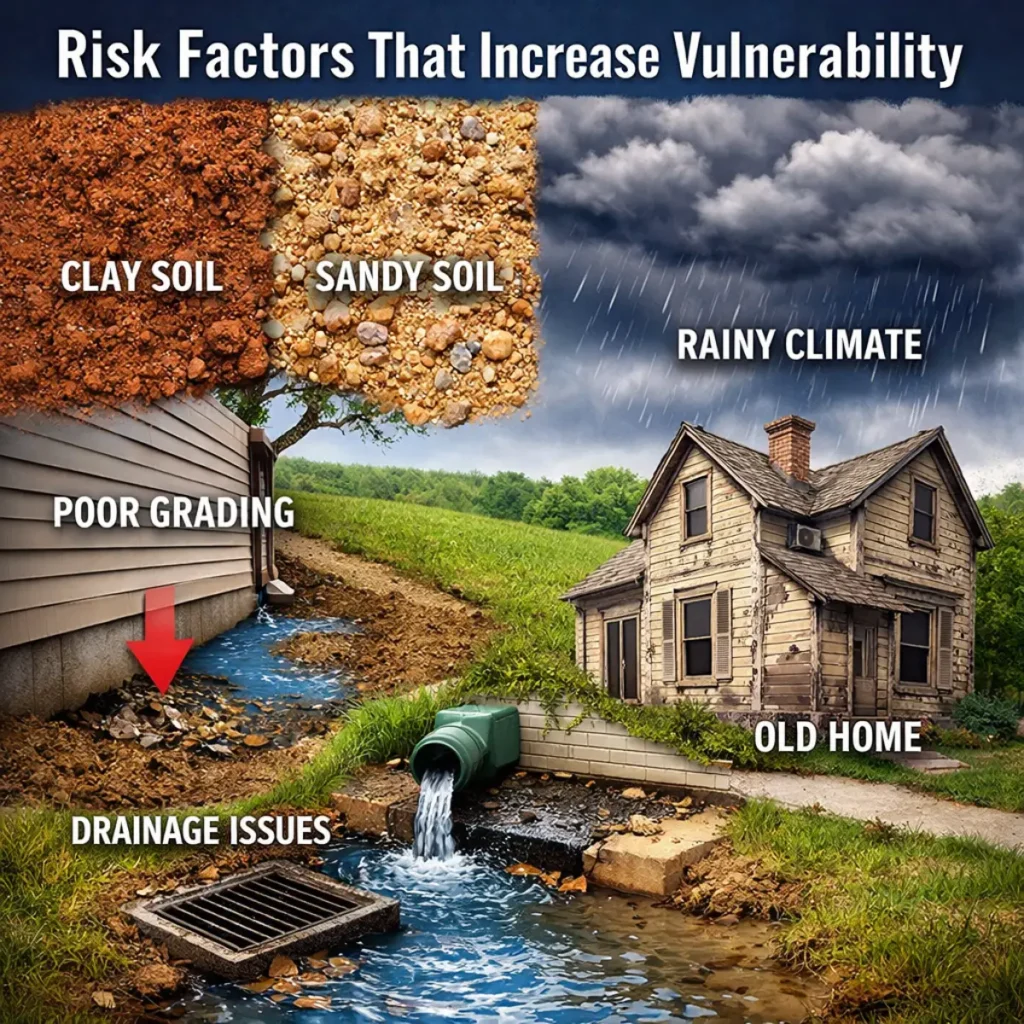
Risk Factors That Increase Vulnerability
Two homes can experience the same rainfall and have very different outcomes. Risk depends on:
Soil type (See: How Water Moves Through Different Soil Types)
Drainage design
Lot grading
Foundation construction
Climate patterns
Home age
We explore these influences in detail on our upcoming page about foundation risk factors.
What Professionals Often Evaluate
When foundation water problems are investigated, the goal is usually to understand how moisture is reaching the structure and whether conditions are changing over time.
Common evaluation areas may include:
- Grading slope and drainage patterns around the home
- Roof runoff and downspout discharge locations
- Soil saturation near foundation walls
- Signs of hydrostatic pressure or recurring seepage
- Crack patterns, wall movement, or shifting materials
- Crawl space humidity and ventilation conditions
- Areas where water repeatedly collects after storms
- Evidence of long-term moisture exposure indoors
Understanding these patterns can help explain why some moisture problems remain minor while others gradually contribute to structural concerns or recurring basement dampness.
Understanding Solution Categories
Most foundation water issues fall into three broad solution approaches:
Reduce water reaching the foundation (grading and drainage improvements)
Manage water pressure at the perimeter
Control water once it enters the structure
The appropriate approach depends on where the water originates and how it behaves around the structure. A broader overview of these categories is outlined in solution paths.
“Most foundation water problems begin outside the home long before visible water appears indoors.”
— Foundation Water Guide Editorial Team
When Foundation Water Problems May Need Closer Attention
Many foundation water problems begin as manageable moisture conditions, but recurring exposure or visible structural changes can sometimes indicate that conditions are worsening over time.
Some warning signs that may deserve closer evaluation include:
- Water repeatedly entering the basement after storms
- Expanding cracks or visible wall movement
- Persistent standing water near the foundation
- Recurring musty odors or elevated indoor humidity
- Floors, doors, or windows becoming difficult to align or operate
- Ongoing moisture conditions that do not improve after drainage adjustments
If symptoms appear to be changing gradually or becoming more consistent over time, these related pages may help explain when foundation moisture conditions become more serious:
Key Takeaways
- Foundation water problems describe moisture conditions that develop when water collects near or moves toward a home’s foundation.
- Many problems begin as exterior drainage issues that keep soil near the structure saturated.
- Persistent moisture conditions may lead to interior symptoms such as damp walls, musty odors, or basement water entry.
- Long-term water exposure can also contribute to soil pressure and structural changes associated with foundation damage.
Where To Go Next
If you want to understand how water moves around a foundation:
If you are noticing moisture symptoms around the home:
If you are trying to decide how serious the issue may be:
If you want to understand foundation water problems where you live:
Frequently Asked Questions About Foundation Water Problems
These related sections expand on how foundation water problems develop, how to recognize early warning signs, and how different types of issues are commonly addressed. If you still have questions about basement moisture or foundation drainage, you can explore additional foundation water problem questions that homeowners commonly ask.
Does water near the foundation always mean structural damage?
No. Water near a foundation is common, especially after heavy rain. Structural damage usually develops when water exposure is prolonged, drainage problems are unresolved, or soil repeatedly expands and contracts over time. Many water-related issues begin as moisture symptoms before becoming structural concerns.
Why does my basement feel damp even when it hasn’t rained?
Basements can feel damp due to groundwater levels, soil saturation, indoor humidity, or seasonal changes. Snowmelt, irrigation, and high water tables can also keep soil moisture elevated even without recent rainfall.
Can water pressure cause foundation cracks over time?
Not always. Some cracks are part of normal settling. Water becomes more relevant when cracks change over time, leak, widen, or appear alongside other moisture symptoms. The relationship between water and cracking often involves soil movement rather than direct water pressure alone.
Is an interior waterproofing system always the right solution?
Not necessarily. Some water problems originate outside the home and can be improved through grading, drainage adjustments, or discharge corrections. In other cases, interior systems help manage water that consistently reaches the foundation. The appropriate approach depends on the source and pattern of water movement.
What should I check first if I suspect a water problem?
Start with the simplest and most visible factors:
Downspout discharge location
Grading around the foundation
Areas where water pools after rain
Signs of soil staying saturated
These early checks can often reveal whether surface water is contributing to the issue.
Can foundation water problems get worse over time?
Yes. Persistent moisture can gradually increase soil pressure, contribute to material deterioration, or allow minor issues to expand. Addressing drainage and moisture patterns early typically reduces the likelihood of more significant structural impact later.
Home › Foundation Water Problems