
Soil Erosion Around Foundations
Soil around a foundation can gradually be moved by rain, runoff, and concentrated water flow. Over time, this erosion can change the shape of the ground, create low areas or channels, and alter how water drains around a home.
Erosion does not automatically mean a foundation has been damaged. However, when soil repeatedly washes away near the structure, it can change drainage patterns and contribute to uneven moisture conditions around the foundation.
Recognizing the signs of erosion can help homeowners understand where water is traveling and how the ground around their home is changing over time.
What Is Soil Erosion Around a Foundation?
Soil erosion is the movement and loss of soil caused by water, wind, or other forces. Around foundations, water is often the primary concern because rainfall, roof runoff, and surface drainage can carry soil away from one area and deposit it somewhere else.
Erosion may happen gradually over many storms or develop quickly where water becomes concentrated in one location.
As soil is removed, the ground surface can change. Small channels, low spots, exposed foundation areas, and altered slopes may develop, potentially changing the path that future water takes around the home.
What Causes Soil Erosion Near Foundations?
Soil erosion develops when water moves across the ground with enough force to loosen and carry soil particles away. Around a home, the most common causes involve surface runoff, concentrated roof drainage, and grading that directs water along or toward the foundation.
The amount of erosion depends on more than the volume of water. Soil type, slope, vegetation, surface cover, and previous disturbance can all influence how easily soil is moved.
Surface Runoff
Rainfall that cannot enter the ground quickly enough begins moving across the surface as runoff. As that water travels, it can loosen soil particles and carry them downhill.
Erosion becomes more noticeable when runoff repeatedly follows the same route. Small paths can gradually become channels or ruts, concentrating even more water during future storms.
Bare or recently disturbed soil may be especially vulnerable because there is less vegetation or surface cover to help protect it.
For more on how runoff develops and travels around a property, see Surface Runoff and Yard Drainage.
Downspout Discharge
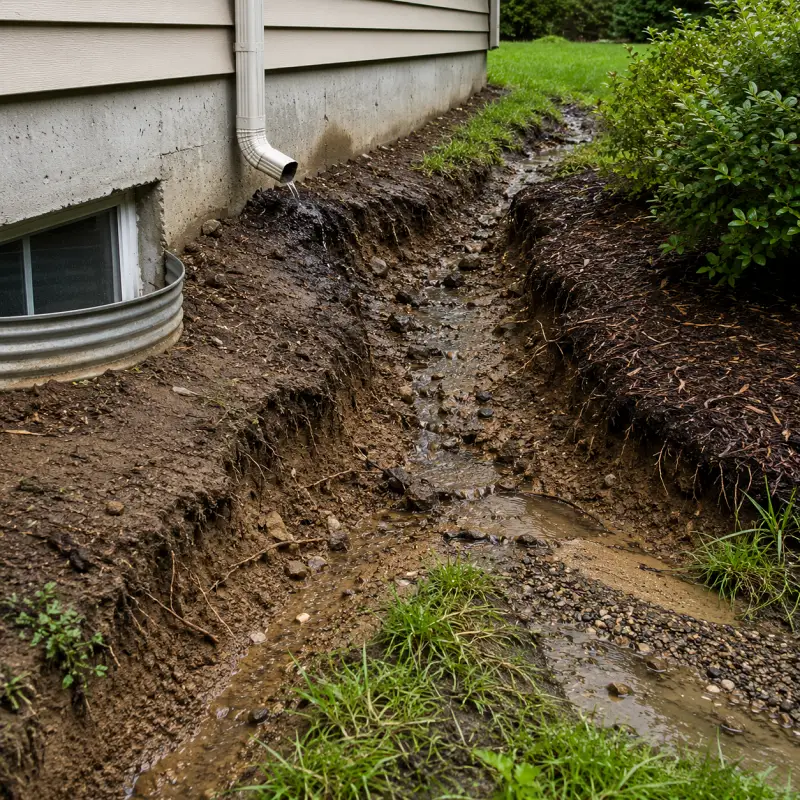
Roof runoff can concentrate a large amount of water into a relatively small area. When a downspout releases that water directly beside the foundation, repeated discharge may wash away soil or create a depression where water begins collecting.
Over time, the changing ground surface can also alter where subsequent runoff travels.
Our Downspout Discharge Issues guide explains how roof drainage can affect conditions around a foundation.
Poor Grading
The slope of the ground influences both the direction and concentration of surface water. When grading directs runoff toward the home or into a low area, repeated water flow can gradually remove soil along that path.
Erosion can then make the original grading problem worse by creating channels or depressions that continue directing water along the same route.
Poor grading around the foundation can therefore contribute to both where erosion begins and how the drainage pattern changes afterward.
“Erosion around a foundation is often a pattern, not a single event. When water repeatedly follows the same path, it can remove soil, reshape the ground, and influence where future runoff travels.”
— Foundation Water Guide Editorial Team
How Erosion Changes Drainage Around a Foundation
Erosion does more than remove soil. As the ground surface changes, the paths water follows can change with it.
When runoff carries soil away, shallow depressions, channels, or low areas may develop. During later storms, water can naturally follow these lower paths, concentrating runoff in areas where additional soil may then be removed.
This can create a repeating cycle: water causes erosion, erosion changes the shape of the ground, and the changed ground directs future water flow.
Near a foundation, those changing drainage paths may cause water to collect in new locations, travel closer to the structure, or repeatedly saturate the same areas.
Erosion can therefore be both a result of a drainage problem and a condition that makes the drainage pattern more pronounced over time.
Signs Soil Erosion May Be Affecting the Area Around Your Foundation
Soil erosion is often visible before it becomes a significant drainage concern. The most useful signs are changes in the ground surface and the paths water follows after rainfall.
Common signs include:
- Small channels or ruts developing in the soil
- Soil repeatedly washing away from the same area
- Exposed sections of the foundation that were previously covered
- Mulch, topsoil, or landscaping material being displaced after storms
- Low spots or depressions forming near the home
- Soil accumulating farther downhill from where it originated
- Water repeatedly following the same path toward or alongside the foundation
- Pooling developing where erosion has changed the ground surface
A single washed-out area after an unusually heavy storm does not necessarily indicate an ongoing problem. Repeated erosion in the same location is more meaningful because it suggests water is consistently following that path.
Soil Erosion vs. Soil Settlement
Soil erosion and soil settlement can both create visible changes in the ground around a foundation, but they occur for different reasons.
Erosion involves soil being physically carried away, usually by runoff or concentrated water flow. Settlement occurs when soil compresses, consolidates, or changes volume, causing the ground surface to lower without the soil necessarily being washed away.
This distinction can help when evaluating what you see around a home. Channels, exposed soil, or displaced material are more consistent with erosion, while sinking or gradually developing depressions may point toward settlement.
The two can also occur in the same area, so the appearance of a low spot alone does not identify the cause. Looking at drainage patterns, soil conditions, recent weather, and how the area has changed over time provides more useful context.
| Condition | Soil erosion | Soil settlement | Why the difference matters |
|---|---|---|---|
| What happens | Soil is physically moved by water | Soil compresses, consolidates, or changes volume | Different mechanisms can create similar low areas |
| Common trigger | Runoff or concentrated flow | Compaction, moisture changes, fill consolidation | Helps explain what to investigate |
| Surface signs | Channels, exposed soil, washed material | Depressions or sinking ground | Visual patterns may differ |
| Water connection | Water removes soil | Water may change soil volume or support | Both can affect foundation-area conditions |
How Soil Type and Compaction Affect Erosion
Not all ground erodes at the same rate. Soil type, compaction, vegetation, and surface cover all influence how easily water can loosen and carry soil away.
Sandy or loose soils may be easier for flowing water to move, while clay-rich soils can resist some erosion but may produce more surface runoff when water enters slowly. Compacted soil can also reduce infiltration, causing more water to remain at the surface and potentially increasing runoff. Learn more about how soil compaction affects foundation drainage and the movement of water across and through the ground.
Vegetation, mulch, and other surface cover can help protect exposed soil by slowing water and reducing its direct impact.
The important point is that soil type alone does not determine erosion risk. The amount and direction of water flow, slope, compaction, and ground cover all work together.
Can Soil Erosion Contribute to Foundation Problems?
Soil erosion can contribute to foundation problems when it changes drainage or removes soil from areas around the structure.
As erosion alters the ground surface, water may begin collecting closer to the foundation or repeatedly following newly formed channels. In more significant cases, continued soil loss may also change ground conditions near foundation edges or other supported areas.
However, visible erosion does not automatically mean the foundation has moved or lost support. The effect depends on where soil is being removed, how much erosion has occurred, the foundation design, and the underlying soil conditions.
Monitoring both the erosion pattern and any changes in the foundation can help determine whether the issue is limited to surface drainage or may need closer evaluation.
When Soil Erosion May Need Closer Evaluation
Soil erosion may deserve closer attention when it is repeated, worsening, or changing conditions near the foundation.
Consider a closer evaluation when you notice:
- Soil repeatedly washing away from the same area
- Erosion channels becoming deeper or wider
- Increasing foundation exposure
- Water being redirected toward the home
- Persistent pooling where soil has been removed
- Erosion occurring alongside new or changing foundation movement
Key Takeaways
- Erosion physically moves soil, usually through runoff or concentrated water flow.
- Repeated erosion can change drainage paths around a foundation.
- Soil type, compaction, grading, and ground cover all affect erosion.
- Erosion and settlement can look similar but occur for different reasons.
- Worsening erosion near a foundation may warrant closer evaluation.
Where To Go Next
If water is causing or worsening the erosion:
To understand related soil conditions:
If the ground or foundation appears to be moving:
For local conditions:
Frequently Asked Questions About Soil Erosion Around Foundations
What causes soil erosion around a foundation?
Soil erosion around a foundation is commonly caused by surface runoff, concentrated water flow, downspout discharge, and grading that directs water across exposed soil. Soil type, slope, compaction, and vegetation can also influence how easily soil is carried away.
Can downspouts cause soil erosion?
Yes. Downspouts concentrate roof runoff into a relatively small area. If water discharges directly onto soil near the foundation, repeated flow can wash away soil, create depressions, or form channels that affect future drainage.
Is soil erosion the same as settlement?
No. Erosion occurs when soil is physically moved from one location to another. Settlement occurs when soil compresses, consolidates, or changes volume, causing the ground surface to lower. Both can create low areas, but the underlying processes are different.
Can erosion expose part of a foundation?
Yes. Repeated erosion can gradually remove soil that previously covered portions of a foundation. Increasing foundation exposure may indicate that soil is continuing to wash away and the surrounding drainage pattern should be evaluated.
Can soil erosion contribute to foundation problems?
It can. Erosion may change drainage patterns or remove soil near a foundation, potentially affecting moisture or support conditions. However, visible erosion alone does not mean foundation damage has occurred.
Home › Soil & Ground Conditions › Soil Erosion Around Foundations