
Musty Smell or Damp Basement: What It Usually Means
A musty smell in a basement is often one of the earliest signs that moisture is present — even if you don’t see standing water.
Basements naturally hold cooler air than the rest of the home. When that cool air meets humidity or persistent dampness, it can create a stale, earthy odor. While sometimes the issue is minor, recurring musty smells often point to ongoing moisture exposure inside or around the foundation.
This guide explains what causes musty odors, what damp conditions may indicate, and when further evaluation makes sense.
What Causes Musty Smells in Basements?
A musty basement smell usually develops when excess moisture allows mold or other organic materials to remain damp for extended periods. Common contributors include high humidity, condensation, minor water intrusion, damp foundation walls, and moisture entering from a crawl space.
Musty odors can appear even when standing water is not visible. Persistent or recurring smells may indicate hidden moisture in the basement or surrounding materials and can be an early sign that moisture conditions deserve closer attention.
Common Sources of Basement Moisture and Musty Odors
Musty basement odors usually develop when excess moisture remains in the space long enough to affect building materials, stored items, dust, or other organic material. The moisture itself may come from indoor humidity, water moving through or around the foundation, or damp conditions in an adjoining crawl space.
Because the moisture source is not always visible, the smell may appear before a homeowner notices wet walls or standing water. Looking at where moisture may be collecting, and whether the odor changes with rainfall, humidity, or seasonal conditions, can help narrow down what may be contributing to the problem.
High Humidity in a Closed Space
Basements are naturally prone to higher humidity. Limited airflow combined with cooler surfaces can cause condensation to form on walls, pipes, or floors.
When humidity remains elevated for extended periods, it can:
-
Create damp surfaces
-
Encourage mold growth
-
Produce persistent earthy odors
Humidity-related dampness may fluctuate seasonally and worsen during warm, humid weather.
If humidity remains elevated, it may help to look at the conditions that allow moisture to build up inside below-grade spaces.
Hidden Moisture Behind Walls or Flooring
Sometimes the smell appears before visible water does. Moisture can migrate through foundation walls or small cracks and collect behind finished walls, insulation, or flooring materials.
Because air circulates throughout the basement, odors may spread even if the moisture source is localized.
Persistent musty smells with no visible puddles often indicate hidden moisture rather than active flooding.
In many homes, persistent humidity traces back to crawl space moisture that gradually migrates upward.
Crawl Space Moisture Transferring Upward
In homes with crawl spaces, moisture from below can migrate upward into the basement or main living areas. Wet soil, poor vapor barriers, or inadequate drainage beneath the home can create ongoing humidity problems. In some cases, these conditions are related to crawl space moisture problems that gradually affect basement conditions.
Even when the basement walls appear dry, underlying moisture may still be influencing indoor air quality.
What Dampness Without Standing Water Can Indicate
A basement does not need to have standing water to have a moisture problem. Damp walls, small wet areas, condensation, or moisture along the floor can indicate that water vapor or liquid moisture is reaching the basement even when there is no obvious flooding.
The pattern matters. Moisture that changes with indoor humidity may have a different cause than dampness that repeatedly appears after rain or along the same wall or floor joint. Distinguishing between condensation and water entering from outside can help determine what should be investigated next.
Early-Stage Water Intrusion
Minor dampness along the lower portion of basement walls may be an early stage of soil saturation or hydrostatic pressure. If left unmanaged, these conditions may progress to visible seepage.
Repeated dampness in the same area is more significant than a single humid day.
If dampness appears repeatedly in the same areas, it may help to review how water is reaching the foundation and whether exterior conditions are contributing.
If you’re unsure whether this is an early warning sign:
Condensation vs. Intrusion
It’s important to distinguish between condensation and water intrusion.
Condensation typically:
-
Forms on cooler surfaces
-
Appears during humid weather
-
Improves with ventilation or dehumidification
Water intrusion often:
-
Follows rainfall patterns
-
Appears in consistent wall sections
-
Leaves mineral residue (efflorescence)
Understanding this difference helps determine whether the issue is airflow-related or foundation-related.
If dampness follows rainfall rather than humidity patterns, it may be related to ongoing wall seepage rather than simple condensation.
In these cases, it may help to explore how moisture is entering the foundation and how these conditions can progress over time:
Common Basement Odors and Moisture Clues
Not every basement odor points to the same moisture condition. A musty smell, damp carpet, white residue on masonry, condensation, or an odor concentrated in one area can each provide different clues about what is happening in the space.
These observations do not identify the source by themselves, but they can help distinguish between elevated indoor humidity, hidden dampness, and moisture that may be entering through or around the foundation.
| What Homeowners Notice | Possible Moisture Condition | What It May Suggest |
|---|---|---|
| Musty odor after rain | Minor seepage or elevated humidity | Moisture may be entering during wet weather conditions |
| Damp carpet edges or flooring | Water intrusion near wall-floor areas | Moisture may be collecting along basement edges |
| White residue on basement walls | Efflorescence from evaporating moisture | Water may be moving through masonry materials |
| Condensation on pipes or surfaces | High humidity and temperature differences | Air moisture levels may be elevated inside the basement |
| Persistent odor near corners or storage areas | Hidden dampness or low airflow | Moisture may be collecting in enclosed areas over time |
“A persistent musty basement smell is often a moisture problem first and an odor problem second. In many homes, recurring odors develop long before visible water intrusion becomes obvious.”
— Foundation Water Guide Editorial Team
Is a Musty Basement Smell Serious?
A musty odor alone is not always a structural concern. However, persistent damp conditions can contribute to long-term issues if the moisture source is not addressed. In many homes, recurring basement odors may be an early signal that broader interior water problems are developing.
Ongoing humidity may:
Support mold growth
Accelerate material deterioration
Increase lateral soil pressure outside foundation walls
Indicate drainage imbalance
If musty smells are accompanied by:
Visible cracks
Wet wall streaks
Efflorescence
Recurring damp floor edges
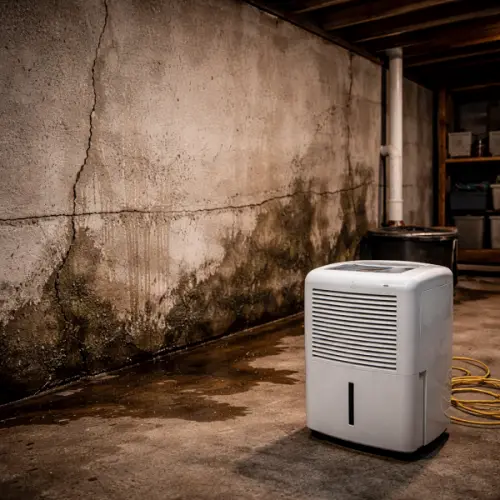
…a closer look at exterior drainage and foundation conditions is usually warranted. In more advanced cases, odor may appear alongside visible basement water intrusion after extended wet periods.
What Homeowners Typically Do Next
When a basement smells musty, homeowners often begin by looking for simple sources of excess moisture and observing when the odor is strongest. Improving ventilation, reducing indoor humidity, and checking for visible dampness can help determine whether the problem is primarily related to conditions inside the basement.
If the odor persists or returns, the next step is usually to look for moisture patterns that may point to a larger source. Damp walls, staining, moisture after rain, or recurring wet areas may indicate that exterior drainage, soil moisture, or water movement around the foundation deserves closer attention.
Step 1 - Improve Airflow and Reduce Humidity
Common first actions include:
-
Running a dehumidifier
-
Increasing ventilation
-
Sealing obvious air leaks
-
Checking for plumbing leaks
If odor improves significantly, humidity may be the primary issue.
If you’re starting with humidity-related improvements, these pages can help explain how moisture conditions develop and how they can be reduced over time:
Step 2 - Inspect for Moisture Patterns
If dampness returns, examine:
Lower wall sections
Corners and seams
Wall–floor joints
Crawl space areas
Repeated patterns suggest external moisture pressure rather than isolated humidity.
Step 3 - Address Drainage or Seek Evaluation if Needed
If dampness persists despite humidity control, evaluation may help determine whether:
Surface drainage issues such as exterior grading or downspouts need correction
Soil saturation is contributing to pressure
An interior moisture management system is appropriate
Early attention often prevents larger water intrusion problems later.
Key Takeaways
- A musty basement smell is often an early indicator that excess moisture is present in the space.
- Odors commonly develop when humidity or damp materials allow mold or mildew to grow.
- Moisture may originate from foundation seepage, occasional water entry, or crawl space humidity.
- Identifying the moisture source early can help prevent larger interior water problems from developing.
Where To Go Next
If you want to understand how moisture reaches the foundation:
If you want to explore related interior moisture problems:
If dampness or odors seem persistent or worsening:
If you want to understand foundation water problems where you live:
Frequently Asked Questions About Musty Basements
What causes a musty smell in a basement?
A musty smell is usually caused by excess moisture interacting with organic materials and dust in a low-ventilation environment. High humidity, minor wall seepage, or crawl space moisture are common contributors.
Can a basement smell musty even without visible mold?
Yes. Musty odors often develop before mold growth becomes visible. Excess humidity, damp building materials, dust, or hidden moisture behind walls and stored items can create stale odors even when no obvious mold is present.
Can a dehumidifier remove basement odors permanently?
A dehumidifier may help reduce basement odors caused by elevated humidity, but persistent smells can return if the underlying moisture source remains unresolved. In some homes, recurring odors are linked to seepage, condensation, crawl space moisture, or drainage conditions around the foundation.
Why Does My Basement Smell Musty Even When It Looks Dry?
A basement can smell musty even when surfaces appear dry because moisture may still be present inside walls, beneath flooring, or in humid air trapped within enclosed spaces. Minor seepage, condensation, or crawl space moisture can create damp conditions that are not always immediately visible.
Why does my basement smell worse after rain?
Basement odors may become stronger after rain because additional moisture can increase humidity levels or allow more water to move through surrounding soil near the foundation. Damp materials and enclosed basement air can make musty smells more noticeable during wet weather conditions.
What’s the difference between humidity and seepage?
Humidity refers to moisture suspended in the air, while seepage refers to water moving through walls, floors, or foundation materials. High humidity may cause condensation and damp odors even without visible leaks, while seepage usually involves moisture entering from surrounding soil or drainage conditions.
Home › Interior Water Problems › Musty Smell or Damp Basement