
High Groundwater Table and Foundations: How Rising Subsurface Water Affects a Home
A groundwater table (the level below the surface where soil and rock are fully saturated with water) exists beneath every property. While it is normally out of sight, changes in its depth can influence how moisture interacts with a home’s foundation.
Unlike surface runoff, which flows across the ground during or immediately after rainfall, groundwater moves slowly beneath the soil. In some regions, the groundwater level rises seasonally due to snowmelt, extended rainfall, or natural water cycle patterns.
When groundwater rises close to the base of a foundation, moisture exposure can increase, even if there has not been a recent heavy storm. Understanding how subsurface water behaves helps explain why some homes experience persistent dampness despite relatively normal weather conditions.
What Is a High Groundwater Table Around a Foundation?
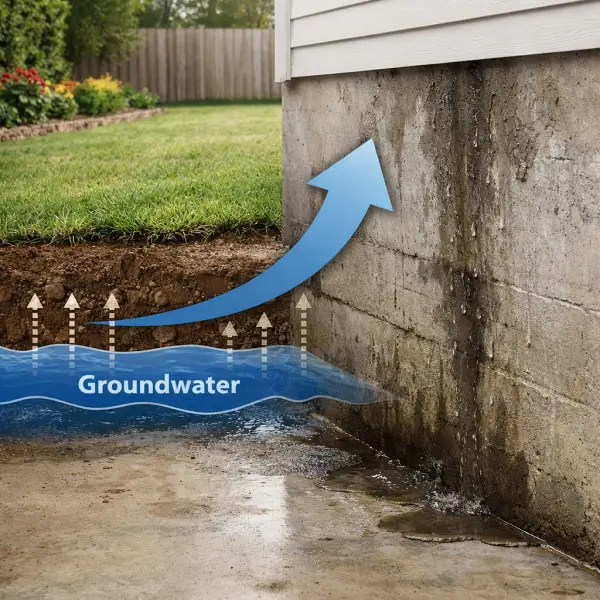
A high groundwater table occurs when the natural level of water in the soil rises close to the surface and remains near the depth of a home’s foundation. Unlike surface runoff from rain, groundwater pressure can develop below the ground as water moves through saturated soil layers.
When groundwater levels rise near or above foundation depth, water may place continuous pressure against basement walls or floor slabs. This pressure can contribute to moisture intrusion, damp basement conditions, or other interior water problems even when surface drainage appears normal.
Conditions like this are one of several exterior water problems that can influence how moisture interacts with a home’s foundation.
What a Groundwater Table Is
Groundwater exists beneath the surface in the small spaces between soil particles and rock. When enough water fills these spaces completely, the soil becomes fully saturated. The top level of this saturated zone is called the groundwater table.
The depth of the groundwater table varies depending on location, season, and recent weather patterns.
The Water Stored Beneath the Soil
Below the surface, soil contains both air and water. After rainfall or snowmelt, some of that water drains downward through the soil until it reaches a level where all open spaces are filled. This zone remains saturated, even when the ground above appears dry.
In some regions, groundwater may sit many feet below a foundation. In others, it may rise closer to the structure during certain times of year.
Because this moisture sits below the surface, it can be easy to overlook how it may affect a home over time. If you’re trying to understand how subsurface water compares to runoff or surface flow, it may help to review surface water vs. groundwater to see how these sources behave differently.
How Groundwater Differs From Surface Water
Surface water moves across the ground during storms. It is typically visible and influenced by slope, grading, and drainage features.
Groundwater, by contrast, moves slowly beneath the soil. It does not depend on immediate rainfall. Instead, it responds to longer-term moisture patterns and natural water cycles.
Because groundwater is not always visible, it can contribute to moisture exposure even when yard drainage appears to function normally.
Why Depth to Water Table Matters
The closer groundwater rises to the base of a foundation, the greater the potential for sustained moisture exposure. When the saturated zone approaches below-grade walls or slabs, hydrostatic pressure (pressure created by water in saturated soil) can increase.
Homes built with basements may be more directly affected when groundwater levels rise, while homes with raised foundations can experience different moisture patterns.
Understanding the depth of the groundwater table provides important context when evaluating persistent dampness or seasonal moisture changes.
Seasonal Groundwater Rise
Groundwater levels do not remain constant throughout the year. In many regions, the water table rises and falls in response to long-term moisture patterns rather than individual storms.
If moisture patterns seem to appear without a clear link to rainfall, it may be worth understanding how seasonal groundwater changes differ from surface drainage issues such as surface runoff and yard drainage.
Seasonal shifts can temporarily bring groundwater closer to a foundation, increasing subsurface moisture exposure, sometimes contributing to issues discussed in wet basement walls or recurring water in the basement.
Spring Thaw and Snowmelt Effects
In colder climates, frozen ground limits water absorption during winter months. When temperatures rise in early spring, snowmelt can release a significant amount of moisture into the soil over a relatively short period.
Because the ground may still be partially frozen or slow to drain, meltwater can raise groundwater levels before it has time to disperse naturally. This seasonal rise may increase hydrostatic pressure (pressure created by water in saturated soil), particularly when combined with conditions described in soil saturation and expansive clay.
When these seasonal patterns repeat each year, it may help to explore how prolonged moisture exposure contributes to conditions like soil saturation and expansive clay, which can increase pressure around a foundation over time.
Extended Rainfall Patterns
Groundwater often responds more to cumulative moisture than to a single storm. Periods of sustained rainfall over several weeks can gradually elevate the water table.
Even moderate rainfall, when repeated over time, may cause groundwater to rise higher than usual, especially in areas where poor grading around the foundation limits outward drainage.
Regional Climate Influences
Local climate patterns influence how dramatically groundwater levels fluctuate. Regions with heavy seasonal precipitation, snow accumulation, or naturally high water tables may experience more noticeable variation.
Because groundwater moves slowly beneath the soil, moisture symptoms may appear even when visible surface runoff appears minimal. This delayed response is one reason subsurface water issues can be confusing for homeowners.
Why Moisture Can Appear Without Heavy Rain
Moisture issues are often associated with visible storms, but groundwater behaves differently from surface runoff. Because it moves slowly beneath the soil, its effects are not always tied to recent rainfall.
Groundwater levels can remain elevated for extended periods after snowmelt or prolonged wet weather. Even when the yard appears dry, subsurface saturation may still be present below grade. This lingering moisture can contribute to conditions such as wet basement walls or periodic water in the basement without a clear triggering storm.
Unlike surface runoff, which moves across the ground and dissipates relatively quickly, groundwater responds to cumulative moisture patterns. It may take days or weeks for the water table to rise, and just as long to recede.
In some cases, groundwater-related moisture exposure overlaps with conditions described in soil saturation and expansive clay, where slow drainage keeps the surrounding soil damp even in the absence of recent heavy rain.
Because subsurface water movement is gradual and often invisible, the resulting moisture patterns can feel unpredictable. Understanding this delayed response helps explain why dampness may appear during otherwise mild weather conditions.
Basement vs. Crawl Space Differences
The way groundwater affects a home often depends on the type of foundation construction. Basements and crawl spaces interact with subsurface moisture differently, even when exposed to the same groundwater conditions.
Understanding these differences helps explain why symptoms may vary from one home to another.
Below-Grade Basement Walls
Basements are typically constructed with foundation walls that extend fully below ground level. When groundwater rises, saturated soil may press directly against these below-grade surfaces.
If the water table approaches the base of the walls or slab, hydrostatic pressure (pressure created by water in saturated soil) can increase. Over time, this may contribute to issues such as wet basement walls or recurring water in the basement.
Because basements are fully enclosed below grade, they are often more directly affected by sustained groundwater elevation. If you’re seeing these conditions develop, it may help to review wet basement walls or water in the basement to understand how this pressure can show up inside the home.
Raised Foundations and Crawl Spaces
Homes with crawl spaces typically have a raised foundation, meaning the structural floor sits above ground level. While this reduces direct lateral pressure on finished living areas, moisture can still accumulate beneath the home.
When groundwater rises, damp soil conditions may increase humidity within the crawl space. Over time, this can contribute to conditions described in crawl space water problems, including persistent moisture, condensation, or musty odors.
The impact may be less immediately visible than basement seepage, but prolonged dampness can still influence structural materials over time.
Ventilation and Moisture Accumulation Differences
Basements are typically enclosed and conditioned spaces, while crawl spaces may be ventilated or partially sealed. These differences influence how moisture behaves once it enters the area.
In basements, water intrusion often appears along wall surfaces or floor joints. In crawl spaces, moisture may present as elevated humidity, damp soil, or condensation on structural components.
Although the symptoms differ, both foundation types can be influenced by seasonal groundwater rise when subsurface water levels remain elevated for extended periods.
Signs a High Groundwater Table May Be Contributing
Groundwater-related moisture patterns often develop gradually rather than appearing as sudden flooding. Because subsurface water moves slowly, symptoms may seem inconsistent or disconnected from recent weather events.
Recognizing these patterns can help determine whether elevated groundwater levels may be influencing a home.
Persistent Dampness Despite Dry Weather
If basement walls or crawl spaces remain damp during periods without significant rainfall, subsurface moisture may be involved. Unlike surface drainage problems, groundwater-related dampness can persist even when yard conditions appear normal.
If dampness continues even during dry weather, it may help to review wet basement walls or crawl space water problems to better understand how groundwater-related moisture can appear inside the home.
Water at Floor Joints or Wall Seams
When groundwater rises near the base of a foundation, pressure may build at the joint where the wall meets the floor slab. This area can be vulnerable because it represents a natural seam in construction.
Recurring water along this joint may overlap with symptoms outlined in water in the basement, especially when the source does not appear tied to visible exterior runoff.
Because this is a common entry point, it may also help to review foundation cracks to see how small openings can allow groundwater to move through under pressure.
Sump Pump Cycling Without Heavy Storms
In homes equipped with sump systems, frequent pump activity during otherwise mild weather can indicate elevated groundwater levels rather than surface drainage issues.
Because groundwater responds to cumulative moisture conditions, pump cycling may continue days after rainfall has ended.
If pump activity continues without recent rainfall, it may help to compare these conditions with surface runoff and yard drainage to determine whether the source is below-ground or related to exterior flow patterns.
Seasonal Moisture Patterns
If dampness or minor seepage appears consistently during certain times of year — such as early spring — seasonal groundwater rise may be a contributing factor.
These seasonal patterns can also interact with conditions described in soil saturation and expansive clay, where slow-draining soils prolong subsurface saturation.
If these patterns repeat seasonally, it may help to review how they connect to settlement from water or other long-term changes that develop gradually as moisture conditions shift over time.
Common Groundwater Related Foundation Conditions
| Condition | Common Groundwater-Related Cause | Typical Moisture Response | Relative Concern Level |
|---|---|---|---|
| Basement seepage | Hydrostatic pressure | Drainage and moisture management | Moderate |
| Foundation wall cracks | Saturated expansive soil | Evaluation of drainage and soil movement | Higher |
| Water entering near floor edges | Rising groundwater levels | Sump systems or drainage improvements | Higher |
| Mold or mildew odors | Persistent moisture exposure | Humidity reduction and moisture control | Moderate |
| Bowing basement walls | Long-term soil pressure | Structural evaluation and drainage correction | More serious |
“High groundwater conditions often require multiple moisture-management approaches working together rather than a single isolated fix.”
— Foundation Water Guide Editorial Team
When Groundwater Is Only Part of the Issue
A high groundwater table can influence foundation moisture exposure, but it is rarely the only factor involved. In many cases, subsurface water works in combination with exterior drainage conditions.
For example, prolonged soil saturation and expansive clay can slow the release of groundwater, keeping the surrounding soil damp for extended periods. When the soil cannot drain efficiently, subsurface pressure may remain elevated longer than expected.
Surface conditions also play a role. Poor surface runoff and yard drainage can increase the amount of water entering the ground near the foundation. Over time, repeated exposure may contribute to higher subsurface moisture levels.
Subtle slope issues described in poor grading around the foundation may further concentrate water near the structure, allowing it to migrate downward into the soil.
In some homes, interior drainage systems such as sump pumps are designed to manage elevated groundwater conditions. However, these systems address the symptoms of rising water rather than the broader exterior water movement patterns.
Understanding how groundwater interacts with soil type, grading, and drainage systems provides a more complete picture of foundation water exposure. Evaluating these factors together, rather than in isolation, often leads to clearer, more stable long-term solutions. Because high groundwater is only one potential cause of foundation moisture, it can also help to determine whether you’re dealing with a drainage problem or foundation problem before deciding on the most appropriate solution.
Key Takeaways
- A high groundwater table occurs when the natural water level in the soil rises close to the depth of a foundation.
- Groundwater pressure can develop below the surface even when surface drainage appears normal.
- Elevated groundwater can increase moisture pressure against basement walls or floor slabs.
- Long-term groundwater conditions may contribute to basement dampness, seepage, or other interior moisture symptoms.
Where To Go Next
If you want to understand related groundwater conditions:
If you’re dealing with moisture inside the home:
If pressure against the foundation walls may be increasing:
If monitoring moisture or structural changes:
Frequently Asked Questions About High Groundwater Tables and Foundations
What is considered a high groundwater table?
A high groundwater table occurs when the saturated zone beneath the soil rises close to the base of a foundation. The exact depth varies by region, but when groundwater consistently approaches below-grade walls or slabs, moisture exposure and pressure may increase.
Why does my basement feel damp even when it hasn’t rained recently?
Groundwater moves slowly beneath the surface. Moisture symptoms may appear days or even weeks after wet weather patterns. If the water table remains elevated, dampness can persist even when the yard looks dry.
Are crawl spaces affected differently than basements?
Can a high water table damage a foundation?
What are signs of groundwater under a basement floor?
Common signs of groundwater beneath a basement floor can include damp concrete, water appearing near floor edges, recurring seepage after wet seasons, white mineral residue (efflorescence), or sump pumps cycling frequently. In some homes, moisture may persist even during dry weather if subsurface soil remains saturated below the foundation.
Does clay soil make groundwater foundation issues worse?
Home › Exterior Water Problems › High Groundwater Table and Foundations