
Is This Serious?
Understanding When Foundation Water Problems Need Attention
Water around a foundation can raise understandable concerns for homeowners. In some cases the issue may be minor or temporary, while in other situations it may indicate conditions that could worsen over time.
Understanding the difference between cosmetic moisture, drainage-related water problems, and early signs of structural stress can help homeowners decide whether the situation simply needs monitoring or whether further evaluation may be helpful.
Many foundation water problems begin with subtle symptoms before becoming more noticeable. Learning how to recognize those early signals can make it easier to respond appropriately and prevent unnecessary worry.
Understanding how interior water problems develop helps clarify why they recur and how they may progress if underlying causes are not addressed.
When Are Foundation Water Problems Serious?
Not every sign of moisture around a foundation indicates a serious structural problem. In many homes, minor dampness, seasonal moisture, or temporary water accumulation can occur during heavy rain or snowmelt without causing long-term damage.
However, certain patterns may suggest that water is consistently affecting the structure or surrounding soil. Persistent moisture, widening cracks, wall movement, or repeated water intrusion inside the home may indicate conditions that deserve closer attention.
In many situations, the seriousness of a foundation water problem depends on three factors: where the water is coming from, how frequently it occurs, and whether the structure is showing signs of movement or deterioration.
Homeowners who are still determining the source of moisture may find it helpful to review how water enters a foundation and surface water vs. groundwater.
“The severity of a foundation water problem depends less on the amount of water seen today and more on whether moisture is consistently changing the soil conditions supporting the home.”
— Foundation Water Guide Editorial Team
Situations That May Be Less Concerning
Some foundation water symptoms are relatively common and may not indicate structural damage, especially when they occur occasionally or resolve once weather conditions improve.
In many homes, short-term moisture conditions can appear during heavy rain, seasonal humidity, or temporary drainage changes. When these conditions disappear once weather patterns stabilize, they may simply reflect normal moisture cycles around the home.
The sections below describe several examples homeowners may encounter.
Temporary moisture during heavy weather
Light dampness or small amounts of water may appear during unusually heavy storms or rapid snowmelt. When conditions dry out afterward and no structural changes occur, the issue may simply reflect short-term weather patterns.
Seasonal humidity or condensation
In basements and crawl spaces, humidity can sometimes create condensation that mimics water intrusion. Situations like these are often discussed in pages about interior water problems such as musty basement smells or damp basement
Occasional surface water near the foundation
After storms it is not unusual to see temporary water accumulation in low areas of the yard. However, repeated pooling may indicate drainage conditions described in water pooling near the foundation or surface runoff and yard drainage.
Signs That Water May Be Affecting the Home
Water that repeatedly reaches areas around or inside a home may indicate conditions that are influencing the structure or surrounding soil.
In many situations, these signs appear gradually as moisture patterns become more consistent. Changes in drainage, soil saturation, or water pressure around the foundation can sometimes lead to interior moisture or other noticeable symptoms.
The sections below describe several patterns homeowners sometimes notice when water is interacting with the structure more regularly.
Repeated water intrusion inside the home
Water appearing inside a basement or crawl space after storms may suggest ongoing moisture entry. Situations like these are explored in water in the basement and wet basement walls.
Drainage Conditions Outside the Home
Interior water issues are frequently influenced by exterior drainage problems. Water that collects near the foundation can increase pressure against walls and joints, leading to seepage or leaks inside the basement.
Persistent damp conditions
When moisture remains for long periods without drying out, the surrounding materials may stay damp. Crawl spaces are particularly susceptible to this type of environment, which is described in crawl space water problems.
Exterior drainage patterns directing water toward the home
Water repeatedly flowing toward the foundation can sometimes result from grading problems, downspout discharge, or saturated soil conditions. These situations are covered within exterior water problems.
Indicators That Structural Issues May Be Developing
In some situations, prolonged moisture exposure can contribute to structural stress over time. When water affects the soil supporting a foundation, it may create conditions that lead to movement or material deterioration.
Foundation cracks that change or widen
Small cracks can occur in many homes, but cracks that widen or shift may indicate movement. These patterns are discussed further in foundation cracks.
Bowing or leaning basement walls
Wall movement may occur when pressure builds in saturated soil. Homeowners noticing these conditions can learn more at wall bowing.
Deteriorating or flaking concrete
Moisture exposure over long periods may lead to surface deterioration such as spalling. This type of damage is explained in spalling and deterioration.
When Monitoring the Situation May Be Appropriate
Some foundation water problems remain stable and manageable once their cause is understood. Not every sign of moisture or cracking indicates that conditions are actively worsening.
In many homes, occasional moisture patterns are tied to weather cycles, seasonal groundwater changes, or short-term drainage conditions. When symptoms appear only during specific events and do not progressively worsen, homeowners may choose to monitor the situation rather than pursue immediate corrective work.
For example, homeowners may decide to monitor the situation when:
• moisture appears only during extreme weather events
• the affected area dries completely afterward
• cracks remain unchanged over time
• no structural movement is visible
In situations like these, documenting changes over time can be helpful. Keeping track of crack size, water frequency, or moisture patterns may provide useful information if the issue needs to be evaluated later.
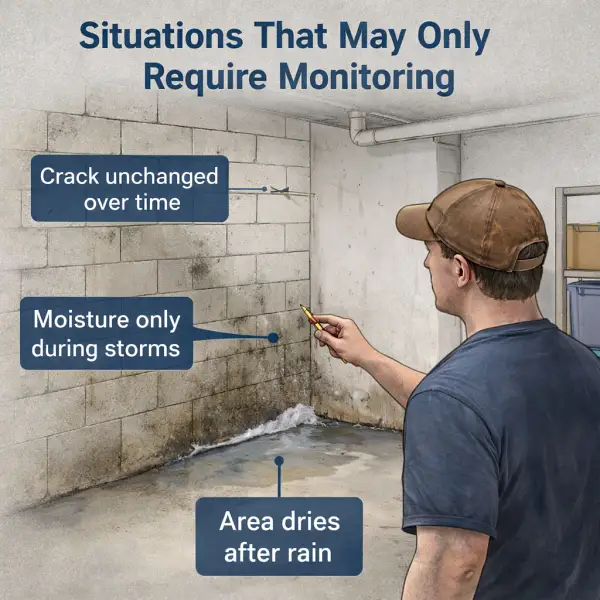
Moisture that appears only during extreme weather
If dampness occurs only during rare weather events and dries afterward, homeowners may simply monitor the situation over time.
Stable cracks or unchanged conditions
Cracks that remain the same size and do not shift or widen are often monitored rather than repaired immediately.
Understanding the overall water system around the home
Reviewing broader topics such as foundation water problems and foundation risk factors can help homeowners better understand how water behavior interacts with soil, drainage, and foundation design.
When a Professional Evaluation May Be Helpful
In certain situations, homeowners may feel more comfortable having a foundation or drainage specialist evaluate the conditions around the home.
When water behavior becomes more frequent, harder to explain, or begins to change over time, an experienced professional may be able to help identify the underlying cause.
Evaluation may be helpful when:
Water repeatedly entering interior spaces
If water regularly appears inside basements or crawl spaces, identifying the source can help determine the most appropriate solution path.
Moisture conditions that worsen over time
Gradually increasing dampness or expanding cracks may indicate changing soil or drainage conditions.
Unclear sources of water around the foundation
When the cause of the moisture is difficult to identify, inspection can help determine whether the issue relates to surface runoff, groundwater, drainage, or structural factors.
Homeowners who want to understand this process can learn more in how professionals diagnose water problems or explore guidance about do I need a professional.
Key Takeaways
- Not all moisture around a foundation indicates a serious problem.
- Temporary dampness after heavy rain can sometimes occur without long-term structural impact.
- Repeated water intrusion, worsening cracks, or wall movement may signal conditions that deserve closer attention.
- The seriousness of the issue often depends on where the water originates and how long it has been present.
Where To Go Next
If you are trying to understand where water around the home may be coming from:
If you are seeing symptoms around the house:
If you are considering whether outside evaluation may help:
If you want to understand foundation water problems where you live:
Frequently Asked Questions About
Homeowners often notice moisture around the foundation or in the basement and wonder whether it could lead to structural damage. While some water exposure is temporary, long-term drainage issues or repeated saturation around a home can contribute to foundation movement, cracking, or material deterioration over time.
The questions below address some common concerns about water around foundations and when it may become a larger issue. If you’re looking for more detailed explanations of common homeowner concerns, you can explore additional foundation water problem questions related to basement moisture, drainage, and foundation conditions.
Can water around a foundation cause serious damage?
In some cases, prolonged moisture exposure can contribute to soil movement or material deterioration around a foundation. However, not all water near a foundation leads to structural damage, especially if the moisture is temporary or seasonal.
Is water in the basement always a structural problem?
No. Water in a basement can sometimes result from drainage issues, heavy rainfall, or groundwater conditions rather than structural failure. Identifying the source of the water is usually the first step in understanding the situation.
When should homeowners be concerned about foundation cracks?
Small cracks can occur in many homes over time. Cracks that widen, change direction, or appear alongside wall movement may indicate conditions that deserve closer attention.
Can exterior drainage problems lead to foundation issues?
Yes. Poor grading, clogged gutters, or improper downspout discharge can allow water to accumulate near the foundation, which may contribute to moisture intrusion or soil movement.
How much foundation movement is considered normal?
Should I worry about one crack?
Not necessarily. A single small crack can occur for many reasons and may remain stable for years without causing structural concerns. Homeowners should pay closer attention when cracks begin to widen, new cracks appear, water enters through the opening, or the crack is accompanied by wall movement, uneven floors, or other changes within the home.
Home › Is This Serious?