
How Water Enters a Foundation: Surface Water, Groundwater, and Pressure
Water reaches foundations in predictable ways. Some problems come from surface water that flows toward the home. Others come from groundwater that saturates soil around below-grade walls. Over time, pressure, soil conditions, and drainage patterns determine whether water stays outside or begins to show up indoors.
Understanding how water enters a foundation helps you interpret symptoms correctly and choose solutions that match the source.
How Does Water Enter a Foundation?
Water can enter a foundation when moisture surrounding the structure does not drain away efficiently or builds up against below-grade walls and floors. Water may come from surface runoff, saturated soil, groundwater, or concentrated drainage near the home.
As moisture accumulates, it may move through cracks, joints, porous materials, or other openings in the foundation. In some cases, water pressure in the surrounding soil can also increase the likelihood of seepage.
Foundation water intrusion often develops gradually as drainage and soil moisture conditions persist or repeat over time.
“Key Takeaway: Water often follows the path of least resistance. A wet basement wall, damp floor edge, or musty smell may not indicate where the water originated. The visible symptom inside a home is often different from the actual source outside.”
The Two Main Water Sources Around a Home
Most water-related foundation issues can be traced back to one of two sources: water that flows across the surface after rain, or water that exists within the soil below grade. While both involve moisture, they behave differently and often require different approaches to manage effectively.
Surface Water
Surface water is water that lands on the roof and yard and then moves across the ground. It becomes a problem when it repeatedly collects near the foundation instead of draining away.
Common contributors include:
- Downspout discharge issues
- Poor grading around the foundation
- Surface runoff and yard drainage patterns
Surface water problems typically show up soon after storms, especially where water pools near the wall or along the foundation edge.
The broader category is outlined under exterior water problems.
Groundwater
Groundwater is water held in the soil below the surface. When groundwater is high or soil drains slowly, the soil around the foundation can stay saturated for long periods.
This is often connected to:
seasonal snowmelt
persistent irrigation
naturally high water tables
clay-heavy soil that retains moisture
One of the most common amplifiers is soil saturation and expansive clay.
Groundwater problems are often less “storm dependent.” Symptoms may persist even during dry weather.
Why Water Moves Toward a Foundation
Water follows gravity, low points, and saturated zones. Foundations create a vertical boundary below grade, and that boundary can become a collection point when water is repeatedly delivered to the perimeter.
Three conditions increase the likelihood of water pushing toward the structure:
Concentrated discharge near the home
Downspouts, valley drains, and hardscape runoff can deliver a surprising amount of water to a small area. When that water lands near the foundation edge, soil saturates faster and stays wet longer.
Poor drainage away from the foundation
If water cannot drain away efficiently, it tends to collect at the foundation line. Over time, repeated wetting increases pressure and increases the chance of seepage
Persistent saturation in surrounding soil
When soil stays saturated, water can remain in contact with below-grade walls for long periods. That increases the chance of moisture moving through porous materials and into interior spaces.
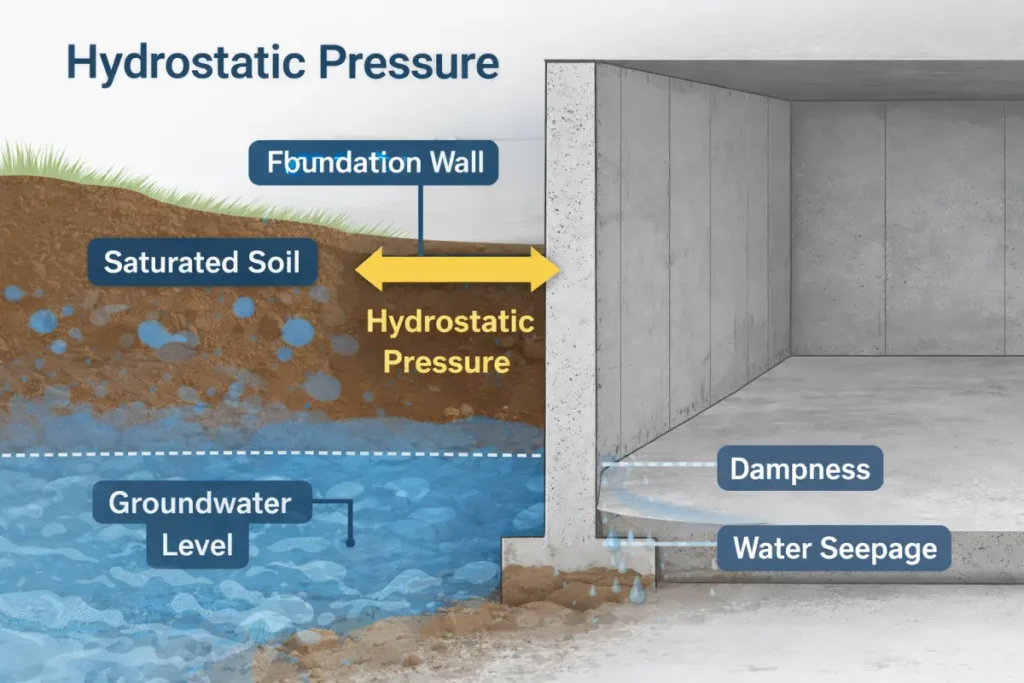
Hydrostatic Pressure
Hydrostatic pressure is the pressure created when water builds up in saturated soil and pushes against a foundation wall.
It doesn’t require standing water inside the basement. Pressure can build outside the wall when soil remains wet and water has limited places to go. The longer saturation persists, the more pressure can develop.
Hydrostatic pressure is one reason basements can show symptoms like:
dampness
staining
seepage at joints
recurring water along wall edges
Related symptom pages include wet basement walls and water in the basement.
Can Water Come Through Concrete?
Common Entry Points Where Water Shows Up Indoors
Water often appears indoors at predictable locations where materials meet or where pressure is most concentrated. These areas do not necessarily indicate severe damage, but they can signal how water is interacting with the structure. Understanding common entry points helps distinguish between isolated moisture and recurring patterns, making it easier to determine whether you’re dealing with a drainage problem or foundation problem.
Floor-wall joint
This is a common seepage point because it’s a transition between materials. Water may appear as dampness along the edge or puddling after storms.
Cracks and porous materials
Small cracks or porous masonry can allow moisture to pass through, especially during prolonged saturation. Not all cracks are structural, but water can use any available pathway.
If cracking is part of the picture, see foundation cracks.
Window wells and exterior openings
Below-grade openings can collect water and direct it toward the wall if drainage is limited.
Crawl space vents and low points
Crawl spaces can collect moisture when soil stays damp, airflow is limited, or drainage routes water toward the structure. See crawl space water problems.
Common Water Entry Conditions and Symptoms
| Common Condition | What Homeowners May Notice | What It May Contribute To |
|---|---|---|
| Hydrostatic pressure around foundation walls | Water appearing near floor edges or wall joints | Moisture movement through cracks, seams, or porous materials |
| Saturated soil near the foundation | Persistent dampness or recurring seepage | Longer periods of moisture exposure around below-grade walls |
| Poor grading or surface runoff | Water pooling near the home after rain | Surface water moving toward the foundation instead of away from it |
| Cracks, joints, or porous foundation materials | Localized damp spots or minor wall seepage | Moisture entering through weak points in the structure |
| Clogged or overwhelmed drainage systems | Recurring water intrusion during storms | Reduced ability to redirect water away from the foundation |
Why Does Water Often Appear Along Basement Edges?
How This Connects to Symptoms and Damage
Water entry is not always dramatic. Many problems begin as mild symptoms that gradually repeat. Over time, recurring saturation can contribute to interior water problems, including dampness and persistent odors. It can also influence broader exterior drainage patterns, especially where soil remains consistently wet. In more prolonged cases, moisture exposure may contribute to structural outcomes such as cracking, settlement, or wall bowing associated with foundation damage.
Common Misunderstandings About Foundation Water
Misconception: Concrete foundation walls are completely waterproof.
Reality:
Concrete and masonry materials can absorb moisture over time, especially when surrounding soil remains saturated for long periods.
Misconception: Water only enters a basement through visible cracks.
Reality:
Moisture can also move through porous materials, wall-floor joints, window wells, or areas affected by hydrostatic pressure.
Misconception: If a basement stays dry most of the year, there is no moisture problem.
Key Takeaways
- Water may reach foundations through surface runoff, groundwater, or saturated soil.
- Poor grading and concentrated runoff can increase water buildup near the home.
- Saturated soil can increase water pressure against below-grade foundations.
- Cracks, joints, and porous materials can provide pathways for moisture.
- Repeated moisture patterns are often more meaningful than a single event.
Where To Go Next
If you want to understand the types of water affecting a home:
If you are noticing moisture or water inside the home:
If you are trying to evaluate the situation:
If you want to understand foundation water problems where you live:
Frequently Asked Questions About How Water Enters a Foundation
Homeowners researching foundation moisture issues often have specific questions about how water behaves around a home and why certain problems appear over time. The answers below address a few of the most common concerns related to foundation drainage, basement moisture, and structural effects.
If you’re looking for more detailed explanations of common homeowner concerns, you can explore additional foundation water problem questions that explain how different types of basement and foundation water issues develop.
Can water enter a foundation even if the basement is “finished” and looks dry?
Yes. Moisture can move through materials and show up as odors, humidity, staining, or subtle dampness before obvious water appears.
Why does water show up at the basement edge instead of the center of the floor?
Water often enters at the floor-wall joint or along the perimeter where the wall meets the slab, especially during saturation and pressure events.
Is hydrostatic pressure only a problem during heavy rain?
Not always. Pressure can persist when groundwater is high or soil stays saturated due to seasonal moisture, irrigation, or slow drainage.
Do gutters and downspouts really make that much difference?
They can. Roof runoff concentrates a large volume of water in small areas. Where that water is discharged often determines whether soil near the foundation stays dry or stays saturated.
Does clay soil change how water behaves around a foundation?
Yes. Some soils drain quickly, while clay-heavy soils hold water longer. Soil behavior strongly influences saturation and pressure patterns.
Can water enter a foundation without visible cracks?
Why does water often appear where the wall meets the floor?
Can groundwater affect a home even when it is not raining?
Home › How Water Enters A Foundation