
Foundation Damage Caused by Water Problems
Foundation damage often develops after water problems have persisted long enough to affect the foundation’s materials and stability. In many cases, the earliest signs begin as interior moisture or exterior drainage issues, then progress over time as saturated soil and repeated pressure place stress on foundation walls and support areas.
This section explains common types of foundation damage associated with water problems, early warning signs to watch for, and how damage can progress if underlying conditions remain unchanged.
What Is Foundation Damage?
Foundation damage refers to structural changes or deterioration affecting a building’s foundation. This can include cracking, shifting, wall movement, or surface deterioration in foundation materials.
In many cases, foundation damage develops gradually when soil movement, moisture pressure, or drainage problems persist around the home. Conditions such as soil saturation, groundwater pressure, or recurring interior water problems may contribute to these structural changes over time.
“Foundation damage is rarely caused by a single event. More often, it develops gradually as moisture conditions influence soil movement, pressure against foundation walls, and the long-term performance of foundation materials.”
— Foundation Water Guide Editorial Team
Common Types of Foundation Damage Linked to Water
Water-related foundation damage can take several forms depending on how moisture interacts with the foundation and surrounding soil over time. While some types of damage are immediately visible, others develop gradually as repeated exposure to water and pressure places stress on foundation materials. Understanding these common damage patterns helps explain how water problems progress and why early signs are often overlooked.
Repeated water exposure and soil movement can contribute to several recognizable forms of foundation damage. These patterns often develop gradually and may range from minor cosmetic changes to structural movement requiring evaluation. Understanding the differences between these damage types helps homeowners interpret visible changes more accurately.
Cracks are one of the most visible signs of foundation damage and can develop for multiple reasons, including long-term moisture exposure and shifting soil conditions. While some cracks remain stable, others may widen or appear alongside recurring water problems, indicating that pressure or movement may be increasing over time.
Monitoring changes in crack size, location, and frequency is often more meaningful than focusing on a single crack in isolation.
Foundation cracks are one of the most common visible signs of water-related stress. Crack patterns may vary in direction and severity depending on soil pressure and structural conditions.
When soil outside the foundation becomes saturated, the pressure against foundation walls can increase. Over time, this pressure may contribute to wall movement, bowing, or leaning, particularly when water problems persist through repeated wet seasons.
These changes can be subtle at first and may become more noticeable as conditions continue.
Bowing walls can develop when saturated soil places sustained lateral pressure against below-grade structures. Early identification helps reduce the risk of progressive movement.
Water can influence how soil supports a structure. When soil becomes overly saturated or shifts over time, it can contribute to settlement beneath the foundation. Settlement may appear as uneven floors, changes around doors and windows, or noticeable variations in how the structure sits.
Settlement patterns can develop gradually, making long-term observation important.
Settlement may occur when soil beneath a foundation shifts due to moisture imbalance. This can result in uneven floors or misaligned structural elements.
Ongoing moisture exposure may contribute to surface deterioration on foundation walls, including flaking, staining, or changes in texture. While surface changes don’t always indicate structural damage, they can signal repeated water contact and conditions that may worsen over time.
Understanding material changes can help connect visible symptoms to broader water issues.
Prolonged moisture exposure can gradually weaken concrete and masonry materials, particularly when combined with freeze-thaw cycles or drainage issues.
Why Water-Related Foundation Damage Occurs
Foundation damage linked to water problems is often caused by a combination of moisture exposure, pressure against foundation walls, and soil movement over time. When water repeatedly collects near the foundation or remains trapped in surrounding soil, conditions may shift in ways that increase stress on the foundation system. For a deeper look at the pathways water uses to reach structural components, see how water enters a foundation.
Addressing water conditions early can help reduce the likelihood of damage progression.
Pressure Against Foundation Walls
Water-saturated soil can increase pressure against foundation walls. Over time, this sustained pressure may contribute to cracking, wall movement, or leaks that become more persistent during wet conditions.
Soil Movement and Instability
Some soils expand, contract, or shift when moisture levels change. Repeated cycles of saturation and drying can contribute to movement around the foundation, increasing the likelihood of cracks or settlement patterns over time.
Progression From Water Intrusion to Structural Change
Water problems often begin as seepage or drainage issues and gradually progress toward structural effects. This progression helps explain why early water symptoms sometimes appear long before visible damage develops.
Drainage Problem or Foundation Problem
Water-related foundation damage often develops gradually, making it difficult to determine whether the underlying cause is poor drainage, groundwater pressure, soil movement or a structural foundation issue. Because many conditions produce similar warning signs, understanding whether you’re dealing with a drainage problem or foundation problem can help you choose the most appropriate next steps before damage progresses.
Early Signs of Foundation Damage
Foundation damage often begins subtly. Common early indicators include:
New or expanding cracks
Changes in wall alignment or surface shape
Uneven floors or shifting interior surfaces
Doors or windows that begin sticking or misaligning
When these signs appear alongside ongoing water issues, the overall pattern may indicate a more advanced stage of the problem.
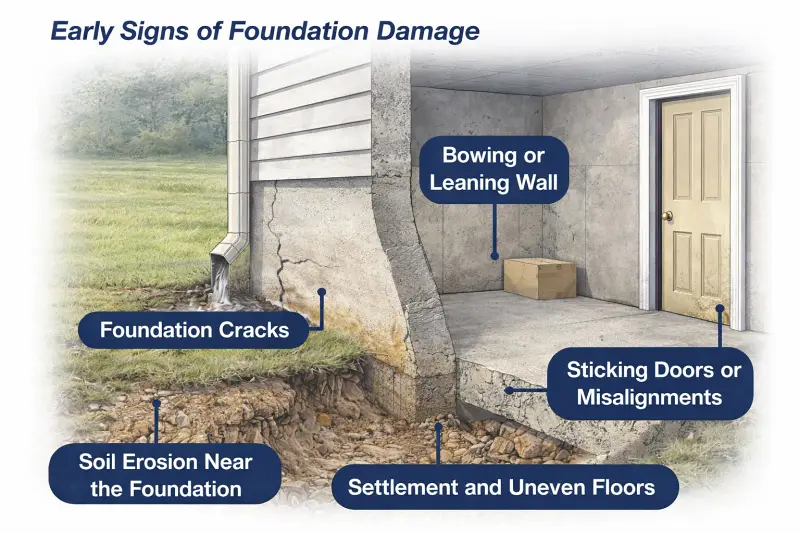
Common Signs of Water-Related Foundation Damage
| Observed Sign | Often Associated With | Learn More |
|---|---|---|
| Foundation cracks | Settlement, moisture imbalance, or structural stress | Foundation Cracks |
| Bowing or leaning walls | Hydrostatic pressure or saturated soil conditions | Wall Bowing |
| Uneven floors or settlement | Shifting support beneath the foundation | Settlement From Water |
| Spalling or material deterioration | Long-term moisture exposure | Spalling and Deterioration |
How Foundation Damage Can Progress Over Time
These related sections explain how water problems begin inside and outside the home, what warning signs to watch for, and how water conditions are commonly managed to reduce long-term risk.
Detailed Exterior Water Problem Guides
If you’re observing water accumulation or drainage concerns around your home, the following guides explain common exterior conditions that may contribute to foundation moisture.
Key Takeaways
- Foundation damage refers to structural changes affecting foundation walls or footings.
- Moisture conditions in soil surrounding the foundation often contribute to structural stress.
- Early warning signs may include cracks, wall movement, or uneven floors.
- Addressing drainage and moisture issues can help reduce the risk of long-term structural problems.
Related Topics
These related sections expand on how foundation water problems develop, how to recognize early warning signs, and how different types of issues are commonly addressed. Exploring these topics can help clarify how individual problems fit into the broader picture.
Interior water problems often appear before visible foundation damage. This section covers seepage, floor joint leaks, and moisture patterns that can signal developing issues.
Many foundation damage patterns are connected to drainage, grading, and soil saturation outside the home. This section explains how exterior water problems can contribute to pressure and long-term stress on foundations.
If cracks, movement or other structural changes are appearing, the next step is determining whether you're dealing with a drainage problem or foundation problem. Identifying the likely cause helps you choose the most appropriate solution before conditions become more serious.
Foundation problems often show early indicators before serious damage develops. This section highlights common signs that may signal developing water-related issues.
Water management strategies vary depending on the cause and severity of the issue. Explore common solution paths and learn how to determine whether you're dealing with a drainage problem or foundation problem.
Foundation damage develops differently depending on local soil conditions, climate, groundwater levels and foundation construction. Explore our Foundation Water Problems by State guides to understand how regional conditions affect homes where you live.
Where To Go Next
If you’re trying to identify the cause of foundation damage:
If you’re learning why foundation damage develops:
If you’re evaluating the severity:
If you’re exploring repair options:
If you want to understand local foundation risks:
Frequently Asked Questions About Foundation Problems
Can water cause foundation damage?
Yes. Water can contribute to foundation damage when moisture conditions affect soil stability, increase pressure against foundation walls, or accelerate deterioration of foundation materials. The effects often develop gradually as water-related conditions persist over time.
How long does foundation damage take to develop?
Foundation damage may develop over months or years depending on soil conditions, drainage patterns, moisture exposure, and the type of damage involved. Some warning signs appear gradually, while others become noticeable only after repeated cycles of wet and dry conditions.
Can poor drainage damage a foundation?
Poor drainage can contribute to foundation problems by allowing water to collect near the home. Over time, excess moisture may influence soil movement, increase pressure against foundation walls, or contribute to conditions associated with foundation deterioration.
Home › Foundation Damage