
How Professionals Diagnose Water Problems Around a Foundation
Homeowners dealing with moisture, dampness, or water around their foundation often wonder how professionals determine the cause of the problem. Because water can enter or affect a home in several different ways, diagnosing the source usually requires looking at both the structure and the surrounding environment.
Rather than focusing only on visible symptoms, professionals typically evaluate how water moves around the home, how it interacts with soil and drainage systems, and whether the structure shows signs of change over time.
How Do Professionals Diagnose Foundation Water Problems?
Diagnosing foundation water problems usually involves identifying where water originates, how it travels toward the structure, and whether the foundation is being affected.
Professionals often review exterior drainage conditions, soil saturation, roof runoff, and visible moisture patterns inside the home. By combining these observations, they can better understand whether the issue relates to surface water, groundwater pressure, drainage problems, or structural factors.
How Professionals Identify the Source of Water
Because water problems can originate from several sources, professionals typically begin by looking at how water behaves around the property as a whole. This helps determine whether the issue is caused by exterior drainage patterns, groundwater pressure, or localized moisture conditions.
Evaluating roof runoff and downspout discharge
Roof runoff can move large volumes of water toward the foundation if downspouts discharge too close to the structure or if drainage systems are not directing water away properly.
Professionals often review gutter and downspout conditions, looking for signs that runoff may be collecting near the home. This type of evaluation frequently overlaps with issues described in downspout discharge issues.
Examining grading and surface drainage
Ground slope and yard drainage patterns strongly influence how rainwater moves around a home. If the soil around the foundation slopes toward the structure, water may collect along basement walls or crawl space areas.
Inspectors often look for grading problems, low areas in the yard, or runoff patterns that repeatedly direct water toward the foundation. Related topics include poor grading around the foundation and surface runoff and yard drainage.
Considering groundwater and soil saturation
In some homes, water problems are influenced by groundwater levels or saturated soil conditions rather than surface runoff alone. When soil becomes saturated, pressure can build against foundation walls and floor joints.
Understanding this behavior often relates to concepts discussed in surface water vs. groundwater and foundation risk factors.
What They Evaluate Around the Home
Once potential water sources are identified, professionals usually review both exterior and interior conditions to determine how the structure may be responding to moisture exposure.
Exterior drainage and foundation conditions
Outside the home, inspectors often evaluate the foundation walls, soil contact areas, grading, and nearby drainage features. They may look for pooling water, soil erosion, or areas where water frequently collects.
These exterior conditions can often explain symptoms associated with exterior water problems.
Interior moisture symptoms
Inside the home, professionals may examine signs such as damp walls, water stains, floor joint moisture, musty odors, or condensation patterns. These symptoms help confirm whether water is reaching interior areas and how often it may be occurring.
Many of these patterns are discussed on pages such as water in basement, wet basement walls, and musty smell or damp basement.
Structural changes related to moisture
What Professionals Commonly Evaluate During a Foundation Water Inspection
Foundation water problems can have several contributing factors. Rather than focusing on a single symptom, professionals typically evaluate multiple conditions around the home to understand how water moves and where moisture may be affecting the structure.
| Inspection Area | What Professionals Look For | Why It Matters |
|---|---|---|
| Roof Runoff | Downspout locations and discharge patterns | Can concentrate water near the foundation |
| Surface Grading | Soil slope around the home | Helps determine where water naturally flows |
| Soil Saturation | Standing water or consistently wet areas | May indicate poor drainage or groundwater issues |
| Foundation Walls | Dampness, staining, or visible seepage | Helps identify moisture entry locations |
| Cracks and Movement | Crack size, direction, and progression | May reveal settlement or structural stress |
| Crawl Spaces | Moisture, humidity, or standing water | Can indicate ongoing water intrusion |
| Drainage Features | Swales, drains, gutters, and extensions | Helps explain how water is managed around the property |
How Professionals Narrow Down Possible Water Sources
If water appears only after rain:
- Review grading around the foundation
- Check downspout discharge locations
- Look for surface runoff collecting near the home
- Evaluate how water moves across the property during storms
If moisture persists during dry weather:
- Consider groundwater conditions
- Inspect for plumbing leaks or localized water sources
- Review soil moisture patterns around the foundation
- Evaluate whether water is entering from below-grade areas
If water appears near the wall-floor joint:
- Assess hydrostatic pressure conditions
- Review perimeter drainage performance
- Look for signs of groundwater intrusion
- Compare moisture patterns after wet and dry periods
If symptoms include cracks, movement, or uneven floors:
- Evaluate soil movement around the foundation
- Review moisture conditions near affected areas
- Compare current conditions to previous observations
- Determine whether structural changes appear stable or progressive
Surface Water vs. Groundwater: Common Diagnostic Differences
| Factor | Surface Water | Groundwater |
|---|---|---|
| When It Often Appears | Often after rainfall, snowmelt, or runoff events | May appear during wet seasons or periods of high groundwater |
| Common Source | Grading issues, roof runoff, downspouts, or surface drainage patterns | Water table conditions, saturated soil, or hydrostatic pressure |
| Typical Entry Pattern | Near walls, openings, window wells, or surface pathways | Along floor joints, lower wall areas, or below-grade surfaces |
| Inspection Focus | Exterior drainage, grading, runoff paths, and roof discharge | Soil saturation, groundwater behavior, and pressure below grade |
| What It May Indicate | Water may be moving toward the foundation from outside surface conditions | Moisture may be accumulating below or around the foundation |
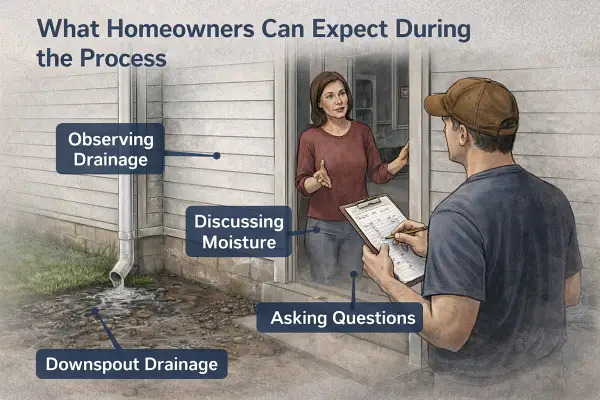
What Homeowners Can Expect During the Process
A foundation or drainage inspection usually focuses on gathering information rather than immediately recommending a specific repair. The goal is to understand the broader water conditions affecting the home.
During the evaluation, professionals may ask about when moisture appears, how often the issue occurs, and whether conditions change during heavy rain or seasonal weather patterns. They may also observe drainage systems, grading, basement conditions, and visible structural features.
This process helps determine whether the issue can be addressed through drainage improvements, moisture management strategies, or structural evaluation if needed.
Homeowners who are still deciding whether evaluation is necessary may want to review Do I Need a Professional? or Is This Serious?.
Key Takeaways
- Diagnosing foundation water problems usually involves identifying where water originates and how it moves toward the structure.
- Professionals often evaluate drainage patterns, soil saturation, roof runoff, and visible moisture symptoms inside the home.
- Exterior conditions such as grading and runoff can strongly influence whether water collects near a foundation.
- Interior symptoms such as damp walls, musty odors, or repeated basement moisture often provide clues about water intrusion.
- Understanding topics like how water enters a foundation and surface water vs. groundwater can help homeowners better interpret inspection findings.
Where to Go Next
If you are still determining whether the problem is serious:
If you want to understand the causes of foundation water problems:
If you are reviewing symptoms around the home:
If you want to understand foundation water problems where you live:
Frequently Asked Questions About How Professionals Diagnose Water Problems Around a Foundation
How do professionals determine where foundation water is coming from?
Professionals typically review exterior drainage conditions, soil saturation, roof runoff patterns, and interior moisture symptoms. By examining how water moves around the property, they can often identify whether the issue relates to surface runoff, groundwater pressure, or structural factors.
Do inspections focus only on the basement?
No. Most evaluations include both exterior and interior areas of the home. Inspectors usually review grading, drainage, soil conditions, foundation walls, and visible interior symptoms to understand the complete water pattern affecting the structure.
Can water problems have more than one cause?
Yes. In many homes, foundation moisture results from several factors working together, such as roof runoff, drainage patterns, soil saturation, or seasonal groundwater changes.
How long does a typical foundation water inspection take?
Inspection time can vary depending on the size of the home and the complexity of the issue. However, many evaluations focus on observing drainage conditions, reviewing visible symptoms, and asking questions about when moisture appears.
What happens after a professional identifies the cause?
Once the cause is better understood, the next step is usually discussing possible solution approaches. These may include drainage improvements, moisture management strategies, or structural repairs depending on the underlying issue.
Home › How Professionals Diagnose Water Problems Around a Foundation