
Spalling and Deterioration of Foundation Materials Caused by Water
Foundation materials are built to last, but prolonged moisture exposure can gradually weaken concrete, block, brick, and mortar. In many cases, deterioration develops slowly and may begin as surface-level changes before progressing into more significant material breakdown.
Understanding how water affects foundation materials helps homeowners interpret what they’re seeing and identify when evaluation makes sense.
What Is Spalling and Foundation Deterioration?
Spalling is a type of surface damage that occurs when the outer layer of concrete or masonry begins to flake, chip, or break away. This often appears as peeling surfaces, crumbling edges, or small sections of missing material on foundation walls or basement surfaces.
Moisture exposure is a common contributor to spalling. When water repeatedly penetrates concrete or masonry—and especially in climates with freezing temperatures—expansion and contraction can gradually weaken the surface. Over time, this can lead to visible deterioration of foundation materials.
Spalling and material deterioration are forms of foundation damage that may develop when foundation surfaces are exposed to long-term moisture conditions.
How Water Breaks Down Foundation Materials
Water can affect foundation materials in several ways. Persistent dampness may carry minerals into porous surfaces, contribute to surface erosion, and weaken mortar joints over time.
In colder conditions, absorbed moisture may expand as it freezes, leading to surface scaling or flaking. In reinforced concrete, long-term moisture exposure can also contribute to corrosion-related expansion that stresses surrounding material.
Most deterioration is not caused by a single event. It tends to reflect repeated moisture exposure and ongoing issues with surface runoff and yard drainage.
Water Conditions That Often Contribute to Surface Breakdown
If foundation materials are flaking, crumbling, or softening over time, it may help to review the moisture conditions that often keep those surfaces exposed to repeated wetting.
“Spalling is often one of the earliest visible signs that moisture is repeatedly affecting masonry or concrete surfaces. While minor flaking may remain superficial, ongoing deterioration can indicate that water exposure is continuing and deserves closer attention.”
— Foundation Water Guide Editorial Team
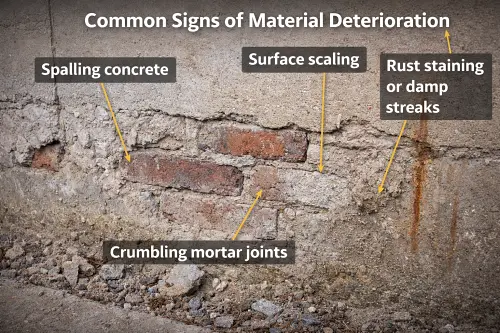
Common Signs of Material Deterioration
Common signs may include:
Flaking or chipping concrete (often called spalling)
Crumbling mortar joints on block or brick foundations
Surface scaling or powdery breakdown
Pitting or roughened concrete texture
Rust staining or damp streaks on foundation surfaces
These changes may appear localized or spread gradually depending on moisture patterns.
Understanding Levels of Material Deterioration
Not all surface deterioration indicates the same level of concern. The appearance and extent of damage can provide clues about whether moisture exposure is affecting only the surface or may be contributing to more significant material breakdown.
| Observed Condition | Typical Appearance | General Level of Concern |
|---|---|---|
| Minor surface flaking | Small areas of scaling or peeling | Often cosmetic, but should be monitored |
| Repeated scaling or chipping | Surface deterioration continues to return | May indicate ongoing moisture exposure |
| Noticeable material loss | Sections of concrete, mortar, or masonry breaking away | May deserve closer evaluation |
| Advanced deterioration | Deep material loss, exposed reinforcement, or widespread breakdown | Often warrants professional assessment |
Spalling vs Efflorescence vs Foundation Cracks
| Condition | What It Often Looks Like | Commonly Associated With |
|---|---|---|
| Spalling | Flaking, scaling, or crumbling concrete or masonry surfaces | Repeated moisture exposure, freeze-thaw cycles, or surface deterioration |
| Efflorescence | White powdery deposits on concrete, masonry, or basement walls | Water moving through materials and leaving behind mineral deposits |
| Settlement Cracks | Vertical, diagonal, or stair-step cracks | Soil movement, settlement, or changing support beneath a structure |
| Structural Cracks | Widening, horizontal, or progressively changing cracks | Pressure, movement, or structural stress affecting the foundation |
Why Deterioration Often Appears Near Grade Lines
Material deterioration frequently shows up near the ground line where moisture exposure is most consistent. Splashback, poor drainage, and repeated wet-dry cycles can concentrate moisture in this area.
Downspout discharge issues, pooling water, or soil that stays saturated may increase the frequency of exposure. Over time, this repeated contact can accelerate surface breakdown and worsen existing weak points in mortar or concrete.
Related Structural Warning Signs
If deterioration is spreading, appearing alongside cracking, or returning after wet periods, it may help to look at related warning signs that can develop when moisture exposure continues over time.
Understanding the Level of Concern
If you’re not sure whether the condition is still surface-level or may point to a larger foundation water problem:
When Deterioration Becomes a Concern
Minor surface wear is common and may remain stable for years. Concern increases when deterioration:
Spreads quickly over time
Creates loose material or deep surface loss
Occurs alongside founcation cracks, bowing, or settlement from water
Is paired with recurring moisture intrusion
The rate of change matters. If visible breakdown progresses from season to season, it’s usually a sign that water exposure is ongoing.
What Typically Happens Next
Evaluation typically focuses on identifying the moisture source and determining whether deterioration is surface-level or affecting structural integrity.
Next steps often involve improving drainage and reducing sustained moisture exposure. In some cases, localized repair may be used to restore affected sections once the water behavior is addressed.
How Moisture-Related Deterioration Is Evaluated
If foundation surfaces appear to be breaking down over time, these pages can help explain how water-related damage is usually reviewed and what conditions are often checked first.
Exterior Drainage Issues That Often Affect Near-Grade Surfaces
When deterioration is concentrated near the ground line, it may help to review the exterior drainage patterns that often keep those areas wet.
Key Takeaways
- Spalling occurs when the surface layer of concrete or masonry flakes, chips, or breaks away.
- Repeated moisture exposure can weaken foundation surfaces over time.
- Freeze-thaw cycles can accelerate deterioration when water penetrates concrete and expands as it freezes.
- Material deterioration may signal ongoing moisture conditions affecting the foundation exterior or basement surfaces.
Where To Go Next
If foundation surfaces are flaking, crumbling, or deteriorating, these pages can help explain how moisture exposure contributes to material damage and what related conditions to review:
If you want to explore water conditions that may contribute to deterioration:
High groundwater table near foundations
Soil saturation and expansive clay
Surface runoff and yard drainage
If other structural warning signs are appearing:
Foundation cracks
Bowing foundation walls
Settlement from water
If foundation damage seems to be progressing:
When foundation water problems may be serious
Do I need a professional inspection?
How professionals diagnose water problems
Common mistakes homeowners make
If you want to explore water conditions that may contribute to deterioration:
If other structural warning signs are appearing:
If foundation damage seems to be progressing:
If you want to understand foundation water problems where you live:
Frequently Asked Questions About Foundation Material Deterioration
Is spalling concrete always caused by water?
Spalling can have multiple causes, but moisture exposure is a common contributor. Water absorbed into concrete can weaken the surface over time, and freezing conditions can accelerate flaking and scaling.
Can deteriorating mortar joints indicate a water problem?
Yes. Mortar and masonry are porous, and repeated dampness can gradually weaken joints. Deterioration often reflects persistent moisture exposure from drainage or saturation near the foundation.
When should crumbling concrete or mortar be evaluated?
Evaluation is recommended when material loss is increasing over time, becoming deep or widespread, or occurring alongside other damage patterns such as cracks, bowing, or settlement.
Is spalling concrete dangerous?
Can water cause foundation deterioration?
Yes. Repeated moisture exposure can gradually weaken concrete, mortar, and masonry materials. In some situations, freeze-thaw cycles, mineral deposits, and long-term saturation may accelerate surface deterioration and material breakdown.
What is the difference between spalling and efflorescence?
Efflorescence appears as a white powdery residue left behind when water evaporates from masonry or concrete surfaces. Spalling involves the actual deterioration of the material itself, such as flaking, scaling, or crumbling concrete or mortar.
Home › Foundation Damage › Spalling and Deterioration