
What Is Hydrostatic Pressure Around a Foundation?
Hydrostatic pressure develops when water builds up in the soil around a foundation and creates pressure against below-grade walls or floors. This is more likely when surrounding soil becomes saturated and water cannot drain away as quickly as it accumulates.
Heavy or prolonged rainfall, high groundwater, slow-draining soil, and poor surface drainage can all contribute to these conditions. The amount of pressure can vary depending on soil type, drainage, groundwater levels, and how long the ground remains saturated.
Understanding how hydrostatic pressure develops can help homeowners make sense of recurring basement moisture, seepage, and other water-related changes around a foundation.
Three Ways to Learn About Hydrostatic Pressure Around a Foundation
Everyone learns differently. Choose the format that works best for you.
- Browse the slide presentation
- Watch the educational video
- Read the complete guide below
Slide Presentation
Educational Video
What Is Hydrostatic Pressure Around a Foundation?
Hydrostatic pressure is the pressure that water in saturated ground can place against a foundation. As soil around or beneath a home fills with water, that water can press against basement walls, foundation walls, and below-grade floors.
The pressure does not come from rainfall alone. It develops when water accumulates faster than it can drain away, causing the surrounding ground to remain saturated. Soil saturation and expansive clay can help explain how changing moisture conditions affect the ground around a foundation.
Hydrostatic pressure matters because water under pressure may move through cracks, joints, porous foundation materials, or the connection between a wall and floor. For a broader explanation of these pathways, see How Water Enters a Foundation.
Hydrostatic pressure is therefore best understood as part of a larger water-and-soil system rather than as a problem caused by a single rainstorm.
How Hydrostatic Pressure Develops
Hydrostatic pressure develops as water accumulates in the ground around a foundation. The process usually begins with increasing soil moisture and can become more significant when the ground remains saturated for extended periods.
How much pressure develops depends on several factors, including how quickly water enters the soil, how easily it can drain, and whether groundwater is contributing moisture from below. The steps below explain how these conditions can progress from wet soil to pressure against the foundation.
Soil Becomes Saturated
Soil contains small spaces, or pores, between its particles. Under normal conditions, these spaces contain a mixture of air and water. As rain, runoff, or other moisture enters the ground, more of those spaces begin to fill with water.
When water enters faster than it can drain away, the soil can become saturated. Slow-draining soils may remain saturated longer, while repeated rainfall can prevent the ground from drying between storms.
Soil type also affects how quickly this happens and how long moisture remains. See How Water Moves Through Different Soil Types for a closer look at these differences.
Water Fills the Spaces Between Soil Particles
As saturation increases, water occupies more of the pore space within the soil. Once those spaces are filled, additional water cannot move into the ground as easily and may begin to accumulate or move toward areas of lower pressure.
Around a foundation, this can leave below-grade walls and floors in prolonged contact with wet soil. The deeper the water extends and the longer saturated conditions remain, the greater the potential for water pressure to develop.
Pressure Builds Against the Foundation
Water has weight. When water accumulates in saturated ground beside or beneath a foundation, that water can exert pressure against the surfaces containing it.
The amount of pressure generally increases with water depth. This means the lower portions of a below-grade foundation wall can experience greater water pressure than areas closer to the surface.
If openings or pathways are present, that pressure may also encourage moisture to move through cracks, joints, porous materials, or wall-floor connections.
Groundwater Can Increase the Pressure
Hydrostatic pressure is not always caused by surface water soaking downward. A naturally high or seasonally rising groundwater table can also keep soil around the lower portions of a foundation saturated.
When groundwater rises toward foundation depth, below-grade walls and floors may remain exposed to wet conditions even when the ground surface appears dry. This helps explain why some basement water problems persist or recur without a recent heavy storm.
For more on this relationship, see High Groundwater Table and Foundations.
Where Hydrostatic Pressure Affects a Foundation
Hydrostatic pressure can act against any foundation surface that is in contact with saturated ground. The effect depends on where water is accumulating, how deep it is, and where openings or weaker pathways exist in the foundation.
Below-grade walls, floors, and construction joints can each respond differently when water pressure develops around the structure.
Basement and Foundation Walls
Below-grade foundation walls hold back the surrounding soil. When that soil becomes saturated, water within the ground can add pressure against the exterior surface of the wall.
Because hydrostatic pressure generally increases with water depth, pressure may be greater toward the lower portion of a basement or foundation wall. Persistent saturated conditions can also keep the wall exposed to moisture for long periods.
Water may eventually find pathways through cracks, joints, or porous foundation materials. In some situations, water pressure may occur alongside soil pressure that contributes to bowing or leaning foundation walls.
Foundation Floors and Slabs
Water pressure can also develop beneath below-grade floors and slabs. When soil beneath the foundation remains saturated or groundwater rises, water may exert upward pressure against the underside of the floor.
If pathways are available, moisture may appear through cracks, penetrations, or other openings in the slab. Water can also emerge near the perimeter where the floor meets the foundation wall.
This is one reason basement water does not always enter through a visibly wet wall.
Cracks, Joints, and Wall-Floor Connections
Cracks and construction joints can provide natural pathways for water when pressure exists outside or beneath the foundation.
The connection between a basement wall and floor is particularly important because it represents a transition between two foundation surfaces. Water accumulating beneath or beside the foundation may find this junction easier to move through than intact concrete.
A crack does not necessarily mean hydrostatic pressure caused the crack. Instead, existing openings can provide a route for pressurized water to enter. Homeowners seeing this pattern can learn more about the different causes of water in a basement.
Conditions That Can Increase Hydrostatic Pressure
Hydrostatic pressure becomes more likely when water enters the ground faster than it can drain away or when saturated conditions persist around the foundation. Some conditions add water from the surface, while others affect how quickly the soil releases it or how high groundwater rises.
Several factors can occur at the same time, which is why hydrostatic pressure often reflects a combination of weather, soil, groundwater, and drainage conditions.
Prolonged or Heavy Rainfall
Heavy rainfall can introduce a large amount of water into the ground over a short period. Prolonged rainfall can have a similar effect by preventing soil from drying between storms.
As the ground absorbs more water, drainage may eventually become too slow to keep pace. Soil around the foundation can remain saturated, allowing water pressure to persist even after the rain has stopped.
Repeated storms can be especially important because each new rainfall event may add water before the ground has had time to drain.
High Groundwater Levels
Groundwater can contribute to hydrostatic pressure from below rather than from water moving downward from the surface.
A seasonally high water table may rise toward the depth of a basement, footing, or slab. When this happens, soil surrounding the lower portions of the foundation can remain saturated for extended periods.
This is one reason hydrostatic pressure can sometimes persist during relatively dry weather. See Surface Water vs. Groundwater for more about distinguishing these two water sources.
Clay-Heavy or Slow-Draining Soil
Soil type influences both how water moves through the ground and how long moisture remains there. Clay-heavy soils generally drain more slowly than sandy soils and can retain moisture for longer periods.
When slow-draining soil becomes saturated near a foundation, water may remain in contact with below-grade surfaces instead of moving away quickly. Repeated wetting can extend the amount of time the foundation is exposed to saturated conditions.
Clay can also expand as its moisture content increases, adding another type of soil-related pressure around a foundation. These behaviors are explained further in Soil Saturation and Expansive Clay.
Poor Grading and Concentrated Runoff
Surface drainage can contribute to hydrostatic pressure when rainwater is repeatedly directed toward the foundation instead of away from it.
Poor grading, short downspouts, or concentrated runoff can deposit large amounts of water near the home. That does not automatically create hydrostatic pressure, but repeated water concentration can increase soil saturation and make pressure more likely to develop.
When surface water consistently collects near the structure, poor grading around a foundation and other drainage conditions may help explain why the surrounding soil remains wet.
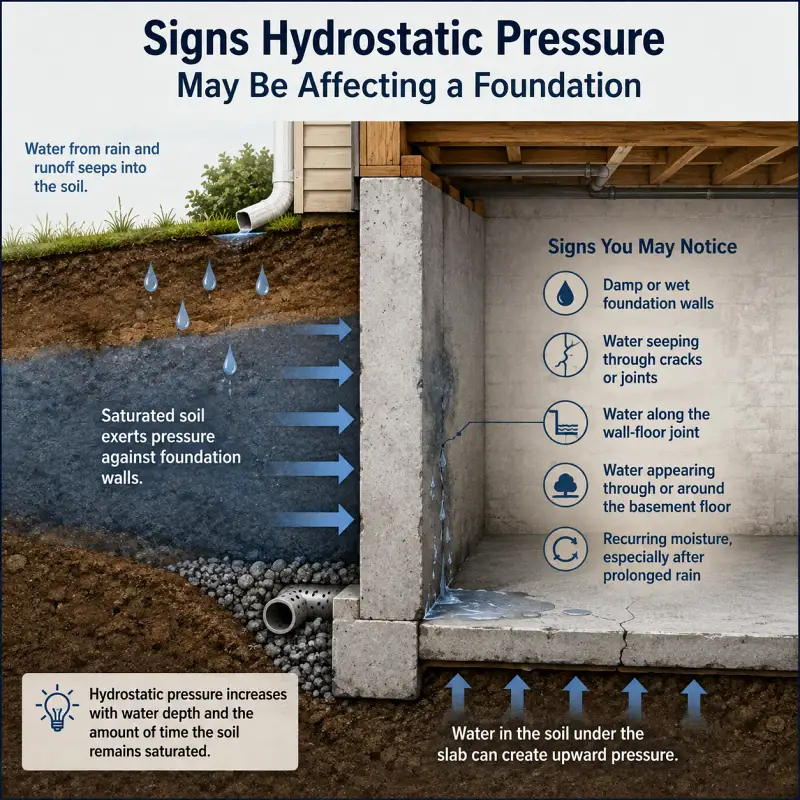
Signs Hydrostatic Pressure May Be Affecting a Foundation
Hydrostatic pressure itself is not visible, but the movement of water it creates can produce recognizable patterns around below-grade walls and floors.
Common signs may include:
- Recurring basement seepage, especially after prolonged rainfall
- Damp or wet foundation walls that remain moist after storms
- Water appearing along the wall-floor joint
- Moisture entering through foundation cracks or joints
- Water appearing through or around a basement floor
- Recurring moisture even when surface drainage appears adequate
A single sign does not confirm hydrostatic pressure. The timing, location, and recurrence of the moisture can help distinguish pressure-related water movement from an isolated leak or surface drainage problem.
If water is repeatedly appearing inside the home, wet basement walls and other interior moisture patterns can provide additional clues about how water may be reaching the foundation.
Hydrostatic Pressure vs. Soil Pressure
Hydrostatic pressure and soil pressure both act against below-grade foundation surfaces, but they are not the same thing.
Hydrostatic pressure comes from water. When the ground becomes saturated, water within the soil can exert pressure against foundation walls and beneath floors or slabs. The pressure generally increases as the depth of accumulated water increases.
Soil pressure comes from the ground itself. The weight of the soil places pressure against foundation walls, while changes in moisture can cause some soils—particularly expansive clay—to swell, shrink, or shift.
The two can also occur together. Saturated clay, for example, may expose a foundation wall to both water pressure and changes in soil volume. This is one reason understanding the surrounding soil conditions can be important when evaluating foundation movement.
For more about how different soils respond to moisture, see How Water Moves Through Different Soil Types
When Hydrostatic Pressure May Indicate a Bigger Problem
Hydrostatic pressure can occur temporarily during unusually wet conditions without necessarily indicating serious foundation damage. What matters more is whether the moisture pattern is persistent, recurring, or accompanied by changes in the foundation.
Conditions that may deserve closer evaluation include:
- Basement seepage that returns after repeated storms
- Water entering through the same cracks or joints
- Moisture that persists well after rainfall has ended
- Increasing or changing foundation cracks
- Bowing, leaning, or other movement in foundation walls
- Water problems that continue even when obvious surface drainage issues have been addressed
The pattern over time is often more informative than a single wet-weather event. Recurring water combined with structural changes may suggest that several conditions are affecting the foundation at once.
If you’re seeing both moisture and structural changes, Is This a Serious Foundation Water Problem? can help put those warning signs into context.
“Hydrostatic pressure is rarely about one rainfall event. What matters is how long water remains in the ground, where it accumulates, and whether saturated conditions repeatedly develop around the foundation.”
— Foundation Water Guide Editorial Team
Related Questions
Homeowners learning about hydrostatic pressure often have related questions about basement water, foundation drainage, and how water collects around the foundation.
Home › Foundation Water Problem Questions › What Is Hydrostatic Pressure Around a Foundation?