
How Can I Improve Drainage Around My Home’s Foundation?
Water pooling against your home is more than a nuisance, it’s a threat to your foundation. When soil becomes oversaturated, it pushes against basement walls and footings, causing cracks, leaks and even structural failure. Improving drainage around your foundation is one of the best things you can do to protect your house and avoid costly repairs.
Three Ways to Learn How To Improve Drainage Around a Home's Foundation
Everyone learns differently. Choose the format that works best for you.
- Browse the slide presentation
- Watch the educational video
- Read the complete guide below
Slide Presentation
Educational Video
Common Ways to Improve Drainage Around a Foundation
| Drainage Improvement | Primary Benefit |
|---|---|
| Clean gutters and downspouts | Moves roof runoff away from the home |
| Improve yard grading | Helps water flow away from the foundation |
| Add surface drainage features | Redirects water before it reaches the home |
| Install subsurface drainage | Manages water moving through the soil |
| Improve landscaping and hardscaping | Reduces water collection near the structure |
“The most effective drainage improvements focus on moving water away from the foundation before it has an opportunity to collect, saturate surrounding soil, or enter the home.”
— Foundation Water Guide Editorial Team
Why Good Drainage Matters
A home’s foundation isn’t designed to act as a waterproof wall. It relies on the soil around it to drain properly. Without adequate drainage, hydrostatic pressure builds and forces water into your basement or crawl space. Poor drainage can also lead to mold, wood rot and uneven settlement. Fortunately, homeowners can take practical steps to prevent these problems.
Inspect and Maintain Gutters & Downspouts
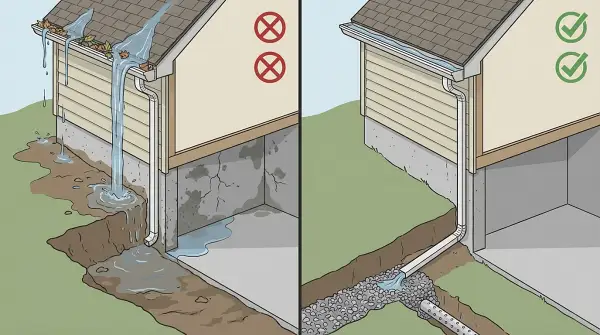
Your roof sheds hundreds of gallons of water during a heavy rain. If that water isn’t routed away, it will saturate the soil next to your foundation.
Clean and Repair Gutters
Remove leaves and debris from your gutters at least twice a year, and fix any leaks or sags. Properly sized gutters are essential for handling heavy rainstorms. Clogged or broken gutters allow water to overflow directly onto the ground near your foundation. See Downspout Discharge Issues for more details on managing roof runoff.
Extend Downspouts
Downspouts should discharge at least six to ten feet away from your foundation. Use rigid or flexible extensions to carry water out to a downward slope or into a rain garden. Short downspouts dump water right back into the soil next to the house, which can cause foundation problems.
Regrade Soil and Improve Yard Slope
The ground around your home should slope away so that rain and melting snow naturally drain outward.
Create a Proper Slope
If the soil has settled near the foundation, add fill to create a gentle slope of about six inches drop over ten feet. This simple regrading redirects water away from the house instead of letting it pool next to the wall.
Avoid Mulch Against the House
Organic mulch and wood chips absorb water and hold it against the foundation. Use gravel or river rock along the perimeter instead. This keeps moisture levels lower next to the house and discourages pests.
Maintain a Siding Gap
Keep soil and landscaping at least a few inches below the bottom of your siding. This prevents moisture from wicking into the structure and makes it harder for insects to invade. For a deeper look at grading problems, read Poor Grading Around Foundation and Soil Saturation & Expansive Clay.
Create Surface Drainage Features
Sometimes water needs a little guidance. Surface drainage systems help direct runoff away from the foundation
Use Swales and Shallow Ditches
Install Catch Basins and Trench Drains
In low spots, catch basins collect water and route it through underground piping. Trench drains installed along driveways or patios intercept water before it flows toward the foundation.
Incorporate Rain Gardens and Dry Creek Beds
Rain gardens and dry creek beds are attractive ways to slow down and absorb runoff. They hold water briefly and release it slowly into the soil, keeping it away from your home. These surface solutions complement proper grading and help keep water flowing in the right direction. See Surface Runoff & Yard Drainage
for ideas.
Consider Subsurface Drainage
If your yard stays wet despite gutters, grading and surface drains, subsurface options may be necessary.
French Drains
A French drain consists of a perforated pipe installed in a gravel‑filled trench. It captures water moving through the soil and carries it to a downhill outlet, storm drain or dry well. Proper installation requires the trench to slope away from the house so water flows naturally.
Curtain Drains
Foundation Drains
Installed at the base of the foundation footings, foundation drains (or drain tile) are often part of new construction. They collect water right at the footing level and connect to a sump pump or a daylight outlet. Because installation involves excavation and precise slopes, it’s usually best to hire a professional. For more on these systems, read How Do Foundation Drains Work? and What Is a Foundation Drain System?
Improve Hardscape and Landscaping
Your roof sheds hundreds of gallons of water during a heavy rain. If that water isn’t routed away, it will saturate the soil next to your foundation.
Choose Permeable Materials
Replace solid concrete or asphalt near the foundation with permeable pavers, gravel paths or stepping stones. These materials let rain soak into the ground instead of running straight toward the house.
Ensure Proper Slopes
Make sure patios and walkways slope away from the foundation. Even a slight tilt in the wrong direction can direct water toward the basement.
Keep Plantings Away From the Foundation
Shrubs, trees and raised flower beds hold moisture against the foundation and their roots can interfere with drainage. Maintain a clear perimeter or plant in well‑drained beds at least a few feet away from the house.
Interior Drainage and Sump Pumps
If you’ve taken every exterior step and still have water intrusion, interior drainage is the last line of defense.
Interior Drain Tile
Interior drain tile is installed under the basement floor along the inside perimeter. It collects water that seeps through walls or floors and routes it to a sump basin.
Sump Pump Systems
A sump pump lifts collected water out of the basin and discharges it through a pipe to the yard or a dry well. These systems are especially useful in areas with high water tables or hydrostatic pressure and can be added without major exterior excavation.
Common Mistakes to Avoid
- Ignoring gutters. Clogged or missing gutters dump hundreds of gallons of water right next to your foundation.
- Digging trenches without proper materials. A trench without gravel or pipe will quickly collapse and hold water.
- Channeling water toward the house. Downspouts that discharge near the foundation or sloped landscaping that directs water inward make drainage problems worse.
- Overlooking wet crawl spaces or musty odors. Damp smells and visible mold are signs of ongoing moisture problems. See Musty Smell or Damp Basement for more.
Avoiding these pitfalls will save you time, money and frustration.
When to Call a Professional
If you’ve tried grading, gutters and surface drains but still have standing water, it’s time to consult an expert. Waterproofing contractors and drainage engineers can evaluate your property, identify underground obstructions and design the right solution. They may recommend a combination of exterior French drains, foundation drains, sump pumps or crawl space encapsulation. If you’re unsure whether you need professional help, read Do I need a professional.
.
Related Questions
Homeowners researching basement moisture often explore related questions about how water behaves around foundations.
Frequently Asked Questions About Improving Foundation Drainage
What is the easiest way to improve drainage around a foundation?
Can poor drainage damage a foundation over time?
How do I know if my drainage improvements are working?
Are French drains always necessary?
Should drainage improvements start inside or outside the home?
In many situations, it makes sense to address exterior drainage first because it helps reduce the amount of water reaching the foundation. Interior systems may still be useful when moisture continues to enter despite exterior improvements.
Home › Foundation Water Problem Questions › How Can I Improve Drainage Around My Home’s Foundation?