
Foundation Water Problems in Florida
Many foundation water problems in Florida begin with persistent moisture surrounding a home. High groundwater levels, frequent heavy rainfall, hurricanes, poor drainage and localized flooding can keep soils saturated for extended periods, increasing the amount of water that collects around foundations.
Because Florida’s water table is often shallow and much of the state experiences heavy seasonal rainfall, managing how water moves across and away from a property is an important part of protecting a home’s foundation. Understanding how water behaves around your home is the first step toward identifying potential problems before they become more serious.
Florida Foundation Water Problems at a Glance
Why Florida Homes Are Especially Vulnerable
Florida’s climate, soils and geography create conditions where water often remains around a home’s foundation longer than in many other parts of the country. High groundwater levels, frequent heavy rainfall, flat terrain and seasonal weather patterns can all influence how water moves through the soil and around a foundation. Understanding these conditions helps homeowners recognize why foundation water problems develop and how they may differ across the state.
High Groundwater Levels
Many areas of Florida have a naturally shallow water table, meaning groundwater can remain close to the surface throughout much of the year. After prolonged rainfall or during periods of high groundwater, soils surrounding a foundation may stay saturated for extended periods. Persistent moisture can increase hydrostatic pressure, contribute to water intrusion and make drainage more difficult.
- Learn more about high groundwater and foundations
- Understand the difference between surface water and groundwater
Heavy Rainfall and Hurricanes
Florida receives significant annual rainfall and is frequently affected by tropical storms and hurricanes. Intense rain can quickly overwhelm drainage systems, allowing water to collect around foundations. Repeated saturation over time increases the importance of proper grading, roof runoff management and drainage maintenance.
Flat Terrain and Slow Drainage
Much of Florida’s landscape is relatively flat, which can slow the natural movement of surface water away from a home. Without adequate grading or drainage improvements, rainwater may pond near the foundation instead of flowing away. This prolonged exposure to moisture can increase the likelihood of foundation-related water problems.
- Learn more about poor grading around foundations
- Understand why water pools near foundations
Seasonal Water Table Changes
Groundwater levels often fluctuate throughout the year as rainfall patterns change. During wetter months, rising groundwater and saturated soils can alter how water behaves around a foundation. Homes that remain dry during one season may experience standing water or increased moisture after periods of prolonged rain.
- Learn more about high groundwater table foundations
- Explore common foundation water problems
| Category | Florida |
|---|---|
| Primary moisture concern | Persistent moisture |
| Dominant soil | Sandy soils |
| Typical weather | Heavy rainfall & hurricanes |
| Common foundation | Slab-on-grade |
| Primary water source | High groundwater & rainfall |
Why This Matters
Unlike many parts of the country where foundation problems are driven by repeated drying and shrinking, Florida homes are more often affected by persistent moisture. Understanding how groundwater, rainfall and drainage interact around your home is the first step toward identifying the true source of foundation water problems.
How Water Affects Foundations in Florida
Florida’s climate often exposes foundations to prolonged moisture rather than repeated drying and shrinking. As water collects around a home, it can increase pressure against foundation walls, saturate surrounding soils and change how moisture moves through the structure. Understanding these processes helps homeowners recognize why water problems develop and why addressing the source is often more effective than treating the symptoms.
Water Collecting Around the Foundation
When rainwater, irrigation or poor drainage allows water to collect around a home’s foundation, the surrounding soil can remain saturated long after a storm has passed. Standing water and consistently wet soils increase the amount of moisture in contact with the foundation, making it easier for water to enter through cracks, joints or other openings.
Learn more about:
Hydrostatic Pressure
As groundwater rises or soils remain saturated, water pressure can build against below-grade foundation walls and floors. This hydrostatic pressure can force moisture through small cracks, construction joints and porous concrete, contributing to damp walls, water intrusion and other foundation water problems.
Learn more about:
Long-Term Moisture Exposure
In many parts of Florida, foundations are exposed to moisture for extended periods rather than short-term wetting and drying cycles. Constant exposure to damp soils can contribute to concrete deterioration, surface staining, efflorescence and moisture intrusion over time if drainage problems are not corrected. Managing water around the foundation helps reduce prolonged contact between saturated soils and the structure.
Learn more about:
Foundation Settlement
Although Florida’s sandy soils generally drain more quickly than expansive clay, settlement can still occur when soils are washed away, become unevenly saturated or are affected by localized drainage problems. Changes beneath portions of a foundation may allow sections of the structure to settle at different rates, leading to cracks and other signs of movement.
Learn more about:
Not sure where the water is coming from?
Use our Drainage Problem or Foundation Problem Assessment to better understand the likely cause of your home’s symptoms and determine which type of professional may be most appropriate.
Common Signs of Foundation Water Problems
Foundation water problems often develop gradually, with small warning signs appearing before more significant damage occurs. In Florida, persistent moisture, heavy rainfall and high groundwater can produce both interior and exterior symptoms that indicate water is affecting the foundation or surrounding soils. Recognizing these signs early can help homeowners investigate the underlying cause before conditions become more serious.
Interior Warning Signs
Not every foundation water problem begins with obvious structural damage. Inside the home, homeowners may notice wall or floor cracks, doors and windows that become difficult to open, uneven floors, moisture stains, damp flooring or persistent musty odors. While these symptoms do not always indicate foundation damage, they can suggest that water is influencing the structure and should be investigated.
Learn more about:
Exterior Warning Signs
Many foundation water problems become visible outside the home before they appear indoors. Standing water, poor drainage, soil erosion, cracks in the foundation, downspout discharge problems or areas where water repeatedly collects near the structure can all indicate that moisture is not moving away from the home properly. Identifying these conditions early may help reduce the risk of more significant foundation problems over time.
Learn more about:
| Natural Causes | Property-Related Causes |
|---|---|
| Heavy rainfall | Poor grading |
| High groundwater | Roof runoff |
| Tropical storms | Irrigation |
| Seasonal water table changes | Plumbing leaks |
Remember:
Many warning signs associated with foundation water problems can have more than one cause. Cracks, damp areas, standing water and uneven floors do not automatically indicate structural damage. Looking at the overall pattern of symptoms often provides a better understanding of how water is affecting the home.
Common Causes of Foundation Water Problems in Florida
Florida’s climate and geography expose homes to several sources of excess moisture throughout the year. While heavy rainfall and high groundwater are common contributors, everyday issues such as poor drainage, roof runoff, irrigation and plumbing leaks can also allow water to collect around a foundation. Identifying the source of excess moisture is often the first step toward preventing more serious foundation water problems.
Heavy Rainfall
Florida receives frequent rainfall throughout the year, with intense storms capable of delivering large amounts of water in a short period. When the ground becomes saturated, excess rainwater may collect around the foundation if drainage systems cannot move it away efficiently. Repeated saturation can increase the likelihood of foundation water problems over time.
Learn more about:
High Groundwater
Many areas of Florida naturally have shallow groundwater levels. During wet seasons or after prolonged rainfall, groundwater may rise closer to the foundation, keeping surrounding soils saturated and increasing hydrostatic pressure. Even without visible standing water, elevated groundwater can contribute to long-term moisture problems.
Learn more about:
Poor Grading
Proper grading helps direct water away from a home’s foundation. When the ground slopes toward the structure or settles over time, rainwater may remain near the foundation instead of draining away. This prolonged exposure increases moisture around the home and can contribute to foundation movement or water intrusion.
Learn more about:
Roof Runoff and Gutters
Gutters and downspouts are designed to collect roof runoff and move it safely away from the home. Clogged gutters, damaged downspouts or discharge points that empty next to the foundation can concentrate large amounts of water in one area, increasing the risk of saturated soils and foundation water problems.
Learn more about:
Irrigation Systems
Florida landscapes often require irrigation, particularly during drier periods. Sprinklers aimed toward the foundation or irrigation systems with leaks can repeatedly saturate the soil surrounding a home. Over time, excessive watering may contribute to unnecessary moisture around the foundation, even when rainfall is limited.
Learn more about:
Plumbing Leaks
Underground plumbing leaks, leaking water lines and damaged drain pipes can introduce moisture beneath or around a home’s foundation. Because these leaks often develop gradually, they may remain unnoticed until signs such as foundation movement, damp areas or unusually high water bills begin to appear.
Learn more about:
Foundation Types Found in Florida
Most homes in Florida are built on slab-on-grade foundations, but raised foundations, crawlspaces and elevated coastal homes are also found throughout the state. Each foundation type interacts with water differently, making it important to understand how moisture, drainage and groundwater can affect the structure beneath your home.
Slab-on-Grade Foundations
Slab-on-grade foundations are the most common foundation type in Florida. Because the concrete slab sits directly on the ground, water collecting around the home’s perimeter can increase moisture beneath and beside the foundation. Proper grading, drainage and runoff management help reduce prolonged soil saturation around the slab.
Learn more about:
Raised Foundations and Crawlspaces
Some Florida homes are built on raised foundations with crawlspaces that improve ventilation and provide access to plumbing and utilities. While crawlspaces reduce direct soil contact beneath the home, poor drainage or excessive moisture can still create damp conditions, wood deterioration and mold growth if water is allowed to collect beneath the structure.
Learn more about:
Elevated Coastal Homes
Homes in flood-prone coastal areas are often elevated above grade to reduce flood risk and comply with local building requirements. Although elevation helps protect living spaces from floodwaters, these homes still rely on proper drainage around support systems, foundations and pilings. Heavy rainfall, storm surge and erosion can all influence long-term foundation performance.
Learn more about:
Foundation Tip:
Although slab-on-grade foundations are most common in Florida, raised foundations, crawlspaces and elevated coastal homes each respond differently to water. Understanding your home’s foundation type helps identify the most effective drainage and moisture management strategies.
Florida Regions and Foundation Water Risks
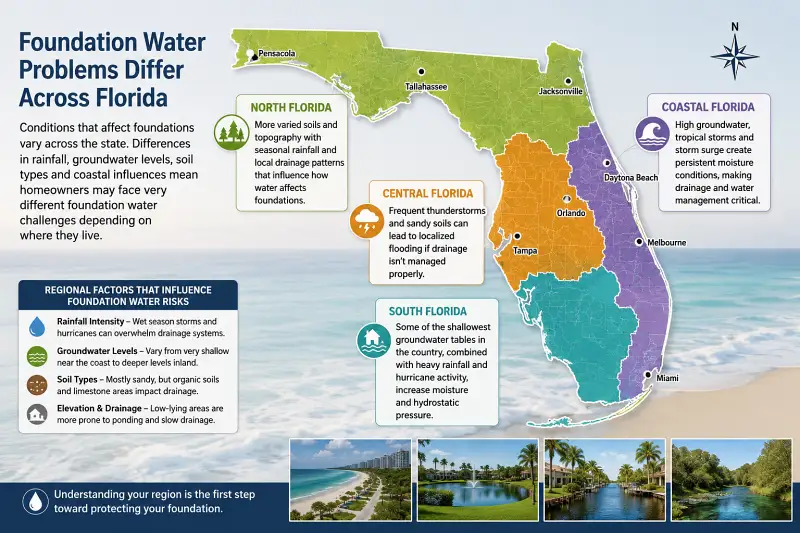
Although many foundation water problems share similar warning signs, the conditions that create them vary across Florida. Differences in groundwater levels, rainfall patterns, soil types and coastal influences mean homeowners in one part of the state may experience very different foundation water challenges than those in another. Understanding these regional differences helps explain why drainage issues and foundation water problems are not the same everywhere in Florida.
While sandy soils are common throughout much of the state, groundwater depth, elevation and weather patterns vary considerably. Coastal communities often contend with high groundwater and storm surge, while inland areas experience different drainage conditions and seasonal rainfall patterns. As Foundation Water Guide expands its Florida coverage, each region and major metropolitan area will include more detailed information about local conditions, common foundation water problems and practical drainage considerations.
Coastal Florida
Homes along Florida’s Atlantic and Gulf coasts are frequently exposed to high groundwater levels, tropical storms and occasional storm surge. Even outside of hurricane season, coastal communities often experience soils that remain damp for extended periods, making drainage and water management especially important around foundations.
Learn more about:
Central Florida
Central Florida experiences frequent summer thunderstorms, sandy soils and localized flooding during heavy rainfall events. Although sandy soils generally drain more quickly than clay, intense rainfall can still overwhelm drainage systems and allow water to collect around foundations if runoff is not managed properly.
Learn more about:
South Florida
South Florida is characterized by one of the shallowest groundwater tables in the country. Combined with frequent rainfall and hurricane activity, this creates persistent moisture conditions that can increase hydrostatic pressure and prolong soil saturation around foundations.
Learn more about:
North Florida
North Florida generally experiences more varied topography and soil conditions than much of the peninsula. While heavy rainfall remains an important consideration, local drainage patterns, seasonal weather and changing soil conditions can influence how water behaves around foundations from one community to the next.
Learn more about:
Regional Foundation Water Risks
| Region | Primary Risk |
|---|---|
| Coastal Florida | High groundwater & storm surge |
| Central Florida | Heavy rainfall & localized flooding |
| South Florida | Shallow water table & prolonged saturation |
| North Florida | Variable soils & drainage conditions |
Foundation water problems vary across Florida
The same symptom may have different underlying causes depending on where you live. Coastal groundwater, inland drainage, local rainfall patterns and regional soil conditions all influence how water behaves around a home’s foundation.
Reducing Foundation Water Risk
While Florida’s climate cannot be controlled, many foundation water problems can be reduced by managing how water moves around the home. Maintaining proper drainage, directing roof runoff away from the foundation and addressing moisture issues early can help reduce prolonged soil saturation and lower the risk of water-related foundation problems.
Improve Drainage Around the Home
The ground surrounding a home should encourage water to flow away from the foundation rather than collect beside it. Keeping swales, yard drains and drainage systems clear, while correcting areas where water regularly ponds, helps reduce prolonged moisture around the structure.
Learn more about:
Manage Roof Runoff
Gutters and downspouts play an important role in protecting foundations from excessive moisture. Regularly cleaning gutters and ensuring downspouts discharge water well away from the home can help prevent concentrated runoff from saturating soils around the foundation.
Learn more about:
Monitor Irrigation
Landscape irrigation should provide water for plants without continuously soaking the soil around the foundation. Periodically checking sprinkler coverage and repairing leaking irrigation components can help maintain more consistent soil moisture and reduce unnecessary water exposure.
Learn more about:
Watch for Changing Conditions
Foundation water problems often begin with subtle changes rather than obvious damage. New cracks, recurring standing water, doors or windows that begin sticking, or areas that remain damp after rainfall may indicate changing conditions that deserve closer attention. Identifying these warning signs early can make it easier to determine the underlying cause before more significant problems develop.
Learn more about:
Concerned about your home’s condition?
Explore Do I Need a Professional? to learn when monitoring is appropriate and when a professional evaluation may help identify the underlying cause.
Key Takeaways
- Persistent moisture is Florida’s biggest foundation water risk.
- High groundwater and heavy rainfall keep soils saturated.
- Water movement matters more than any single symptom.
- Good drainage helps protect your foundation.
- Find the cause before choosing the solution.
Where To Go Next
Whether you’re trying to identify the cause of a foundation water problem or learn more about how soil and water affect your home, these resources can help you take the next step.
If you’re not sure what’s causing the problem:
If you want to understand how water affects foundations
If you’re investigating common water-related problems
If you’ve noticed foundation movement
Official Florida Resources
The following organizations provide trusted information about Florida’s geology, groundwater, soils, weather and foundation-related conditions. These public resources can help homeowners better understand how high groundwater, sandy soils, heavy rainfall and regional water conditions may affect residential foundations throughout Florida.
Common Florida Foundation Water Questions
Florida’s unique geology, high groundwater levels and frequent heavy rainfall often lead homeowners to similar questions about drainage, foundation moisture and water management. The guides below provide more detailed answers to some of the most common foundation water concerns affecting homes throughout Florida.
Frequently Asked Questions
Why are foundation water problems common in Florida?
Florida’s high groundwater levels, frequent rainfall, flat terrain and tropical weather can keep soils saturated for extended periods. These conditions increase the likelihood of water collecting around foundations if drainage is not properly managed.
Can Florida's high water table damage a foundation?
A high water table can keep the soil around a foundation saturated and increase hydrostatic pressure. While groundwater alone does not always cause damage, prolonged moisture can contribute to water intrusion and other foundation-related problems.
Are slab foundations more common than basements in Florida?
Yes. Most homes in Florida are built on slab-on-grade foundations because of the state’s high groundwater levels and soil conditions. Crawlspaces and elevated homes are also found in some areas, while basements are relatively uncommon.
Can hurricanes cause foundation problems?
Does sandy soil prevent foundation water problems?
How can I reduce foundation water risk in Florida?
When should I be concerned about standing water near my foundation?
How do I know if my problem is drainage or the foundation itself?
Home › Foundation Water Problems by State › Florida