
Water in Basement: What It Usually Means and What to Do Next
Finding water in your basement can feel alarming. In many cases, the cause is manageable – but the source isn’t always obvious.
Water may appear after heavy rain, snowmelt, plumbing leaks, or even during humid weather. The key is understanding how the water is entering, and whether it signals a drainage issue, hydrostatic pressure, or early structural impact.
This guide explains what water in a basement typically means, and what steps homeowners usually take next.
What Does Water in a Basement Mean?
Water in a basement usually means moisture is finding a way toward or through the foundation. Common causes include surface runoff, poor grading, saturated soil, groundwater, drainage problems, or openings where water can enter.
Where the water appears and when it happens can help narrow down the likely source.
Where Is the Water Appearing?
The location of water inside a basement often provides the first clue about its source.
Standing Water on the Basement Floor
If water is collecting on the basement floor after rain or snowmelt, the issue is often tied to how water is being directed around the outside of the home.
Explore the most common exterior causes below:
Occasional pooling may be manageable. Repeated flooding suggests a larger drainage imbalance that should be evaluated.
Water at the Wall–Floor Joint
One of the most common entry points for basement water is the seam where the foundation wall meets the basement floor.
This joint is a natural construction connection. Under hydrostatic pressure (when groundwater pushes upward against the foundation), water may enter at this seam. Many interior waterproofing systems are designed specifically to manage this type of intrusion.
Water at this joint often:
Appears seasonally
Follows extended rainfall
Occurs even when no visible wall cracks are present
Water Seeping Through Foundation Walls
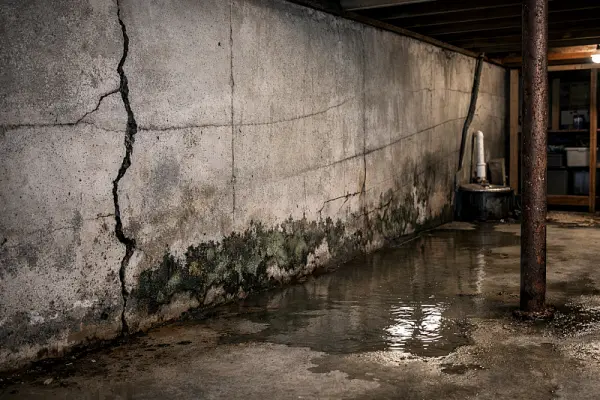
Moisture that travels directly through the wall surface usually indicates saturated soil pressing laterally against the foundation.
Over time, soil that holds water — especially clay — can expand and create sustained pressure. That pressure forces moisture through porous concrete or small hairline cracks. This may show up as damp streaks, mineral deposits (efflorescence), or darker patches on the wall.
Persistent wall seepage may increase the risk of structural issues such as bowing or long-term deterioration if left unmanaged.
| Sign | Likely meaning | Action |
| Water after heavy rain | Surface drainage issue | Check gutters, downspouts, grading |
| Water at wall-floor joint | Hydrostatic pressure | Evaluate drainage + interior system |
| Damp streaks/efflorescence | Saturated wall pressure | Inspect exterior drainage |
| Widening cracks | Possible movement | Professional evaluation |
| Bowing wall | Structural stress | Urgent inspection |
In many homes, early signs appear before visible flooding. Identifying the pattern helps determine whether the issue is minor drainage or a more serious structural concern.
Why Water Enters a Basement
Surface Water Overload
Surface water problems are often the simplest to correct. When rainwater is not directed away from the home due to issues with surface runoff and yard drainage, it collects near the foundation and gradually seeps downward.
Common causes include:
- Short or disconnected downspouts
- Clogged gutters
- Negative grading that slopes toward the house
- Water pooling near foundation walls
If surface water is not being directed away from the home, these exterior drainage issues are often the first areas to evaluate:
In many cases, correcting exterior drainage significantly reduces interior water problems.
Surface drainage issues are responsible for a significant portion of basement water problems, especially when grading or downspouts direct water toward the home.
Groundwater and Hydrostatic Pressure
Groundwater behaves differently from surface runoff. When soil becomes saturated below ground level, water exerts upward and lateral pressure against the foundation. This is known as hydrostatic pressure. Groundwater pressure increases when high groundwater conditions keep soil saturated around the foundation.
Hydrostatic pressure can:
Push water through the wall–floor joint
Exploit small cracks
Force moisture through porous concrete
Homes built in areas with high water tables or clay-heavy soils are particularly susceptible.
Hydrostatic pressure is estimated to contribute to roughly 60–70% of basement water intrusion cases.
Foundation Cracks or Structural Gaps
Concrete naturally shrinks as it cures. Over time, foundations may also shift due to settlement. These movements can create foundation cracks or small structural gaps that allow water to pass through.
Not all cracks indicate structural danger. However, widening cracks or cracks accompanied by wall movement should be monitored closely. Water intrusion through cracks can accelerate deterioration if ignored.
Common Basement Water Problems and How They’re Fixed
The cause of basement water determines the most effective solution. The table below compares common problem types, what causes them, and the typical repair approach.
| Problem Type | Likely Cause | Best Fix | Avg Cost | Failure Risk |
| Wall seepage | Hydrostatic pressure | Interior drain tile | $5k–$12k | Medium |
| Floor cracks | Groundwater intrusion | Sump pump system | $3k–$8k | Low |
| Window leaks | Poor sealing/drainage | Window well + sealing | $500–$2k | Low |
| Surface runoff | Poor grading | Exterior drainage fixes | $1k–$5k | Medium |
In many homes, interior drainage systems resolve up to 85–90% of non-structural basement water issues when properly installed.
“Most homeowners assume the visible crack or puddle is the main problem, but basement water usually starts with pressure, drainage, or soil conditions outside the foundation.”
— Foundation Water Guide Editorial Team
Is Water in the Basement Serious?
If you’re unsure how serious your situation is, it may help to explore related conditions and warning signs:
- Foundation cracks and what they may indicate
- Wall bowing and structural stress signs
- Water pooling near the foundation
You can also explore general guidance on evaluating severity and next steps:
In some homes, the issue begins below the living space as crawl space moisture problems that gradually affect basement conditions.
In many homes, interior drainage systems resolve up to 85–90% of non-structural basement water issues when properly installed.
What Should You Do If You Find Water in Your Basement?
Most homeowners follow a logical progression when addressing basement water:
-
Inspect gutters and downspouts to ensure proper discharge away from the foundation.
-
Check grading around the home to confirm soil slopes away from the structure.
-
Monitor visible cracks for changes in width or length.
-
Consult a professional if water continues despite exterior corrections.
A professional evaluation typically involves determining whether the issue is surface drainage, groundwater pressure, or structural vulnerability.
DIY fixes may temporarily reduce moisture, but recurring basement water problems persist in up to 40–50% of cases without addressing the underlying cause.When Basement Water Fixes Don’t Work
In many homes, common solutions resolve basement water problems. However, some conditions require a different approach or more extensive repairs.
- Structural cracks: Water entering through large or shifting cracks may indicate foundation movement and often requires structural repair.
- Poor exterior grading: If the ground slopes toward the home, interior systems alone may not prevent recurring moisture.
- High groundwater levels: In areas with persistent groundwater pressure, multiple systems (interior and exterior) may be needed.
- Foundation settling: Movement in the structure can create new entry points for water over time.
In these situations, a more comprehensive evaluation is usually needed to identify the primary cause and prevent recurring issues.
Download the Basement Water Causes, Solutions & Cost Guide
Get a homeowner-friendly breakdown of common causes, potential solutions, and general cost ranges for addressing basement water problems.
Key Takeaways
- Water in a basement often develops when exterior drainage conditions allow moisture to accumulate near foundation walls.
- Soil saturation and heavy rainfall can increase moisture pressure against below-grade walls.
- Early signs may include damp spots, mineral deposits, or musty odors.
- Identifying exterior drainage conditions may help explain recurring basement moisture.
Where To Go Next
If you want to understand how water reaches the foundation:
If you want to explore related interior moisture problems:
If water intrusion appears frequent or worsening:
If you want to understand foundation water problems where you live:
Frequently Asked Questions About Water in Basements
What is the most common cause of water in a basement?
The most common cause of water in a basement is poor exterior drainage. When rainwater is not directed away from the home through proper grading, gutters, and downspouts, it can collect near the foundation and gradually seep inside. In other cases, hydrostatic pressure from saturated soil forces groundwater through small cracks or construction joints in the foundation.
Is water in the basement always a structural problem?
No. Occasional dampness or minor seepage does not automatically indicate structural damage. However, repeated pooling, widening cracks, bowing walls, or shifting floors may signal underlying foundation stress. The severity depends on the source of the water and whether the foundation is moving or deteriorating over time.
Can I fix basement water issues myself?
Some surface drainage issues can be corrected by extending downspouts, improving grading, or clearing clogged gutters. However, if water continues to enter despite exterior adjustments — or if structural symptoms such as cracks or wall movement are present — a professional evaluation is typically recommended to identify the root cause.
Home › Interior Water Problems › Water In Basement