
Bowing or Leaning Foundation Walls Caused by Water
Bowing or leaning foundation walls are often associated with sustained lateral pressure against below-grade structures. While multiple factors can contribute to wall movement, prolonged exposure to saturated soil and water pressure is a common underlying cause.
Understanding how water interacts with soil and foundation materials helps explain why some walls begin to shift inward over time.
What Is Wall Bowing?
Wall bowing occurs when foundation walls begin to curve or lean inward due to sustained pressure from the surrounding soil. This movement most often affects basement walls and may develop gradually as external forces push against the structure.
One common source of this pressure is saturated soil around the foundation. When soil becomes filled with water, the weight and outward pressure against foundation walls can increase significantly. Over time, this pressure may contribute to inward movement or visible bending of the wall surface.
Wall bowing is one type of foundation damage that may develop when soil pressure and moisture conditions place sustained stress on foundation walls.
Understanding Wall Bowing at a Glance
Foundation wall bowing occurs when lateral pressure from surrounding soil exceeds a wall’s ability to resist inward movement. Water-saturated soil is one of the most common contributors because it increases both soil weight and hydrostatic pressure against below-grade walls. Early warning signs may include horizontal cracks, inward wall curvature, separation at floor joints, or doors and windows that begin sticking nearby. While minor bowing can sometimes remain stable for a period of time, continued movement may indicate increasing structural stress and should not be ignored.
Foundation Wall Bowing: Key Facts
| Question | General Answer |
|---|---|
| What causes wall bowing? | Wall bowing is often associated with sustained lateral pressure from saturated soil, hydrostatic pressure, expansive soils, or other conditions that increase stress against below-grade walls. |
| What are common warning signs? | Horizontal cracks, inward wall curvature, separation at floor joints, and nearby sticking doors or windows may indicate movement. |
| Is wall bowing always a structural emergency? | Not necessarily. Some conditions remain stable for a period of time, while others may progressively worsen depending on the cause and extent of movement. |
| Can drainage problems contribute? | Yes. Saturated soil and poor drainage conditions can increase lateral pressure against foundation walls. |
| When should a wall be evaluated? | Visible movement, widening cracks, or signs of ongoing progression may justify closer evaluation by a qualified professional. |
Why Foundation Walls Bow or Lean
Bowing walls are one of several structural patterns described within broader foundation damage conditions. While vertical loads are typically well supported, lateral soil pressure can create sustained inward force against below-grade walls.
When soil becomes saturated, it becomes heavier and exerts increased force against basement or crawl space walls. Conditions related to soil saturation and expansive clay can significantly increase outward pressure against the wall.
Over time, repeated seasonal cycles of saturation and drying may gradually push the wall inward.
How Water Pressure Contributes to Wall Movement
Hydrostatic pressure develops when groundwater accumulates along a foundation wall. his pressure increases when high groundwater conditions keep surrounding soil consistently saturated.
If exterior drainage systems are insufficient or improper grading around the foundation directs water toward the structure, the wall may experience sustained lateral stress.
Unlike isolated cracking, bowing often reflects ongoing pressure rather than a single event.
“Foundation wall bowing is often a visible symptom of conditions developing outside the wall itself. Water management, drainage patterns, and soil behavior frequently play an important role in how pressure builds against below-grade structures.”
— Foundation Water Guide Editorial Team
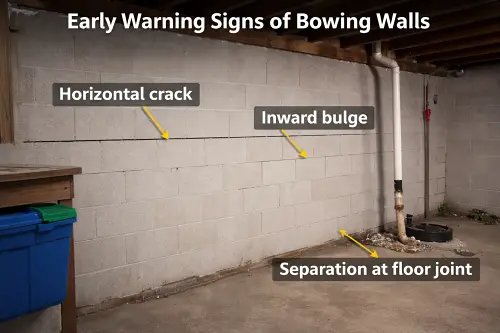
Early Warning Signs of Bowing Walls
Early signs may include horizontal cracking, which may also appear alongside developing foundation cracks in areas experiencing sustained pressure.
Horizontal cracking
Slight inward curvature
Separation at floor joints
Sticking doors or windows above the affected area
In some cases, inward wall movement may occur alongside uneven floors or settlement from water, particularly when soil conditions shift unevenly.
Comparing Wall Bowing and Foundation Cracks
Foundation cracks and wall bowing can both be associated with moisture-related soil movement, but they do not always represent the same type of condition. Understanding the differences can help homeowners recognize when additional investigation may be appropriate.
| Condition | Often Associated With | Common Visible Sign | General Level of Concern |
|---|---|---|---|
| Hairline Vertical Crack | Concrete curing or minor settlement | Narrow vertical crack | Often low, but should be monitored |
| Horizontal Crack | Lateral soil pressure | Horizontal separation in wall surface | May deserve closer evaluation |
| Bowing Wall | Hydrostatic pressure or saturated soil conditions | Visible inward wall movement | Potentially significant depending on severity |
| Leaning Wall | Progressive movement or ongoing pressure | Wall no longer appears vertical | Often warrants professional assessment |
When Bowing Becomes Structural Risk
Minor deflection may remain stable for extended periods. However, increasing inward displacement, widening horizontal cracks, or visible misalignment may indicate structural impact.
When wall movement continues, structural reinforcement or pressure-relief strategies may become necessary.
Addressing exterior water behavior early can often reduce further stress.
What Typically Happens Next
Evaluation typically involves measuring wall deflection and identifying contributing moisture conditions.
Corrective approaches may include improving drainage, relieving hydrostatic pressure, or reinforcing the affected wall depending on severity.
The appropriate path depends on the extent of movement and the role water plays in the condition.
Key Takeaways
- Wall bowing occurs when foundation walls begin to curve or lean inward under pressure from surrounding soil.
- Saturated soil can increase lateral pressure against basement walls.
- Hydrostatic pressure and soil expansion are common contributors to wall movement.
- Visible bowing may indicate sustained stress affecting the structural integrity of the wall.
Where To Go Next
If foundation walls are beginning to bow or lean inward, these pages can help explain how water pressure and soil conditions contribute to structural movement and what related warning signs to review:
If you want to understand conditions that create pressure against foundation walls:
High groundwater table near foundations
Soil saturation and expansive clay
Surface runoff and yard drainage
If other structural symptoms are appearing:
Foundation cracks
Settlement from water
Spalling and deterioration
If wall movement appears to be progressing:
When foundation water problems may be serious
Do I need a professional inspection?
How professionals diagnose water problems
Common mistakes homeowners make
Frequently Asked Questions About Bowing Foundation Walls
Can water alone cause foundation walls to bow?
Water itself does not push directly on walls, but saturated soil creates hydrostatic pressure and increases lateral force. Over time, repeated moisture buildup and poor drainage can significantly increase the stress placed on below-grade walls.
Are bowing foundation walls always a structural emergency?
Not always. Mild inward deflection may remain stable for extended periods. However, increasing curvature, widening horizontal cracks, or continued movement over time may indicate structural risk and warrant professional evaluation.
What are the earliest signs that a wall may begin bowing?
Early signs often include horizontal cracking, minor inward curvature, or separation at wall-floor joints. In some cases, doors and windows above the affected area may begin sticking due to subtle structural movement.
Does drainage affect foundation wall movement?
Yes. Poor drainage can contribute to soil saturation around a foundation, increasing the pressure placed against below-grade walls. Over time, repeated exposure to saturated soil and hydrostatic pressure may contribute to wall movement in susceptible structures.
How do I know if wall bowing is getting worse?
Home › Foundation Damage › Wall Bowing