
Foundation Cracks Caused by Water
Foundation cracks are one of the most common signs that water may be affecting a home’s structural system. While not all cracks indicate serious damage, water-related movement in soil and concrete can gradually create stress that leads to visible separation.
Understanding how and why cracks form helps homeowners interpret what they’re seeing without jumping to worst-case conclusions.
What Are Foundation Cracks?
Foundation cracks are visible separations that develop in concrete walls, slabs, or foundation surfaces. While small cracks can occur naturally as concrete cures and settles, others may form when the foundation experiences movement, pressure, or changes in soil conditions.
Water around a foundation can influence how cracks develop over time. Soil saturation, hydrostatic pressure, or shifting soil may place stress on foundation walls or slabs, sometimes contributing to cracking or widening existing fractures.
Foundation cracks are one of several types of foundation damage that may appear when moisture conditions or soil movement affect a home’s structural support.
Why Water Leads to Foundation Cracks
Water changes the behavior of soil. When soil becomes saturated, it expands. When moisture-sensitive soil dries, it can shrink or contract. This cycle is often influenced by conditions related to soil saturation and expansive clay, which can increase pressure on foundation walls and footings.
In clay-heavy soils, this movement can be significant. Hydrostatic pressure, the force created by water pushing against below-grade walls, can increase when high groundwater conditions keep soil consistently wet.
Cracks are often the visible symptom of deeper soil movement rather than a failure of the concrete itself.
“Foundation cracks often develop gradually as soil moisture conditions change over time. In many cases, the crack itself is a visible sign of movement occurring beneath or around the foundation rather than a failure of the concrete alone.”
— Foundation Water Guide Editorial Team
Types of Cracks Associated With Moisture
Different crack patterns can reflect how water, soil movement, and pressure are interacting with a foundation. The direction, width, and location of a crack often provide insight into whether the issue is related to normal settlement, seasonal moisture changes, or sustained external pressure.
Vertical Cracks
While vertical cracks are often associated with normal settling, moisture conditions around the home can still influence how they develop over time.
Explore related conditions that may affect crack behavior:
If cracks appear to be widening or changing over time, it may help to review:
Horizontal Cracks
Horizontal cracks typically suggest lateral pressure against a wall. This is often linked to hydrostatic pressure or saturated soil pushing inward.
These conditions can develop when water builds up around the foundation due to poor drainage, heavy soil saturation, or limited relief for groundwater pressure.
If you’re seeing horizontal cracks, it may help to review the conditions that contribute to this type of pressure:
Because these cracks can indicate structural stress, they are often evaluated alongside:
Stair-Step Cracks
Stair-step cracks appear along mortar joints in block or brick foundations. They often reflect uneven soil movement and moisture-related expansion.
These patterns can develop when soil beneath or around the foundation shifts due to changes in moisture levels, especially in areas with expansive clay or inconsistent drainage.
If you’re seeing stair-step cracks, it may help to review the underlying conditions that influence soil movement:
Because these cracks can vary in severity, they are often considered alongside:
Foundation Crack Severity Guide
Not all foundation cracks indicate the same level of concern. The location, size, pattern, and associated moisture conditions can provide clues about whether a crack is primarily cosmetic or may deserve closer evaluation. The table below offers a general overview of common crack types and the conditions often associated with them.
| Crack Type | Typical Cause | Water Risk | Structural Risk | Recommended Action |
|---|---|---|---|---|
| Hairline Vertical Crack | Concrete curing or normal settlement | Low | Low | Monitor periodically |
| Vertical Crack Wider Than 1/8″ | Settlement or moisture-related movement | Moderate | Moderate | Consider professional evaluation |
| Diagonal Crack | Uneven soil movement or settlement | Moderate | High | Foundation evaluation may be appropriate |
| Horizontal Crack | Hydrostatic pressure or wall movement | High | High | Prompt assessment recommended |
| Stair-Step Crack | Movement beneath masonry walls or footings | Moderate | High | Structural inspection may be warranted |
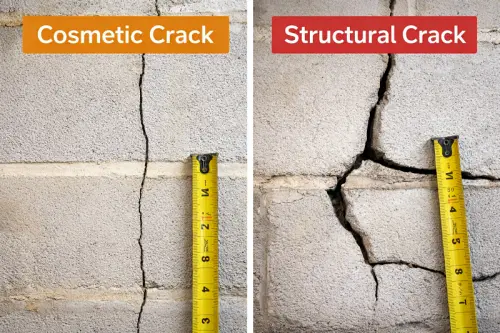
When Cracks Are Cosmetic vs Structural
Hairline cracks less than 1/8 inch wide are often cosmetic. They may form due to natural curing or minor seasonal movement.
However, widening cracks, displacement between sides of the crack, or cracks accompanied by wall bowing may signal structural impact. In some cases, these changes may also appear in areas experiencing settlement from water, particularly when soil moisture imbalance affects structural alignment.
The context of the crack matters more than the crack alone.
What Typically Happens Next
Cracks do not automatically mean failure. Many homes develop minor cracking without progressing into structural damage.
However, if water intrusion accompanies cracking, such as seepage, staining, or dampness, the underlying moisture source should be addressed.
Ignoring moisture-related movement allows pressure cycles to continue.
When to Seek Professional Evaluation
Professional evaluation is recommended when:
Cracks are wider than 1/4 inch
Walls show inward movement
Doors and windows begin sticking
Water actively enters through cracks
A qualified foundation or waterproofing professional can assess whether the issue is cosmetic, drainage-related, or structural.
Addressing water behavior early often prevents more extensive repairs later.
Key Takeaways
- Foundation cracks are openings or separations that form in concrete foundation walls or slabs.
- Some cracks occur naturally as concrete cures, settles, or experiences minor movement.
- Water pressure, soil movement, and saturated ground conditions can contribute to crack formation or widening.
- Monitoring crack patterns over time can help determine whether movement or moisture conditions are influencing the foundation.
Where To Go Next
If cracks are appearing in foundation walls or floors, these pages can help explain how water conditions may contribute to structural stress and what related signs to review:
If you want to understand what may be causing foundation pressure:
Poor grading around a foundation
Surface runoff and yard drainage
High groundwater table near foundations
If other structural symptoms are appearing:
Bowing foundation walls
Settlement from water
Spalling and deterioration
If cracks seem to be worsening:
When foundation water problems may be serious
Do I need a professional inspection?
How professionals diagnose water problems
Common mistakes homeowners make
Frequently Asked Questions About Foundation Cracks
Are hairline foundation cracks caused by water serious?
Hairline cracks are often cosmetic and may form due to natural concrete curing or minor seasonal soil movement. However, if moisture is consistently present, water-related expansion and contraction can gradually widen small cracks over time.
How wide does a crack need to be before it becomes structural?
Cracks wider than 1/4 inch, cracks that show displacement between sides, or cracks that continue to grow may indicate structural stress. Width alone is not the only factor — location and associated movement matter as well.
Can water pressure cause horizontal foundation cracks?
Yes. Hydrostatic pressure from saturated soil can push laterally against basement walls. Horizontal cracks are often associated with sustained external pressure and should be evaluated more carefully.
Do foundation cracks always mean foundation failure?
No. Many homes develop minor cracks that remain stable for decades. Cracks become concerning when they widen, allow water intrusion, or are accompanied by wall movement or settlement.
Home › Foundation Damage › Foundation Cracks