
Can Poor Drainage Around My House Cause Foundation Problems?
Poor drainage around a home can lead to more than just standing water in the yard. When water is not directed away properly, it can collect near the foundation, soak into the surrounding soil, and begin to affect how the structure is supported.
In many cases, drainage issues develop gradually and may not seem serious at first. However, over time, repeated exposure to excess moisture can contribute to both interior water problems and structural changes.
Three Ways to Learn About Poor Drainage
Everyone learns differently. Choose the format that works best for you.
- Browse the slide presentation
- Watch the educational video
- Read the complete guide below
Slide Presentation
Educational Video
Can Poor Drainage Cause Foundation Problems?
| Drainage Condition | Potential Foundation Effect |
|---|---|
| Standing water near the foundation | Increased soil saturation |
| Saturated soil | Hydrostatic pressure against foundation walls |
| Excess moisture in the soil | Soil expansion and movement |
| Soil erosion near the home | Settlement or shifting support conditions |
| Poor runoff control | Interior moisture problems or basement dampness |
“Most drainage-related foundation problems begin when water remains near the foundation longer than the surrounding soil was designed to handle.”
— Foundation Water Guide Editorial Team
What Does Poor Drainage Around a Home Mean?
Poor drainage means that water is not being carried away from your home effectively. Instead of flowing away from the foundation, water may pool nearby, move toward the structure, or remain trapped in the soil.
This can happen for several reasons, including improper grading, runoff from higher areas, or soil that does not absorb water well. If you’ve noticed water collecting near your home, it may help to understand how this relates to issues like water pooling around a foundation.
How Poor Drainage Can Affect a Foundation
Poor drainage doesn’t typically cause immediate damage, but it can create conditions that increase stress on a foundation over time. As water accumulates and soil becomes saturated, several changes can occur around the structure.
Water Accumulating Near the Foundation
When drainage is inadequate, water tends to collect near the base of the home. This repeated exposure increases moisture levels in the surrounding soil and keeps the foundation in constant contact with water.
Increased Soil Saturation and Expansion
As soil absorbs water, it can expand and hold moisture for longer periods. This is especially common in clay soils, which are discussed in more detail on the soil saturation and expansive clay page.
Pressure Against Foundation Walls
Saturated soil can place additional pressure against foundation walls. Over time, this pressure may contribute to moisture entering through small openings or joints, especially in below-grade areas.
Soil Movement and Instability Over Time
Repeated cycles of wet and dry conditions can cause soil to shift, settle, or erode. These changes can affect how evenly the foundation is supported, sometimes leading to gradual structural movement.
Common Signs Drainage May Be Affecting Your Foundation
Drainage problems often show up through visible symptoms both outside and inside the home. Recognizing these early can help you understand what may be happening below the surface.
Water Pooling Around the Home After Rain
One of the clearest signs is water collecting near the foundation after rainfall. This often points to grading or runoff issues and is explained further in water pooling around a foundation.
Damp Basement or Crawl Space
If moisture is building up outside, it can eventually make its way inside. Signs may include damp walls, musty smells, or visible water. Pages like water in the basement and wet basement walls explain how these issues develop.
Cracks in Walls or Foundation
Small cracks in foundation walls, floors, or interior drywall can sometimes be linked to shifting or settling caused by changing soil conditions.
Uneven Floors or Sticking Doors
Subtle changes inside the home, such as doors that stick or floors that feel uneven, may indicate that the structure is no longer settling evenly.
What Types of Drainage Problems Cause These Issues?
Several types of drainage problems can lead to water collecting near your foundation. In many cases, more than one factor is involved.
Poor Grading Around the Foundation
If the ground slopes toward the home instead of away, water will naturally flow toward the foundation. This is one of the most common causes and is covered in poor grading around foundation.
Downspout and Gutter Issues
Gutters and downspouts are designed to direct water away from the home. When they discharge too close to the foundation, they can concentrate water in a single area. Learn more about this on the downspout discharge issues page.
Surface Runoff and Yard Drainage Problems
Water may flow toward your home from surrounding areas if there are no proper drainage paths. This type of issue is explained in surface runoff and yard drainage.
Saturated or Expansive Soil Conditions
Certain soil types retain water longer, making drainage more difficult and increasing the likelihood of pooling and pressure around the foundation.
Can Poor Drainage Lead to Structural Damage?
Poor drainage does not always lead to structural damage right away. However, when excess moisture is consistently present around a foundation, the risk of long-term issues increases.
Over time, saturated soil, pressure against foundation walls, and uneven support can contribute to problems such as cracking, settlement, or wall movement. These conditions are explored further in the foundation damage section, including topics like settlement from water and wall bowing.
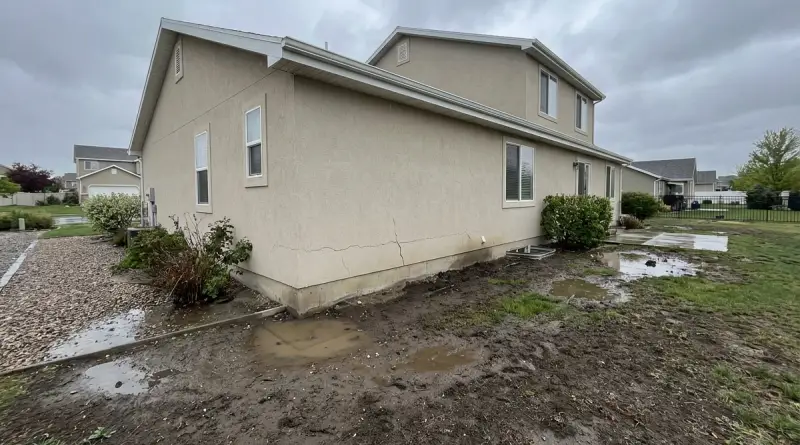
What You Can Do If Drainage Is Causing Problems
Addressing drainage issues often starts with improving how water moves around your home. In many cases, relatively simple changes can reduce the amount of water collecting near the foundation.
Improve Surface Drainage Around the Home
Adjusting the slope of the ground so that water flows away from the foundation can help prevent pooling. Even small grading changes can make a noticeable difference.
Redirect Water Away From the Foundation
Extending downspouts or adjusting where water is discharged can reduce concentrated moisture near the home.
Monitor for Interior or Structural Changes
Keeping an eye on changes inside the home, such as dampness or cracks, can help you determine whether the issue is progressing or remaining stable.
When Broader Drainage Solutions May Be Needed
If drainage problems persist, additional measures may be required. These are outlined in solution paths, which explains how different approaches are used depending on the situation.
When Poor Drainage May Require Professional Evaluation
In some cases, it may be helpful to have the situation evaluated more closely, especially if signs of structural impact are present.
You may want to consider this if:
- Water pooling is frequent or worsening
- Moisture is entering the home
- Cracks or structural changes are becoming more noticeable
If you’re unsure how serious the issue may be, pages like do I need a professional and how professionals diagnose water problems can help you understand what to expect.
Related Questions
Homeowners researching basement moisture often explore related questions about how water behaves around foundations.
Frequently Asked Questions About Poor Drainage and Foundation Problems
How long does poor drainage take to damage a foundation?
Foundation damage caused by poor drainage usually develops gradually. Depending on soil conditions, climate, and the amount of water involved, noticeable effects may take months or years to appear.
Can gutters cause foundation problems?
Yes. Gutters and downspouts that overflow or discharge water too close to a home can contribute to soil saturation and drainage-related foundation issues.
What are the first signs of drainage problems?
Common early signs include water pooling after rain, damp basement walls, musty odors, soil erosion, and cracks that appear or worsen over time.
Is poor drainage worse for clay soil?
Often, yes. Clay soils expand when wet and shrink when dry, creating soil movement that may increase stress on a foundation.
Home › Foundation Water Problem Questions › Can Poor Drainage Around My House Cause Foundation Problems?