
Why Is Water Pooling Around My Foundation?
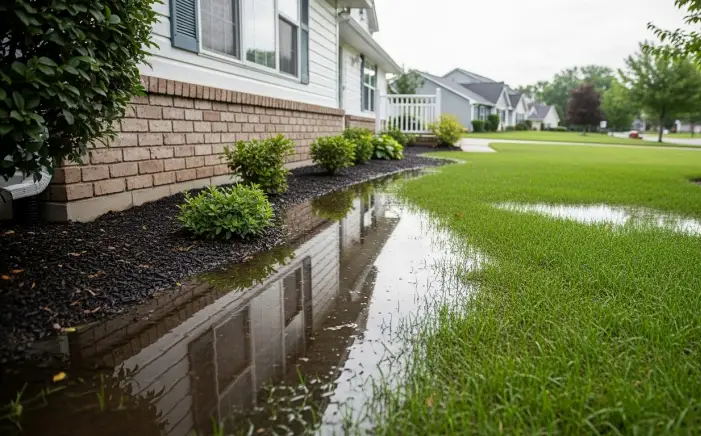
Water pooling around your foundation usually means that water is not draining away from your home properly. Instead of moving safely away, it collects near the base of the structure where it can soak into the soil and press against the foundation walls.
In many cases, this is caused by drainage or grading issues rather than a single isolated problem. Understanding why water collects in these areas can help you identify whether it’s a temporary surface issue or part of a larger pattern affecting your home.
Three Ways to Learn About Water Pooling Around Your Foundation
Everyone learns differently. Choose the format that works best for you.
- Browse the slide presentation
- Watch the educational video
- Read the complete guide below
Slide Presentation
Educational Video
Why Water Pools Around Foundations
When water gathers near your foundation, it typically indicates that the ground around your home is not directing water away as it should. Ideally, rainwater and runoff should flow away from the house, not toward it.
If water consistently pools in the same areas, it may suggest underlying drainage problems such as improper grading, saturated soil, or runoff that has nowhere else to go. Over time, this can increase moisture levels around the foundation and contribute to interior issues like damp walls or basement water. If you’re already seeing signs indoors, it may help to understand how this relates to issues like water pooling near a foundation
.
Common Causes of Water Pooling Around a Foundation
Water pooling around a foundation is usually the result of how water moves across your property and how the ground directs it. In most cases, it’s not caused by a single issue, but by a combination of grading, drainage, and soil conditions working together.
Understanding the most common causes can help you narrow down what’s happening on your property and determine whether the issue is temporary or part of a larger drainage pattern.
Poor Grading Around the Home
One of the most common causes is improper grading. The ground surrounding your home should slope gently away from the foundation. If it slopes toward the house, or has settled over time, water will naturally collect along the base.
Even small dips or low spots near the foundation can trap water. Learn more about how this happens on the poor grading around foundation
page.
Surface Runoff and Yard Drainage Issues
Water doesn’t always come from your own roof or yard. In many cases, it flows from higher ground, neighboring properties, or hard surfaces like driveways and patios.
If your yard doesn’t have a clear path for runoff, water can accumulate near your home instead of draining away. This type of issue is often tied to broader surface runoff and yard drainage problems.
Downspout Discharge Problems
Gutters and downspouts are designed to move water away from your home, but if downspouts discharge too close to the foundation, they can create concentrated pooling.
Short extensions, missing splash blocks, or disconnected downspouts can all cause water to collect in the same area during every rainstorm. This is one of the most direct and fixable causes, often covered under downspout discharge issues.
Soil Saturation and Heavy Rainfall
During prolonged or heavy rain, the soil around your home can become saturated. When this happens, it loses its ability to absorb additional water, causing excess moisture to sit on the surface.
Certain soil types, especially clay, tend to hold water longer, making pooling more likely even after the rain stops. This behavior is explained further in soil saturation and expansive clay.
Why Standing Water Near Your Foundation Can Be a Problem
Standing water near your foundation may not seem like an immediate concern, especially after a heavy rain. However, when water remains in place or returns frequently, it can begin to affect both the soil around your home and the structure itself.
Understanding why this matters can help you recognize early warning signs and avoid more serious issues developing over time.
Increased Pressure Against Foundation Walls
When water accumulates near your foundation, it increases pressure on the walls below ground level. This pressure can force moisture through small openings, joints, or porous materials over time.
Water Seeping Into Basements or Crawl Spaces
Pooling water often leads to interior symptoms. As moisture builds up outside, it can begin to enter the home through cracks, wall joints, or floor seams.
If you’re noticing dampness, musty odors, or visible water inside, it may be connected to the exterior conditions described here. Pages like water in basement and wet basement walls explain how these symptoms develop.
Long-Term Soil and Structural Impact
Over time, excess moisture around the foundation can affect the soil itself. Saturated soil may expand, shift, or erode, which can influence how the foundation settles.
In some cases, this contributes to issues like cracks or uneven movement. If you want a broader view of how water affects structural stability, see the foundation damage section.
How to Identify the Source of the Water
Before deciding how to address water pooling, it’s important to understand where the water is coming from. The source isn’t always obvious, and different causes can create similar-looking problems around your foundation.
By observing patterns and checking a few key areas around your home, you can often narrow down whether the issue is related to runoff, drainage, or soil conditions.
Observe When Pooling Happens
Pay attention to when water collects. Does it only appear after heavy rain, or is it present even during dry periods?
Water that appears only during storms often points to surface drainage issues, while constant moisture may indicate groundwater or persistent saturation.
Check Downspouts and Gutters
Look at where your downspouts discharge water. If water is being released directly next to the foundation, it can quickly create pooling.
Follow the path of water during a rainstorm if possible, this often reveals whether gutters or extensions are contributing to the problem.
Look at Yard Slope and Low Spots
Walk around your home and look for areas where water naturally settles. Low spots, compacted soil, or areas where landscaping has shifted can all affect drainage patterns.
Even subtle grading issues can have a noticeable impact over time.
What You Can Do About Water Pooling Around Your Foundation
Addressing water pooling around your foundation usually involves improving how water is directed and managed around your home. In many cases, small adjustments to grading, drainage, or runoff paths can significantly reduce the amount of water collecting near the foundation.
The right approach depends on what’s causing the issue, but understanding the general options can help you see what may be contributing to the problem and what changes might make a difference.
Improve Grading Around the Foundation
Adjusting the slope of the soil so that it directs water away from your home is often one of the most effective steps. This may involve adding soil and reshaping the surface near the foundation.
Redirect Downspouts Away From the Home
Extending downspouts so they discharge water several feet away from the house can significantly reduce pooling. Simple extensions or splash blocks are often enough to make a difference.
Manage Surface Runoff
If water is flowing toward your home from other areas, it may need to be redirected. Solutions can include shallow swales, drainage paths, or other methods that guide water safely away.
When Additional Drainage May Be Needed
In some cases, surface improvements are not enough, especially if the issue is persistent or tied to soil conditions. This is where broader approaches, covered in solution paths, may come into play.
When Water Pooling May Indicate a Bigger Issue
Occasional pooling after heavy rain is not uncommon. However, consistent or worsening water accumulation may point to a larger concern.
You may want to take a closer look if:
- Standing water remains near the foundation long after rain ends
- Pooling repeatedly develops in the same location
- Soil erosion or washout appears near the foundation
- Basement dampness, musty odors, or moisture stains begin appearing indoors
- Efflorescence or discoloration develops on basement walls
- Water problems become more noticeable during prolonged rain or snowmelt
If you’re unsure how serious the situation is, pages like is this serious and do I need a professional can help you evaluate the next steps.
“Foundation water problems are often influenced by multiple conditions occurring together rather than a single isolated issue.”
Related Questions
Homeowners often explore related questions about drainage, grading, and basement moisture, these can help you better understand how water behaves around your foundation.
Home › Foundation Water Problem Questions › What Does It Mean When Water Pools Around Your Foundation?