
Solution Paths: What Can Be Done About Foundation Water Problems
Most foundation water problems can be addressed, but the right approach depends on where the water originates and how it interacts with soil and structure.
Some solutions focus on reducing water before it reaches the foundation. Others manage pressure around the perimeter. In certain cases, systems are designed to control water after it enters.
Understanding these categories helps homeowners think clearly before deciding what to do next.
What Are Foundation Water Solution Paths?
Solution paths are common categories of approaches used to manage foundation water problems. Rather than describing a single fix, solution paths help explain the general direction homeowners typically take once they understand where the water is coming from and how it is affecting the home.
Some solution paths focus on managing water outside the structure by improving drainage and reducing soil saturation. Others focus on controlling moisture once it reaches below-grade areas. In some cases, structural concerns may need evaluation when movement, cracking, or wall pressure is involved.
Because water problems can originate in different ways, the most effective path usually depends on whether the issue is tied to exterior water problems, interior water problems, or early signs of foundation damage.
Three Broad Solution Categories
Foundation water solutions generally fall into three groups. The best approach depends on whether the issue is surface-driven, groundwater-related, or structural in nature.
1. Reducing Water Reaching the Foundation
This category focuses on keeping excess water away from the structure in the first place.
Common examples include:
Adjusting grading to create positive slope
Extending downspouts
Improving surface drainage
Redirecting roof runoff
Addressing pooling areas
These approaches are often connected to surface water patterns and are frequently relevant when symptoms appear shortly after rain.
If pooling is visible outside, see water pooling near the foundation.
2. Managing Soil Saturation and Perimeter Pressure
When water cannot be easily redirected, especially in regions with high groundwater or clay-heavy soil that remains saturated, the focus may shift to managing pressure around the structure.
This can involve:
Perimeter drainage systems
Exterior waterproof membranes
Foundation wall protection layers
Improvements that reduce hydrostatic pressure
These approaches are often associated with the groundwater behaviors discussed in how water enters a foundation.
They are more common when moisture persists even during dry weather.
3. Controlling Water After It Enters
In some cases, water has already found a path inside. When that happens, solutions may focus on managing it safely and preventing interior damage.
Examples include:
Interior drainage channels
Sump systems
Vapor barriers in crawl spaces
Moisture control strategies
These solutions are often considered when symptoms like wet basement walls or persistent damp odors are present.
Foundation Water Solution Decision Framework
| Situation | Typical Solution Path | Relative Complexity | Typical Disruption | Often Associated With |
|---|---|---|---|---|
| Water appears after heavy rain | Exterior drainage improvements | Low–Medium | Low | Surface water runoff or grading issues |
| Damp basement walls year-round | Perimeter drainage management | Medium | Medium | Groundwater pressure or saturated soil |
| Water entering at floor joints | Interior water management systems | Medium–High | Medium | Persistent seepage conditions |
| Foundation cracks or wall movement | Structural evaluation | High | High | Settlement, pressure, or structural concerns |
This framework is intended to help homeowners understand why different water problems often lead to different solution paths. Correctly identifying the source of the moisture is often more important than selecting a specific product or repair method.
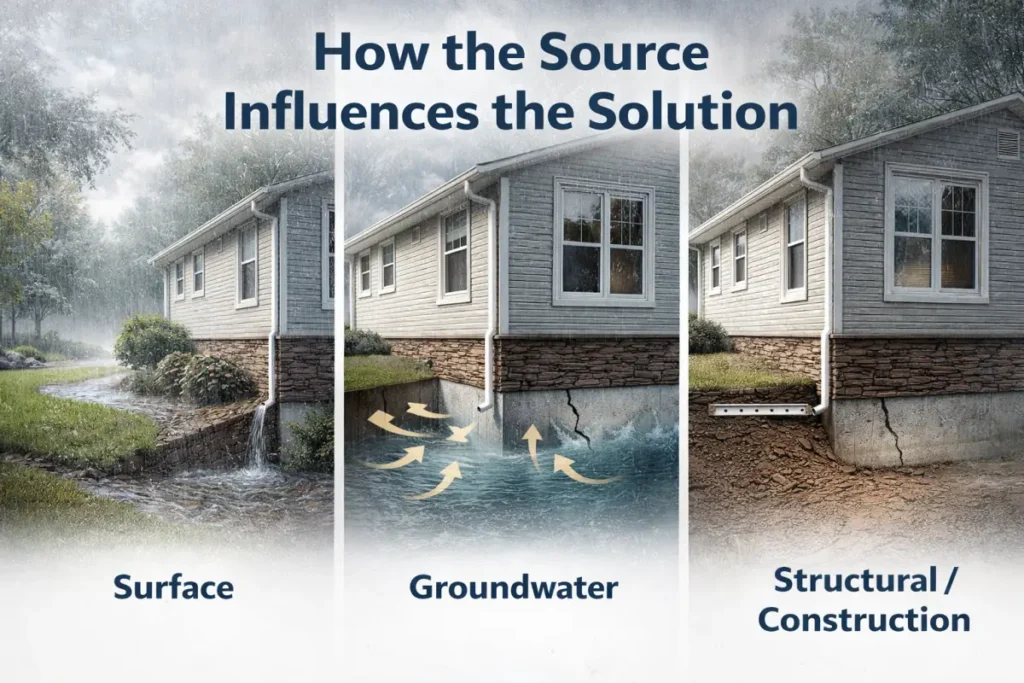
How the Source Influences the Solution
The most effective approach depends on correctly identifying whether water is primarily:
Surface-driven
Groundwater-driven
Structural or construction-related
If you are unsure which category applies, start with:
Correct diagnosis prevents unnecessary work and helps narrow options.
“Most foundation water problems begin outside the home long before water appears inside. In many cases, addressing how water moves around a property is more important than addressing the symptom that appears indoors.”
— Foundation Water Guide Editorial Team
Solutions Are Often Layered
In many homes, no single adjustment solves everything.
Water movement is influenced by:
Soil conditions
Lot position
Drainage patterns
Construction style
For that reason, solutions are sometimes layered, addressing surface flow first, then perimeter conditions, and finally interior control if needed.
This layered approach reflects how water behaves over time, not just during a single storm.
Foundation Water Facts
- Water-related foundation problems often begin as drainage or moisture-management issues before visible structural symptoms appear.
- Hydrostatic pressure is a common contributor to basement seepage and moisture intrusion.
- Surface runoff, poor grading, and roof drainage frequently influence how water moves around a foundation.
- Repeated wet-dry soil cycles can contribute to settlement, cracking, and foundation movement over time.
- The most effective solution path usually depends on identifying the source of the water rather than focusing on the symptom alone.
When to Consider Professional Evaluation
Educational resources can help clarify patterns, but recurring moisture, visible cracks, or structural movement may require on-site evaluation.
If symptoms include:
it may be appropriate to consult a qualified professional for assessment.
This site does not provide contractor services but helps homeowners understand common categories and next steps.
Key Takeaways
- Solution paths are broad categories of approaches used to manage foundation water problems.
- Exterior-focused paths aim to reduce water near the foundation by improving drainage and limiting soil saturation.
- Interior-focused paths address moisture that enters basements or crawl spaces and help manage dampness over time.
- If structural movement or cracking is present, evaluation may be helpful to understand whether foundation damage is developing.
Where to Go Next
If you are still determining the source of the problem:
If you are reviewing symptoms around the home:
If you want to understand foundation water problems where you live:
Frequently Asked Questions About Foundation Solution Paths
Do all foundation water problems require major waterproofing systems?
No. Many issues begin with surface drainage adjustments such as correcting grading or extending downspouts. Larger systems are typically considered only when water pressure or persistent saturation cannot be addressed through simpler exterior improvements.
How do I know whether I need exterior or interior solutions?
It depends on where the water originates. If moisture appears shortly after rain and dries quickly, surface adjustments may be appropriate. If dampness persists during dry weather, groundwater or soil saturation may be contributing factors. Reviewing <a href=”/surface-water-vs-groundwater/”>surface water vs. groundwater patterns</a> can help clarify this distinction.
Can interior drainage systems fix exterior grading problems?
Interior systems manage water after it enters. They do not correct improper slope, pooling near the foundation, or downspout discharge issues. In many cases, addressing exterior contributors first provides longer-term stability.
Is it common for homes to need more than one type of solution?
Yes. Water movement is influenced by soil, lot position, construction style, and climate. Some homes benefit from layered approaches, for example, improving surface flow while also managing perimeter pressure.
If I fix drainage, will foundation cracks close on their own?
Drainage improvements can reduce future stress, but existing cracks may remain visible. Structural evaluation may be necessary if cracks widen, shift, or are accompanied by movement. See foundation cracks for more detail.
Should I wait to see if the problem gets worse before taking action?
Minor, occasional moisture may not require immediate intervention. However, recurring saturation or visible structural changes are less likely to resolve on their own. Monitoring patterns over time helps determine whether adjustments are needed.
Home › Solution Paths