
Surface Water vs. Groundwater: What’s Affecting Your Foundation?
Not all foundation water problems come from the same source. Some are caused by surface water that flows toward the home after rain. Others are driven by groundwater and soil saturation below grade. The difference matters because the warning signs, timing, and effective solution categories are often different.
This page explains how each behaves, how to recognize the pattern, and what it usually points to.
What Is the Difference Between Surface Water and Groundwater?
Surface water is water that remains above or near the ground surface after rainfall, roof runoff, irrigation, or drainage overflow. Around foundations, surface water problems are commonly linked to grading and drainage conditions.
Groundwater is water stored below the earth’s surface within soil and underground water-bearing layers. When groundwater levels rise, moisture can press against or move beneath a foundation even when the surface appears dry.
Surface water usually moves across the ground toward the home, while groundwater develops pressure below the surface. Both can contribute to basement moisture, foundation stress, and long-term water intrusion patterns.
“Surface water problems are usually visible first. Groundwater problems often develop pressure below the surface before homeowners notice symptoms indoors.”
— Foundation Water Guide Editorial Team
Three Ways to Learn About Surface Water vs. Groundwater
Everyone learns differently. Choose the format that works best for you.
- Browse the slide presentation
- Watch the educational video
- Read the complete guide below
Slide Presentation
Educational Video
How Surface Water and Groundwater Reach a Foundation
Surface water and groundwater can both contribute to foundation moisture, but they reach the home in different ways. Surface water moves across or collects near the ground surface, while groundwater moves through saturated soil below ground.
That difference affects where water may collect, how pressure develops around the foundation, and when moisture becomes visible indoors. Understanding the path the water takes can make it easier to recognize whether conditions around the home point more strongly toward a surface drainage problem or a groundwater problem.
| Factor | Surface Water | Groundwater |
|---|---|---|
| Source | Rainfall, roof runoff, and poor drainage | Underground water moving through soil |
| When Problems Usually Appear | During or shortly after storms | Can appear even during dry periods |
| Typical Movement | Flows across the surface toward the home | Rises upward or presses inward below grade |
| Common Pressure Type | Surface saturation and pooling | Hydrostatic pressure |
| Most Common Warning Signs | Pooling water, overflow, erosion | Damp basement floors, recurring seepage |
| Often Connected To | Grading or drainage issues | High groundwater table or saturated soil |
| Typical Repair Focus | Drainage correction and runoff control | Waterproofing and pressure management |
Surface water problems are usually tied to drainage and runoff patterns, while groundwater problems are more commonly associated with hydrostatic pressure beneath or around the foundation.
How Surface Water Behaves
Surface water becomes a problem when it is repeatedly delivered to the foundation line and cannot drain away efficiently. This often happens after storms or rapid snowmelt.
Common drivers include:
Surface patterns are usually connected to broader exterior water problems.
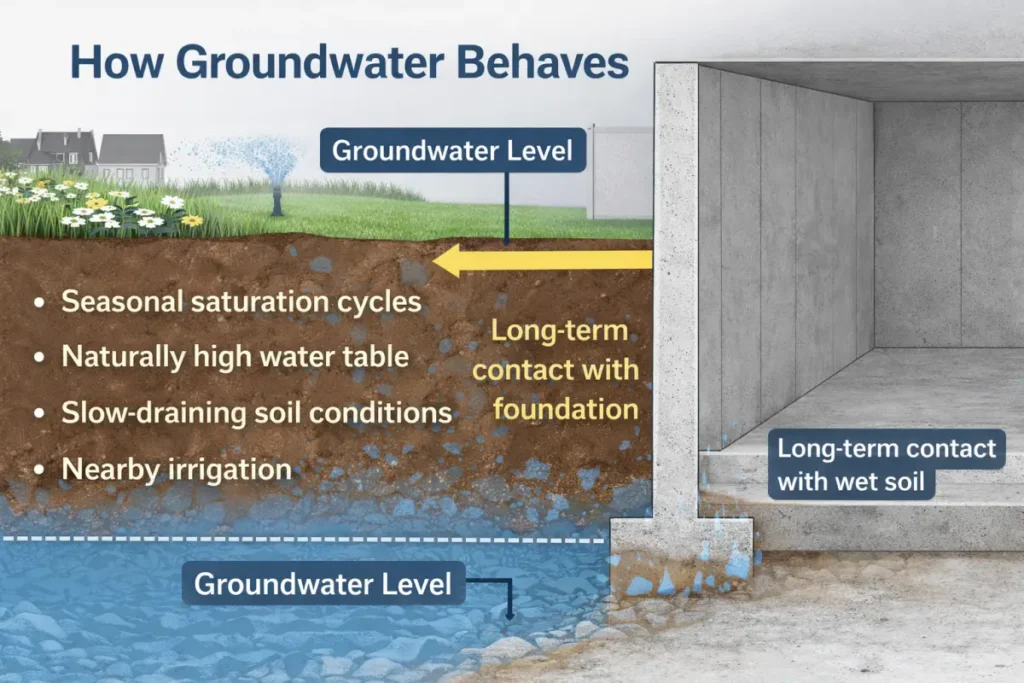
How Groundwater Behaves
Groundwater problems are tied to soil staying wet below grade. That wet soil can remain in contact with the foundation for long periods, even when the surface appears dry.
Groundwater influences are often connected to:
seasonal saturation cycles
naturally high water tables
slow-draining soil conditions
irrigation patterns near the foundation
One of the most common amplifiers is soil saturation and expansive clay.
Timing Clues That Help You Identify the Source
Surface water and groundwater often follow different timing patterns. Paying attention to when symptoms appear can help narrow the likely source.
When surface water is more likely
Symptoms appear shortly after rain
Wet areas match downspout locations
Pooling is visible outside
The problem improves quickly once conditions dry out
A common symptom is water pooling near the foundation.
When groundwater is more likely
Dampness persists during dry weather
Symptoms worsen seasonally (spring thaw, wet season)
Soil stays saturated for long periods
Moisture appears even without obvious surface runoff
Where Water Shows Up Indoors
Surface water and groundwater often show up in similar places, but the pattern and frequency differ.
Common interior symptoms include:
If you’re beginning with visible symptoms, interior water problems outlines how these moisture patterns typically develop.
Why This Difference Matters for Solutions
The goal is not to “pick the biggest fix.” The goal is to match the approach to the source of water.
Surface water issues often improve when discharge and grading are corrected
Groundwater issues often require managing persistent saturation and pressure
Solution categories are outlined under solution paths.
If you want the mechanics behind these patterns, how water enters a foundation explains pressure, saturation, and common entry points.
Signs of Surface Water Problems
- Water appears during or shortly after rain
- Pooling near the foundation
- Overflowing gutters or downspouts
- Soil erosion or visible runoff patterns
- Wet basement walls after storms
Signs of Groundwater Problems
- Persistent seepage during dry weather
- Damp basement floors or floor joints
- Recurring moisture in the same areas
- Efflorescence or mineral staining
- Humidity or musty odors without recent rain
Simple Clues That Help Identify the Water Source
If you notice most of these, surface water is more likely:
Water appears after storms
Pooling is visible outside
Downspouts drain near the wall
Dry weather improves symptoms quickly
If you notice most of these, groundwater is more likely:
Dampness persists without rain
Symptoms follow seasonal moisture patterns
Soil stays wet for long periods
Moisture shows up repeatedly in the same areas
If structural changes are also present, see foundation damage.
Key Takeaways
- Surface water refers to rain or runoff that flows across the ground before soaking into the soil.
- Groundwater moves below the surface through saturated soil layers.
- Surface drainage patterns influence how water moves toward or away from a foundation.
- Groundwater conditions can create moisture pressure against basement walls even when surface drainage appears normal.
Where To Go Next
If you want to understand how water reaches the foundation:
If you’re seeing water around or inside the home:
If you’re concerned about structural damage
Frequently Asked Questions About Surface Water and Groundwater
Homeowners often notice moisture around their home but aren’t sure whether the source is surface runoff, groundwater movement, or a combination of both. Understanding how these water sources behave can help explain why basement dampness, yard drainage problems, or foundation moisture appear in different ways.
If you have additional questions about basement moisture, drainage patterns, or water around foundations, you can explore more foundation water problem questions that address common homeowner concerns.
What is the difference between surface water and groundwater?
Can both surface water and groundwater affect the same home?
Yes. Many homes deal with both. Surface water may trigger problems during storms, while groundwater contributes to persistent dampness or seasonal patterns.
If my basement only leaks during heavy rain, is it always surface water?
Not always, but timing is a strong clue. Heavy rain can raise groundwater temporarily, especially in slow-draining soil. The surrounding drainage pattern still matters.
Why does my yard look dry but my basement still feels damp?
Groundwater and soil moisture below grade can stay elevated even when the surface dries. Indoor humidity can also contribute to damp-feeling surfaces.
Do surface water and groundwater problems require different solutions?
Surface water and groundwater problems often require different approaches because the source and movement of moisture are not always the same. Surface water issues may improve with grading or drainage corrections, while groundwater problems often involve long-term soil saturation or hydrostatic pressure conditions.
Do clay soils make groundwater problems more likely?
Can Surface Water Become Groundwater?
Yes. Excess surface water can soak into the soil and contribute to rising groundwater levels around a foundation, especially during prolonged rain or poor drainage conditions.
How Do I Know if My Issue Is Surface Water or Groundwater?
Surface water problems usually appear during or shortly after storms, while groundwater problems may continue even when the surface appears dry. Recurring seepage, damp floors, or persistent moisture can sometimes indicate groundwater pressure below the foundation.
Home › Surface Water vs. Groundwater