
Water Pooling Near the Foundation: What It Means and Why It Matters
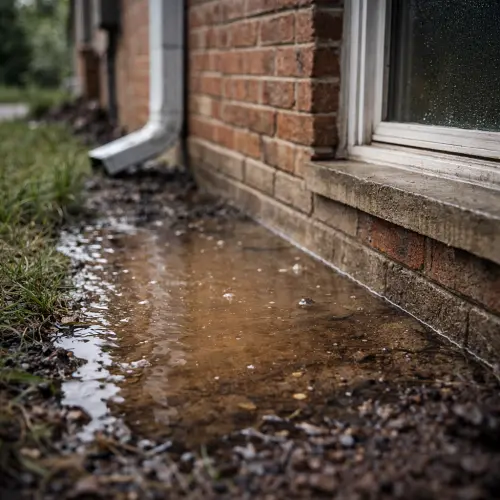
Water pooling near the foundation is often an early warning sign of potential basement or crawl space moisture problems. Even when water has not yet entered the home, standing water or consistently wet soil near the foundation increases the risk of intrusion over time.
Because foundations sit below grade, any water that collects nearby can eventually move downward and inward. The key question is whether the pooling is occasional and harmless — or persistent enough to create pressure against the structure.
This guide explains what causes water to collect near a home’s foundation, when it may lead to interior moisture issues, and what homeowners typically do next.
What Does Water Pooling Near the Foundation Mean?
Water pooling near a foundation occurs when rainwater or runoff does not drain away from the home and instead collects near the base of the exterior walls. The water may remain for hours or days after rainfall.
Common causes include poor grading, concentrated roof runoff, slow-draining soil, surface drainage problems, and saturated ground. These conditions can prevent water from moving away efficiently or repeatedly direct it toward the foundation.
Persistent pooling can increase moisture in the surrounding soil and contribute to basement seepage, crawl space dampness, and changing soil conditions around the foundation.
Why Water Collects Near a Foundation
Water pooling around a home is usually related to drainage patterns rather than a defect in the foundation itself.
Improper Grading
When soil slopes toward the structure instead of away from it, rainwater naturally flows inward rather than outward. This often results from improper grading around the foundation.
Improper grading can occur due to:
- original construction issues
- landscaping changes
- soil settling over time
- erosion or washout
Even a slight inward slope can cause repeated pooling during storms.
If water is consistently flowing toward the home, it often helps to review the broader drainage patterns that influence how runoff moves across the yard.
Poor Grading Around Foundation
Surface Runoff and Yard Drainage
Downspouts Discharging Too Close to the Home
Downspouts that end near the foundation deposit large volumes of water in one concentrated area. During heavy rainfall, this can overwhelm soil absorption capacity and create saturation.
Short or disconnected downspouts are one of the most common and correctable causes of water pooling, as they allow concentrated runoff to collect near the foundation.
If runoff is being released too close to the home, it may also help to review how that discharge interacts with the surrounding grade and surface drainage.
Soil That Drains Slowly
Certain soil types, especially conditions related to soil saturation and expansive clay, hold water longer than sandy or well-draining soils. When rain falls, clay soils may swell and remain saturated for extended periods.
This prolonged saturation can:
increase lateral pressure on basement walls
push moisture toward wall joints
raise groundwater levels around the home
In these cases, even proper grading may not fully eliminate moisture risk.
When soil holds moisture for extended periods, it may also help to understand how these conditions affect water movement around the foundation.
Common Drainage Conditions Around Foundations
| Drainage Condition | What Commonly Contributes | What Homeowners Often Observe |
|---|---|---|
| Water collecting near exterior walls | Poor grading or runoff concentration | Standing water after rain or soggy soil near the home |
| Downspouts releasing water too close to the house | Short extensions or blocked discharge areas | Pooling near corners or foundation edges |
| Slow-draining or clay-heavy soil | Compacted ground or poor natural drainage | Wet soil remaining for long periods after storms |
| Recurring basement dampness | Persistent exterior moisture near below-grade walls | Musty odors, seepage, or damp basement surfaces |
| Water pressure building near the footing | Saturated soil and limited drainage relief | Moisture appearing near floor joints or basement walls |
Can Pooling Water Lead to Basement or Crawl Space Problems?
Water pooling near the foundation does not always result in interior intrusion, but it increases the likelihood over time.
When soil remains wet for extended periods, it can create hydrostatic pressure against below-grade walls and floors particularly in areas affected by high groundwater conditions. This pressure may eventually force moisture through cracks, joints, or porous concrete.
Pooling water becomes more concerning when:
wet soil remains for days after rainfall
interior dampness follows storm events
efflorescence appears on basement walls
crawl space humidity increases seasonally
In many cases, interior symptoms begin after exterior drainage patterns have been affecting the home for months or years. Over time, these conditions can contribute to a range of interior water problems.
This may include issues such as basement seepage or increased pressure along below-grade walls. In homes with crawl spaces, pooling outside may also contribute to crawl space moisture problems beneath the structure.
Signs Water Pooling May Be Causing Larger Foundation Moisture Problems
Occasional puddling that dries quickly is usually not an emergency. However, repeated or persistent pooling deserves attention.
- Standing water remains near the foundation long after rainfall
- Water stains or dampness begin appearing on basement walls
- Musty odors or humid air develop in below-grade spaces
- Soil erosion or washout appears near exterior walls
- White mineral residue appears on basement surfaces
- Cracks or shifting begin appearing near foundation corners
When It May Be a Minor Issue
If pooling begins to persist, spread, or appear alongside interior moisture, it may help to review related warning signs that can develop as water conditions continue.
If you’re not sure how serious the situation may be:
When It May Increase Structural Risk
Pooling becomes more significant when:
soil stays saturated for extended periods
water repeatedly contacts the same wall section
basement or crawl space dampness follows rainfall
foundation cracks are present in nearby areas
Sustained saturation increases pressure against the foundation and may accelerate deterioration over time. Early warning signs often appear first as damp basement walls before more visible pooling or structural changes develop.
If these patterns are present, it may help to look more closely at related signs that can develop as pressure and moisture conditions continue.
If you’re unsure how serious the situation may be:
Water pooling that repeatedly returns after rain usually indicates that runoff is not draining far enough away from the foundation.
What Homeowners Typically Do Next
Most homeowners begin by addressing the simplest and most controllable factors.
Step 1 — Improve Surface Drainage
Common improvements include:
extending downspouts several feet away from the foundation
correcting grading to create outward slope
filling low areas near the foundation
redirecting irrigation systems
These changes often reduce pooling significantly.
If you’re starting with these improvements, these pages can help explain how each change affects water movement around the foundation:
Step 2 — Monitor Interior Conditions
After improving drainage, monitor:
basement walls for dampness
crawl space humidity levels
recurring moisture after storms
If interior symptoms decrease, the issue was likely surface-water driven.
Step 3 — Seek Evaluation if Pooling Persists
If pooling continues despite drainage improvements, further evaluation may help determine whether:
subsurface drainage is needed
groundwater conditions are contributing
structural vulnerabilities are present
The goal is to prevent prolonged soil saturation rather than reacting after interior intrusion occurs.
What Often Helps Reduce Water Pooling Near Foundations
In many homes, reducing water pooling near the foundation involves improving how rainwater and runoff move away from the structure. The most effective approach usually depends on the property’s grading, soil conditions, and drainage patterns.
- Correcting soil that slopes toward the home
- Extending downspouts farther from the foundation
- Improving surface drainage around low areas
- Reducing roof runoff concentration near exterior walls
- Monitoring how water behaves during and after storms
When pooling continues after drainage improvements, it may help to evaluate broader moisture conditions around the foundation and surrounding soil.
Key Takeaways
- Water pooling near the foundation often results from drainage patterns rather than structural foundation failure.
- Poor grading, short downspouts, and slow-draining soils commonly contribute to water collecting near exterior walls.
- Persistent soil saturation near the home can allow moisture to migrate into basement areas.
- Observing drainage patterns during rainfall can help identify the source of recurring pooling.
Where To Go Next
If water is pooling near the foundation, these pages can help explain where the water may be coming from, how surrounding ground conditions affect drainage, and what signs to monitor.
If you want to understand water and soil conditions around the foundation:
If you want to review exterior drainage problems:
If water pooling is leading to other symptoms:
If you want to understand foundation water problems where you live:
Frequently Asked Questions About Water Pooling Near Foundations
Is water pooling near my foundation always a problem?
Not always. Occasional puddling that dries quickly may not cause issues. Repeated or persistent pooling increases the risk of soil saturation and foundation pressure over time, which can contribute to basement seepage or crawl space moisture.
How far should downspouts extend from a foundation?
Downspouts are often extended several feet away from the home to prevent concentrated water from saturating soil near the foundation. The best distance depends on grading, soil type, and where water naturally flows on the property.
Can pooling water cause foundation cracks?
Over time, repeated saturation can contribute to foundation cracks by increasing soil pressure and uneven settlement.
Is Pooling Water Always a Grading Problem?
No. Water pooling near a foundation may also develop from clogged gutters, short downspouts, compacted soil, slow-draining clay, saturated ground, or broader surface drainage problems around the property.
Home › Interior Water Problems › Water Pooling Near Foundation