
Soil Shrinkage During Drought
Drought can change more than the appearance of a yard. As soil loses moisture during extended dry weather, some soils contract and decrease in volume. These changes can alter ground conditions around and beneath a foundation.
The amount of shrinkage depends on soil composition, moisture loss, vegetation, climate, and other site conditions. Expansive clay is particularly sensitive because it can undergo significant volume changes as it dries and later becomes wet again.
Understanding soil shrinkage helps explain why foundation conditions can change during prolonged drought and why the return of rainfall can begin another stage of the soil moisture cycle.
What Is Soil Shrinkage During Drought?
Soil shrinkage occurs when the ground loses moisture and decreases in volume. The effect varies by soil type, with clay-rich and other moisture-sensitive soils generally experiencing greater shrinkage than coarse, sandy soils.
Around a home, drying may cause soil to contract, develop cracks, or visibly pull away from foundation edges. Changes can also occur below the surface, where moisture loss may alter the soil conditions supporting portions of a foundation.
Soil shrinkage does not automatically mean a foundation has been damaged. It is a ground condition that can influence foundation support and movement depending on the soil, severity and duration of drought, foundation design, and other site-specific factors.
Why Soil Shrinks During Dry Weather
Soil contains water within the spaces between its particles. During extended periods of hot, dry weather, moisture is gradually lost from the ground through evaporation, plant uptake, and the absence of replenishing rainfall.
As moisture decreases, some soils change volume. Clay-rich soils are particularly responsive because certain clay minerals can contract as they lose water. The longer and more severe the drying period, the deeper those moisture changes may extend into the ground.
Drying is not always uniform around a home. Sun exposure, trees and other vegetation, irrigation, drainage, and differences in soil composition can cause one area to lose moisture faster than another. This can create uneven ground conditions around or beneath portions of a foundation.
The process is closely related to the opposite condition described in Soil Saturation and Expansive Clay. Together, drying and rewetting help explain the recurring shrink-and-swell cycles that can occur in moisture-sensitive soils
“For moisture-sensitive soils, drought and heavy rain are two parts of the same cycle. Soil may contract as it dries and expand again when moisture returns.”
— Foundation Water Guide Editorial Team
Which Soils Shrink the Most During Drought?
The amount of soil shrinkage during drought depends largely on soil composition and how strongly the soil responds to changes in moisture. Fine-grained, clay-rich soils generally have greater shrinkage potential than coarse soils such as sand and gravel.
Expansive Clay
Expansive clay is particularly sensitive to moisture changes. Certain clay minerals absorb water and increase in volume when wet, then contract as moisture is lost during dry weather.
This repeated expansion and contraction is often described as shrink-swell behavior. During prolonged drought, the contraction can become visible as cracks in the ground or gaps between the soil and foundation.
Learn more about the wet side of this cycle in Soil Saturation and Expansive Clay
Other Fine-Grained Soils
Silt and non-expansive clay soils can also lose moisture and change as they dry, although their response varies considerably depending on mineral composition, density, and the mixture of soil particles present.
The presence of fine particles alone does not mean a soil will undergo severe shrinkage. The type of clay and the overall characteristics of the soil are important.
These differences also influence how quickly soils accept, retain, and drain water. Learn more about how water moves through different soil types.
Sandy and Coarse Soils
Fill and Disturbed Soils
Fill soil is material that has been placed or moved during construction, grading, or other site work. Its behavior depends on what the fill contains, how it was placed, and how well it was compacted.
Fill containing moisture-sensitive clay may shrink during drought, while poorly compacted fill can have additional settlement concerns that are different from shrink-swell behavior. This is why knowing that soil is “fill” does not by itself tell you how it will respond to dry conditions.
Because placed or disturbed soil can differ from the naturally occurring ground around it, see Fill Soil vs. Native Soil Around Foundations for a closer look at how these conditions can affect drainage and settlement.
How Drought Changes Soil Around a Foundation
| Ground change | What is happening | Why it may matter |
|---|---|---|
| Soil dries | Moisture is gradually lost from the soil | Soil volume may decrease |
| Soil contracts | Moisture-sensitive soils shrink | Gaps may develop near foundation edges |
| Drying becomes uneven | Sun, vegetation and irrigation affect areas differently | Support conditions may vary around the home |
| Drought continues | Deeper soil may gradually lose moisture | Changes can extend farther beneath or around the foundation |
| Rain returns | Dry soil begins absorbing water again | Moisture and soil volume can change again |
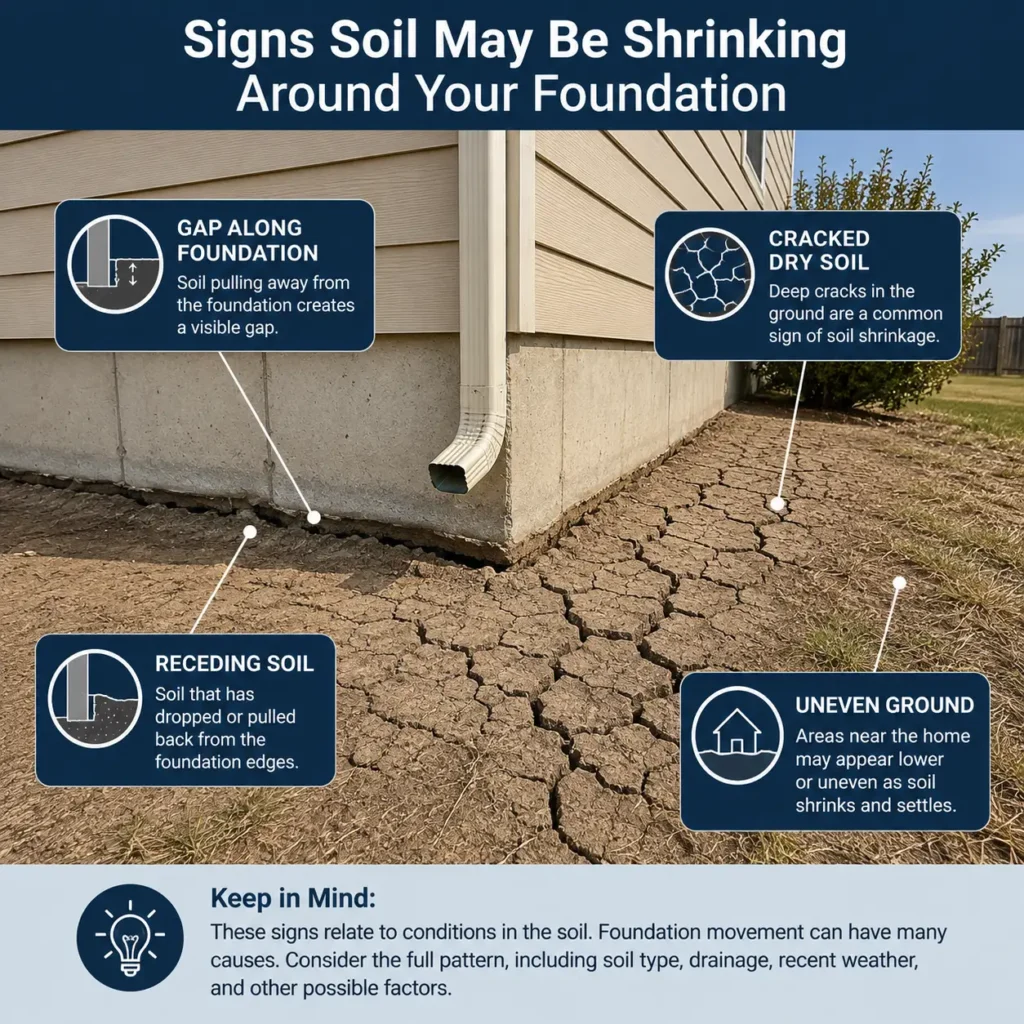
Signs Soil May Be Shrinking Around Your Foundation
Soil shrinkage can sometimes be visible around a home, especially after an extended period of hot, dry weather. Common signs to watch for include:
- A visible gap between the soil and foundation
- Deep cracks developing in dry ground
- Soil receding from foundation edges or other hard surfaces
- Ground that appears lower or uneven in certain areas
- Changes in existing foundation cracks
- Doors or windows that begin sticking or fitting differently
The first four signs are observations of the ground itself. Changes in cracks, doors, or windows may indicate foundation movement, but they do not identify drought or soil shrinkage as the cause.
If ground changes and foundation symptoms appear at the same time, looking at the overall pattern, including soil conditions, drainage, recent weather, and other possible causes, provides more useful information than relying on any single sign.
What Happens When Rain Returns After Drought
When rain returns after an extended dry period, dry soil begins absorbing moisture again. How quickly that happens depends on the soil type, how dry the ground became, and how intense the rainfall is.
In expansive clay soils, rewetting can cause the soil to increase in volume after it previously shrank during drought. If moisture returns unevenly around the home, different areas of soil may respond at different rates.
Heavy rain after drought can also create runoff when very dry or compacted ground cannot absorb water quickly enough. That water may collect near low areas or move toward the foundation if grading and drainage are poor.
This wetting-and-drying cycle is why drought and rainfall should not always be viewed as separate conditions. Together, they can create repeated changes in soil moisture and ground volume around a foundation.
Learn more about the wet side of the cycle in Soil Saturation and Expansive Clay.
When Soil Shrinkage May Need Closer Evaluation
Visible soil shrinkage by itself does not necessarily mean a foundation problem is developing. Dry, cracked ground or a gap along the foundation can simply reflect moisture loss during drought.
Closer evaluation may be worth considering when soil changes occur alongside signs such as:
- new or widening foundation cracks
- noticeable settlement or uneven movement
- doors or windows that begin sticking
- recurring changes that appear during repeated drought and rain cycles
- significant erosion or loss of soil near the foundation
If the pattern is unclear, resources such as Is This a Serious Foundation Water Problem? and Do I Need a Professional? can help homeowners decide what to look at next.
Key Takeaways
- Drought can cause moisture-sensitive soils to shrink as they dry.
- Expansive clay generally experiences greater shrinkage than sandy or coarse soils.
- Uneven drying can create different ground conditions around the same foundation.
- Rain after drought can restart the shrink-swell cycle as soil absorbs moisture again.
- Soil shrinkage alone does not mean foundation damage has occurred.
Where To Go Next
If cracks are appearing in foundation walls or floors, these pages can help explain how water conditions may contribute to structural stress and what related signs to review:
If you want to understand changing soil conditions:
If you’re seeing possible foundation movement:
If you’re unsure whether the changes need closer attention:
If you want to understand soil and foundation conditions where you live:
Frequently Asked Questions About Soil Shrinkage During Drought
Why does soil shrink during drought?
Soil can shrink during drought as moisture is gradually lost from the ground. Some soils, particularly clay-rich soils, decrease in volume as they dry. The amount of shrinkage depends on the soil composition, severity of the drought, vegetation, and other local conditions.
What type of soil shrinks the most?
Expansive clay soils generally have the greatest potential for moisture-related shrinkage. They can increase in volume when wet and contract significantly as they dry. Sandy and coarse soils typically experience much less shrink-swell behavior.
Why does soil pull away from a foundation?
During prolonged dry weather, moisture-sensitive soil can contract enough to create a visible gap between the ground and the foundation. This is especially common with expansive clay and does not by itself mean the foundation has been damaged.
Can drought cause foundation settlement?
Drought can contribute to conditions associated with foundation settlement when moisture loss causes supporting soil to shrink or change volume. Whether movement occurs depends on the soil, foundation design, depth and pattern of drying, and other site conditions.
What happens to dry soil when it rains again?
Home › Soil & Ground Conditions › Soil Shrinkage During Drought