
What Does a Wet Basement Mean?
A wet basement usually means that moisture or water is entering your home from outside or building up due to drainage or humidity issues. In some cases, this may be minor, such as condensation, but it can also indicate more serious problems like foundation cracks, poor grading, or rising groundwater levels.
Because basements sit below ground level, they are naturally more vulnerable to moisture intrusion. Water can move through soil, collect around the foundation, and eventually enter through walls, floors, or structural gaps.
Understanding what a wet basement means helps you determine whether the issue is temporary or part of a larger foundation water problem that needs to be addressed.
What a Wet Basement May Indicate
| What You Notice | What It May Indicate |
|---|---|
| Damp basement walls | Moisture entering through foundation walls |
| Water after heavy rain | Drainage or runoff-related issues |
| Persistent musty odors | Ongoing moisture or humidity problems |
| Wet floors or floor edges | Groundwater pressure or floor-level intrusion |
| Recurring dampness | A broader moisture pattern may be present |
“A wet basement is not a problem by itself—it is a sign that moisture is interacting with the home. Understanding where that moisture is coming from is often the first step toward identifying the underlying cause.”
— Foundation Water Guide Editorial Team
What a Wet Basement Usually Means
A wet basement is not a single issue—it is a sign that water is interacting with your home in ways it shouldn’t. This can involve surface water, groundwater, or indoor humidity.
To better understand the cause, it helps to know how water enters a foundation and how different conditions contribute to moisture buildup.
Water Entering Through Foundation Walls
Water can seep through porous concrete or small cracks in basement walls when soil becomes saturated. Over time, this can lead to visible dampness or fully wet basement walls.
Poor Drainage Around the Home
If water is not directed away from your home, it can collect near the foundation and eventually find its way inside. Problems like poor grading around the foundation or downspout discharge issues are common causes.
High Groundwater Levels
In some cases, a wet basement is caused by rising groundwater. When soil becomes saturated, pressure builds and forces water toward the foundation. Learn how this happens with high groundwater table conditions.
Water Rising Through the Basement Floor
Water can also enter from below due to hydrostatic pressure. This often leads to moisture coming up through the floor even without visible wall leaks. See how water can come up through a basement floor.
Condensation From Humidity
Not all wet basements are caused by outside water. High humidity can lead to condensation forming on cool surfaces, creating damp conditions and even contributing to a musty basement smell.
Is a Wet Basement a Serious Problem?
The seriousness of a wet basement depends on the source, frequency, and extent of moisture. Some situations are minor, while others can indicate structural concerns.
Minor Situations
- Occasional dampness or light condensation
- Moisture during seasonal humidity
- No visible damage or standing water
Moderate Concerns
- Repeated damp walls or floors
- Musty odors or air quality issues
- Water appearing after heavy rain
Serious Problems
- Standing water in the basement
- Water entering through cracks or joints
- Signs of foundation cracks or structural movement
If you’re unsure how serious your situation is, you can review how serious a foundation water problem may be or whether you need a professional.
Common Situations Homeowners Experience
Homeowners often describe a wet basement in different ways depending on what they observe:
- The basement feels damp but there is no visible water
- Water appears after heavy rain
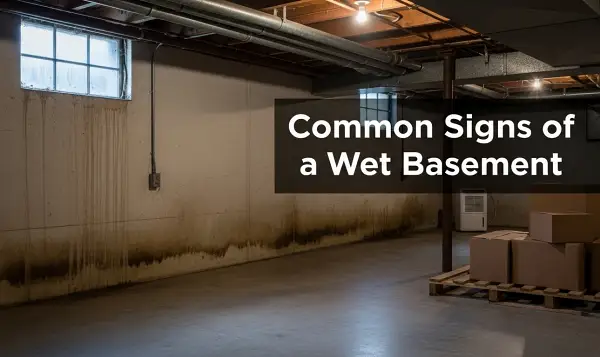
- Walls look discolored or wet in certain areas
- Floors feel slightly damp underfoot
- A persistent musty smell develops over time
Many of these situations are tied to how surface water vs groundwater interacts with your home and surrounding soil conditions.
What You Should Do Next
If your basement is wet, the next step is identifying the source and pattern of moisture. This helps determine whether the issue is related to drainage, structural concerns, or indoor conditions.
Start by observing:
- When the moisture appears (after rain, constant, seasonal)
- Where it shows up (walls, floor, corners)
- Whether there are additional warning signs like odors or staining
Understanding these patterns can help you avoid common mistakes homeowners make and better understand how professionals diagnose water problems.
Related Questions
Homeowners researching basement moisture often explore related questions about how water behaves around foundations.
Frequently Asked Questions About Wet Basements
Does a wet basement always mean there is a leak?
Is a wet basement a structural problem?
Why is my basement wet after heavy rain?
Can a wet basement dry out on its own?
What is the first thing I should check if my basement is wet?
Home › Foundation Water Problem Questions › What Does a Wet Basement Mean?