
Interior Water Problems in Foundations and Basements
Interior water problems occur when water enters the basement or crawl space from within the foundation structure. These issues often appear as seepage, leaks, or persistent moisture and may develop gradually over time. While interior water problems are sometimes treated as isolated leaks, they are often connected to exterior drainage conditions, soil saturation, or groundwater pressure.
Understanding how interior water problems develop helps clarify why they recur and how they may progress if underlying causes are not addressed.
What Are Interior Water Problems?
Interior water problems occur when moisture enters a basement or crawl space from surrounding soil, drainage conditions, or structural openings in the foundation. Water may appear as seepage through foundation walls, damp floors, condensation on surfaces, or persistent humidity in enclosed spaces. While some interior moisture may result from seasonal conditions, recurring water intrusion often indicates exterior drainage issues or groundwater pressure affecting the foundation.
“Many interior water problems begin outside the home rather than inside it. Conditions such as saturated soil, groundwater pressure, or poor exterior drainage may allow moisture to enter basements and crawl spaces long before visible structural damage develops.”
— Foundation Water Guide Editorial Team
Common Types of Interior Water Problems
Water can slowly pass through foundation walls, especially when surrounding soil remains saturated for extended periods. This type of seepage may appear as damp patches, discoloration, or moisture that worsens during heavy rain or seasonal groundwater changes.
Floor Joint Leaks
Leaks often occur where the foundation wall meets the basement floor. These joints can become pathways for water when pressure builds around the foundation. Learn more about how this relates to water in the basement and floor-level seepage patterns. Floor joint leaks may appear intermittently and are commonly mistaken for surface spills or condensation.
Persistent Basement Moisture
Some interior water problems don’t involve visible leaks but instead show up as ongoing dampness, humidity, or musty conditions. Persistent moisture can indicate slow water movement through foundation materials or recurring intrusion that is not immediately obvious. In some cases, this presents as musty or damp basement conditions that develop gradually over time.
Common Interior Water Problem Symptoms and What They May Indicate
| Interior Symptom | Often Associated With | Learn More |
|---|---|---|
| Water along floor edges | Seepage at the wall-floor joint or groundwater pressure | Water in Basement |
| Wet basement walls | Moisture moving through foundation materials | Wet Basement Walls |
| Musty odors | Persistent moisture or elevated humidity | Musty Smell or Damp Basement |
| Crawl space moisture | Ground moisture or poor drainage conditions | Crawl Space Water Problems |
| Standing water near the home | Exterior drainage or grading issues | Water Pooling Near Foundation |
Why Interior Water Problems Occur
Groundwater and Soil Saturation
When soil around the foundation becomes saturated, water may seek paths of least resistance into interior spaces. Even without visible cracks, moisture can move through porous materials or small openings.
Drainage Conditions Outside the Home
Interior water issues are frequently influenced by exterior drainage problems. Water that collects near the foundation can increase pressure against walls and joints, leading to seepage or leaks inside the basement.
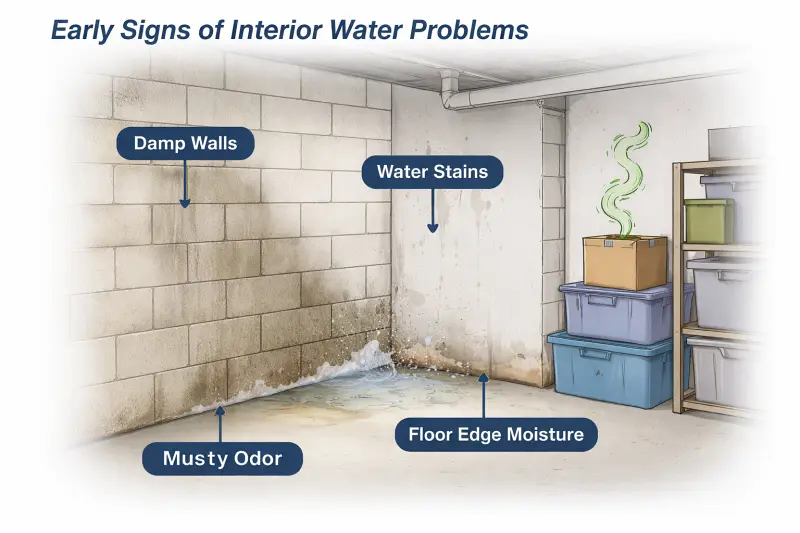
Early Signs of Interior Water Problems
Interior issues often develop gradually. Common early indicators include:
Damp foundation walls
Water stains or surface residue
Moisture along floor edges
Elevated humidity or musty odors
Noticing these signs early can help prevent more persistent problems.
How Interior Problems Can Progress Over Time
Interior water problems rarely resolve on their own. Continued exposure to moisture can lead to more frequent leaks, surface deterioration, or changes in foundation condition. In some cases, persistent interior water issues may coincide with the early stages of foundation damage. Understanding the pathways moisture follows through soil and structural joints can clarify why this progression occurs, see how water enters a foundation for a deeper explanation.
Monitoring changes over time is often more useful than focusing on a single event.
Detailed Interior Water Problem Guides
If you’re experiencing specific symptoms, explore the detailed guides below:
Key Takeaways
• Interior water problems often appear before visible foundation damage occurs.
• Moisture inside basements or crawl spaces frequently originates from exterior drainage or soil conditions.
• Recurring interior moisture may indicate groundwater pressure affecting the foundation.
• Identifying early signs can help prevent more serious structural problems.
Related Topics
These related sections expand on how foundation water problems develop, how to recognize early warning signs, and how different types of issues are commonly addressed. Exploring these topics can help clarify how individual problems fit into the broader picture.
Many foundation water issues begin outside the home. This section explains how exterior water problems such as poor drainage, grading issues, and saturated soil conditions contribute to interior water intrusion and long-term pressure against foundation walls.
When water problems persist, moisture and soil pressure can begin to affect the structure itself. This section explores how prolonged water exposure may contribute to foundation damage, including cracking, movement, or structural deterioration.
If interior moisture appears repeatedly or seems to be getting worse, the next step is understanding whether you're dealing with a drainage problem or foundation problem, or a combination of both. Identifying the likely cause helps you choose the most appropriate solution.
Water problems often reveal themselves through recurring signs rather than sudden failures. This section outlines common indicators such as moisture, staining, cracks, and other changes that may signal developing foundation water issues.
Solutions for foundation water problems vary depending on the cause and severity of the issue. This section provides a high-level overview of common approaches used to manage water, reduce pressure, and prevent future problems. For a clearer breakdown of how these approaches are organized, see solution paths.
Soil conditions, climate, groundwater levels and common foundation types vary across the country. Explore our Foundation Water Problems by State guides to learn how local conditions affect homes where you live.
Where To Go Next
If you’re trying to identify the source of interior moisture:
If you’re learning why interior water problems occur:
If you’re seeing signs of structural damage:
If you’re looking for solutions:
If you want to understand local conditions:
Frequently Asked Questions About Interior Water Problems
Is water coming through basement walls a foundation problem?
Not always. Water entering through basement walls is often related to drainage conditions, saturated soil, groundwater pressure, or moisture moving through foundation materials. While water intrusion can sometimes occur alongside foundation damage, the presence of moisture alone does not automatically indicate structural failure.
What is the first sign of hydrostatic pressure?
Early signs may include damp basement walls, recurring seepage, efflorescence (white mineral deposits), water appearing along floor joints, or persistent moisture after rainfall. These symptoms can occur when groundwater pressure increases around the foundation and moisture begins moving into interior spaces.
Can interior water problems cause foundation damage?
Home › Interior Water Problems