
Can Gutters Cause Water in a Basement?
How Roof Runoff Affects Foundation Drainage
Gutters are designed to move rainwater away from a home’s roof and foundation. When they work properly, they help control how water flows around the house during storms.
However, when gutters or downspouts are clogged, damaged, or poorly positioned, rainwater may collect near the base of the home. Over time, this extra moisture can increase pressure in the surrounding soil and contribute to basement water problems.
Understanding how roof runoff behaves can help explain why drainage problems sometimes appear inside the basement.
How Gutter Problems Can Contribute to Basement Water
| Gutter or Drainage Issue | Potential Result |
|---|---|
| Clogged or overflowing gutters | Water spills near the foundation |
| Downspouts draining too close to the home | Soil saturation around foundation walls |
| Poor yard drainage | Water remains near the structure longer |
| Heavy roof runoff | Increased moisture around the foundation |
| Saturated soil conditions | Greater risk of basement moisture intrusion |
“Gutters help control one of the largest sources of water around a home: roof runoff. When that water is not directed away properly, it can contribute to moisture problems around the foundation and basement.”
— Foundation Water Guide Editorial Team
How Gutters Influence Water Around a Foundation
Gutters control one of the largest sources of water near a home: roof runoff.
During heavy rain, hundreds of gallons of water can flow off the roof. Gutters collect this water and send it through downspouts so it can be discharged safely away from the structure.
If this system fails or drains too close to the house, water may collect around the foundation instead of being directed away. This can lead to saturated soil conditions that increase the chances of moisture entering the basement.
Understanding the difference between surface water vs groundwater can help explain why roof runoff sometimes plays a role in basement water issues.
Clogged or Overflowing Gutters
Leaves, debris, and sediment can clog gutters and prevent water from flowing properly. When gutters overflow, rainwater may spill directly next to the foundation instead of being carried away.
Repeated overflow during storms can contribute to soil saturation around the home.
Downspouts Draining Too Close to the House
Even when gutters are clean, problems can occur if downspouts release water right next to the foundation.
When large volumes of roof runoff collect near the base of the home, the soil may become saturated. In some cases, this moisture can lead to conditions that contribute to basement seepage.
Learn more about common downspout discharge issues and how they affect foundation drainage.
Poor Yard Drainage Around the Home
If the yard slopes toward the foundation instead of away from it, roof runoff may collect around the house even when gutters are functioning.
This type of drainage problem can allow water to accumulate near basement walls and increase moisture pressure in the surrounding soil.
This is why exterior drainage issues such as poor grading around a foundation and surface runoff and yard drainage are often evaluated when basement water problems occur.
Soil Saturation Near the Foundation
When water repeatedly drains next to the house, the surrounding soil may remain saturated for long periods.
Wet soil can increase hydrostatic pressure against basement walls or floors. Over time, this pressure may contribute to moisture entering the basement environment.
Some properties are also affected by conditions such as soil saturation and expansive clay, which can influence how water behaves around the structure.
Do Gutters Prevent Water in a Basement?
Gutters play an important role in controlling roof runoff, but they are only one part of a larger drainage system around a home.
When gutters work properly and discharge water safely away from the house, they help reduce the amount of water that reaches the foundation. However, basement moisture problems can still occur if other conditions are present.
For example, basement water may also be related to poor exterior drainage, saturated soil conditions, or groundwater movement beneath the foundation.
Homeowners sometimes begin investigating gutter performance when they notice symptoms such as water in the basement or damp basement walls.
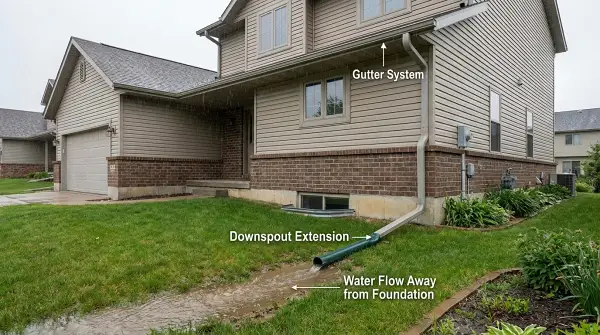
When Gutter Problems May Contribute to Basement Water
In some situations, gutter problems can allow large amounts of roof runoff to collect near the house. Over time, this may contribute to moisture entering the basement.
Conditions that can increase this risk include:
- clogged gutters that overflow during storms
- downspouts draining next to the foundation
- yard grading that directs runoff toward the house
- drainage systems that cannot handle heavy rainfall
These factors can combine with broader foundation water risk factors to create the conditions that allow basement moisture problems to develop.
Related Questions
Homeowners researching basement moisture often explore related questions about how water behaves around foundations.
Frequently Asked Questions About Gutters and Basement Water Problems
Can clogged gutters cause water in a basement?
How far should downspouts discharge water from a house?
Can new gutters solve basement water problems?
Sometimes, but not always. Gutters can help manage roof runoff, but basement moisture may also be influenced by grading, soil conditions, groundwater levels, or other drainage issues around the property.
Why does my basement get wet even though I have gutters?
Are gutters more important during heavy rain?
Home › Foundation Water Problem Questions › Can Gutters Cause Water in a Basement?