
Settlement and Uneven Surfaces Caused by Water
Foundation settlement can occur when the soil beneath or around a home shifts due to moisture changes. While all structures experience minor movement over time, significant moisture imbalance may lead to uneven settling that affects floors, walls, and structural alignment.
Understanding how water influences soil behavior helps explain why some homes develop uneven surfaces or shifting structural elements.
What Is Foundation Settlement From Water?
Foundation settlement from water occurs when moisture conditions in the surrounding soil affect how the ground supports a structure. When soil becomes overly saturated or repeatedly expands and contracts due to changing moisture levels, the ground beneath a foundation may shift or compress.
As the supporting soil moves, portions of the foundation can settle unevenly. This movement may lead to structural changes such as cracks in foundation walls, sloping floors, or separation between building materials.
Settlement related to soil moisture is one form of foundation damage that may develop when water conditions influence the stability of the ground beneath a home.
How Water Contributes to Foundation Settlement
Soil expands when saturated and contracts when it dries. In clay-rich regions, conditions related to soil saturation and expansive clay can make this expansion and contraction more substantial.
When sections of soil beneath a foundation become unevenly saturated, often due to improper grading around the foundation or concentrated runoff, while other areas remain dry, uneven pressure distribution may occur.
Repeated cycles of moisture fluctuation may gradually shift structural alignment.
Common Exterior Conditions That Influence Soil Movement
If settlement appears to be linked to changing soil moisture, it may help to review the exterior conditions that often influence how water collects and moves around a foundation.
“Water-related foundation settlement often occurs because soil beneath a structure expands, contracts, or shifts as moisture conditions change. In many cases, the visible damage appears inside the home, while the underlying cause originates in the soil supporting the foundation.”
— Foundation Water Guide Editorial Team
Common Conditions That May Contribute to Foundation Settlement
Foundation settlement can be influenced by several water-related conditions. While every property is different, the following factors are commonly associated with changes in soil support beneath a structure.
- Poor grading around the foundation: Water that repeatedly collects near a home can contribute to uneven soil moisture conditions.
- Concentrated downspout discharge: Roof runoff directed into a small area may increase moisture beneath portions of the foundation.
- Expansive clay soils: Certain soils expand when wet and shrink when dry, affecting how the ground supports a structure.
- Hidden plumbing leaks: Persistent moisture beneath a home can alter soil conditions over time.
- Surface runoff from nearby areas: Water flowing across a property may contribute to uneven saturation patterns.
- Overwatering or irrigation issues: Excessive watering near a foundation can sometimes create localized moisture imbalances.
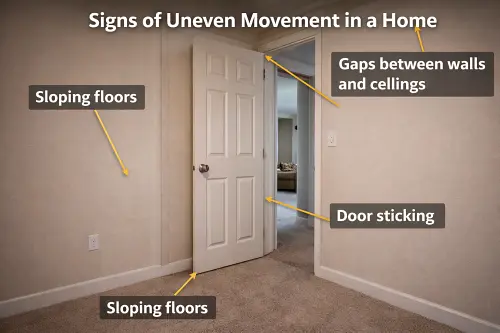
Signs of Uneven Movement in a Home
Early indicators of settlement-related movement may include:
Sloping or uneven floors
Doors or windows that begin sticking
Gaps forming between walls and ceilings
Cracks appearing near door frames
These changes often develop gradually rather than suddenly.
Monitoring subtle differences over time can help determine whether movement is progressing.
Why Moisture Imbalance Creates Structural Shift
Uniform moisture around a foundation generally reduces differential pressure. Problems often arise when one side of the structure retains water while another remains dry. Over time, this imbalance can contribute to structural symptoms such as wall bowing or uneven settlement.
Common contributors may include:
Poor drainage concentration on one side
Downspout discharge issues near specific areas
Seasonal drought followed by heavy rainfall
When soil volume changes unevenly, the structure above may respond accordingly.
Common Water Conditions Associated With Foundation Settlement
Different water-related conditions can influence how soil behaves beneath a foundation. While the exact effects vary by property, the examples below illustrate how moisture conditions may contribute to settlement-related symptoms.
| Water Condition | Potential Influence on Foundation Support | Commonly Associated Symptom |
|---|---|---|
| Poor grading | May concentrate water near portions of the foundation | Sloping floors or uneven settlement |
| Downspout discharge near the home | Can increase soil moisture in localized areas | Settlement near corners or isolated sections |
| Expansive clay soils | Expansion and contraction may alter soil support | Seasonal movement or cracking |
| Plumbing leaks | May create persistent moisture beneath a structure | Localized settlement patterns |
| Surface runoff | Can contribute to uneven moisture distribution | Cracks, floor movement, or settlement-related symptoms |
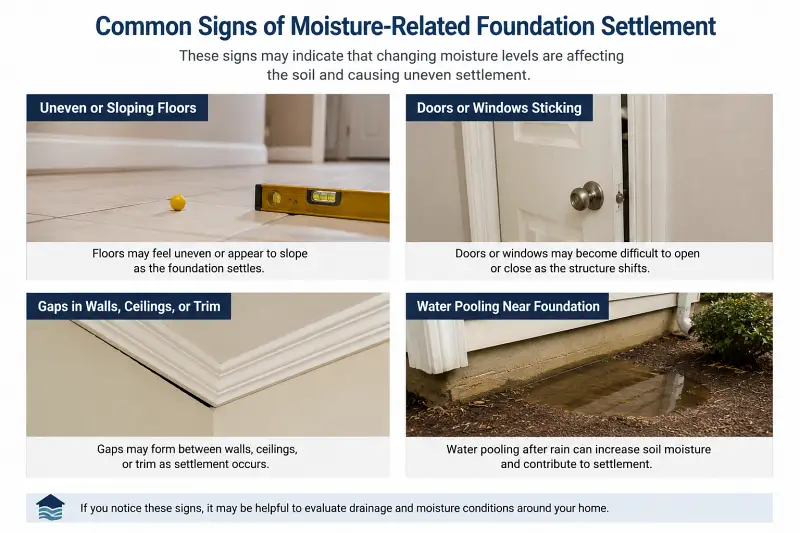
Signs That May Accompany Moisture-Related Settlement
Foundation settlement can develop gradually, and the signs are not always obvious at first. The checklist below highlights conditions that may appear when moisture imbalance affects how soil supports a structure.
Checklist
- Cracks that appear to widen over time
- Floors that feel uneven or begin to slope
- Doors or windows that become difficult to open or close
- Gaps appearing between walls, ceilings, or trim
- Water pooling near the foundation after rainfall
- Areas of soil erosion or washout near the home
- Changes that appear seasonally during wet or dry periods
When Settlement Becomes a Concern
Minor settlement is common in many homes and does not always indicate structural failure.
However, increasing floor slope, widening foundation cracks, or continued misalignment over time may signal progressive movement. In many cases, the rate of change matters more than the initial symptom.
Identifying the role water plays in settlement helps guide appropriate next steps.
Understanding the Level of Concern
If you’re not sure how serious the situation may be:
Moisture-Related Settlement vs Progressive Structural Movement
Not all foundation movement develops at the same rate or for the same reasons. The table below highlights some general differences between settlement associated with changing moisture conditions and situations where structural movement may appear to be progressing.
| Characteristic | Moisture-Related Settlement | Progressive Structural Movement |
|---|---|---|
| Typical Development | Often gradual and develops over time | May show increasing movement or worsening symptoms |
| Common Contributing Factors | Changing soil moisture, runoff, drainage, or expansive soils | Ongoing foundation movement, pressure, or structural stress |
| Visible Signs | Sloping floors, sticking doors, minor cracking | Increasing cracks, wall movement, or worsening misalignment |
| Evaluation Focus | Understanding moisture and soil conditions | Determining the extent and progression of movement |
What Typically Happens Next
Evaluation typically includes assessing floor elevation changes and inspecting moisture patterns around the foundation.
Corrective approaches may involve improving drainage, stabilizing soil conditions, or reinforcing affected areas depending on severity.
Addressing water behavior early often reduces further movement.
How Water-Related Settlement Is Evaluated
If settlement appears to be continuing, these pages can help explain how foundation water issues are usually evaluated and what conditions professionals often review first.
Key Takeaways
- Foundation settlement can occur when soil supporting the structure shifts or compresses.
- Excess moisture or changing soil moisture levels may influence how the ground supports a foundation.
- Uneven settlement can lead to cracks, sloping floors, or visible changes in the structure.
- Managing drainage and soil moisture around a home can help reduce conditions that contribute to settlement.
Where To Go Next
If you want to understand soil conditions that may contribute to settlement:
If you want to review water conditions around the foundation:
If you’re seeing other signs of foundation movement:
For local soil and water conditions:
Frequently Asked Questions About Foundation Settlement
Can water cause a house to settle unevenly?
Yes. When soil moisture varies around different parts of a foundation, expansion and contraction may occur unevenly. Over time, this imbalance can contribute to differential settlement.
Are sloping floors always a sign of serious foundation damage?
Not always. Minor floor slope may result from normal aging or small shifts. Concern increases when slope worsens, cracks widen, or other structural symptoms appear.
How do I know if settlement is still active?
Signs of active movement include expanding cracks, increasing floor unevenness, or doors and windows that progressively worsen. Monitoring changes over time helps determine whether movement is ongoing.
Home › Foundation Damage › Settlement From Water