
Soil & Ground Conditions
Water around a foundation does not behave the same way at every home. The soil beneath and around a foundation affects how quickly water drains, where moisture collects, and how the ground responds as conditions become wetter or drier.
Understanding soil and ground conditions helps explain why one home may experience pooling water, basement moisture, or foundation movement while another nearby home receiving the same rainfall does not.
Weather → Soil → Water Movement → Foundation → Symptoms or Damage
What Are Soil & Ground Conditions?
Soil and ground conditions describe the characteristics of the ground beneath and around a home, including soil type, moisture level, drainage, compaction, and how those conditions change over time.
Some soils allow water to move through them relatively quickly, while others hold moisture and drain slowly. Certain soils can also expand when wet or shrink as they dry. Compaction, erosion, fill material, groundwater, and drainage around the property can further influence how water behaves near a foundation.
Understanding these conditions provides an important link between where water comes from, how it moves through the ground, and what eventually happens around the foundation.
“Soil isn’t simply the dirt beneath a house. Its composition, moisture, and compaction influence how water drains, accumulates, and moves around a foundation.”
— Foundation Water Guide Editorial Team
Why Soil Matters Around a Foundation
Soil is the environment that receives, stores, and moves much of the water surrounding a foundation. Its composition and condition influence whether rainfall soaks into the ground, moves across the surface, remains trapped near the home, or travels deeper through the soil.
Different soils respond to moisture in different ways. Clay-rich soils may hold water and change volume as moisture levels rise and fall, while sandier soils generally allow water to move through more quickly. Compaction, fill material, erosion, and existing moisture levels can further change how the ground behaves.
This is why rainfall alone does not determine foundation water conditions. Two nearby homes can receive the same storm yet experience very different results because of differences in soil, grading, drainage, groundwater, and other site conditions.
How Soil and Water Affect Each Other
Water changes soil, and soil influences what happens to water. As moisture enters the ground, soil characteristics affect how quickly it can soak in, how easily it moves, and how long it remains near a foundation. At the same time, changing moisture levels can alter the volume, stability, and drainage behavior of certain soils.
Understanding these interactions helps explain why ground conditions around a foundation can change even when the source of the water appears to be the same.
| Ground condition | What happens with water | Why it can matter around a foundation |
|---|---|---|
| Expansive clay | Holds moisture and may swell as water content increases | Changes in soil volume can alter pressure and support around a foundation |
| Saturated soil | Pore spaces fill with water and drainage may slow | Water may remain near the foundation longer and contribute to increased water pressure |
| Drying soil | Moisture is lost from the ground | Some soils, especially expansive clay, may shrink and pull away from the foundation |
| Compacted soil | Water may soak in more slowly | More water may remain at the surface or move as runoff |
| Eroding soil | Moving water carries soil particles away | Drainage patterns and ground support near the foundation can change |
| Fill soil | Water behavior varies with the material and how well it was compacted | Poorly compacted or uneven fill may drain or settle differently from native soil |
Why Soil Conditions Around a Foundation Change
Soil conditions are not static. Rainfall, drought, groundwater, drainage, irrigation, and seasonal weather can continually change the amount of moisture in the ground around a home. These changes can affect how soil drains, how much water it holds, and, in some soils, its volume and stability.
Rain and Heavy Precipitation
During prolonged or heavy rain, soil may absorb water faster than it can drain. Once the ground becomes increasingly saturated, additional water may remain near the surface, collect around the foundation, or move toward lower areas of the property.
Drought and Dry Weather
Extended dry periods can remove significant moisture from soil around a foundation. Some soils respond to this moisture loss more dramatically than others.
Clay-rich soils are particularly important because they can shrink as they dry. In areas with expansive clay, prolonged drought can therefore change ground volume and the support conditions surrounding or beneath portions of a foundation.
Groundwater
Groundwater can influence soil moisture from below rather than from rainfall at the surface. When the groundwater table rises, surrounding soil may remain wet or become saturated even when there is no obvious pooling water around the home.
Groundwater conditions can vary with rainfall, season, terrain, nearby bodies of water, and local geology. A high groundwater table can also contribute to persistent moisture and water pressure around below-grade foundations.
Grading and Drainage
The shape of the land determines where surface water travels. Ground that slopes toward a home can direct rainfall and runoff toward the foundation, while effective grading helps move water away.
Gutters, downspouts, drainage systems, neighboring runoff, and low areas in the yard can also affect where water collects. Over time, these conditions can create consistently wetter soil on one side of a home than another.
Irrigation and Watering
Sprinklers, landscape irrigation, leaking irrigation lines, and repeated watering can add substantial moisture to soil near a foundation.
The effect depends on how much water is applied, where it is delivered, how quickly the soil absorbs it, and whether the area can drain effectively. Uneven watering may also contribute to differences in soil moisture around different portions of a home.
Seasonal Changes
Ground conditions naturally change throughout the year. Wet seasons can increase soil moisture and groundwater levels, while hot or dry seasons may cause the ground to lose moisture.
In colder climates, freezing, thawing, snow accumulation, and snowmelt introduce additional changes. These recurring cycles help explain why a foundation water problem may appear during one part of the year and become less noticeable during another.
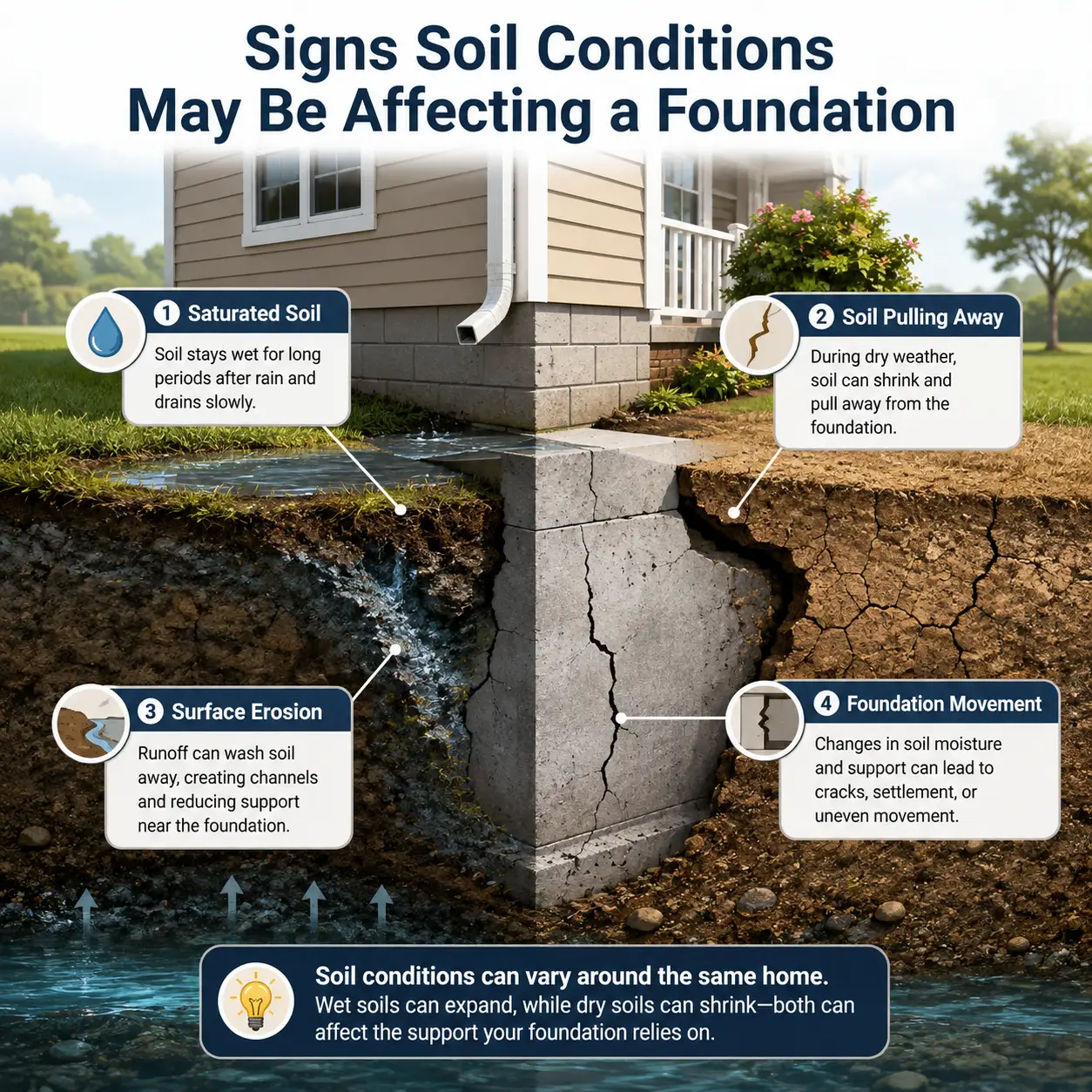
Signs Soil Conditions May Be Affecting Your Foundation
Changes in the ground around a home are not always obvious, but certain patterns may suggest that soil moisture, drainage, or movement is affecting conditions near the foundation. Things to watch for include:
- Persistent water pooling near the foundation
- Soil pulling away from the foundation during dry weather
- Soft, muddy, or repeatedly saturated ground
- Visible soil erosion or channels where runoff has carried soil away
- New or changing foundation cracks
- Signs of uneven settlement or foundation movement
- Recurring basement or crawl-space moisture
These signs do not necessarily mean the soil is causing foundation damage. They are clues that can help homeowners understand how exterior water conditions, foundation damage, and ground conditions may be connected.
How Soil Conditions Can Change Over Time
Soil around a foundation is constantly responding to changes in moisture. After periods of rain, the ground may become wetter or even saturated. During extended dry weather, moisture is gradually lost and some soils, particularly expansive clay, can shrink.
When wetter conditions return, those soils may absorb moisture and expand again. Repeated cycles of wetting, drying, shrinking, and swelling can create changing ground conditions around and beneath a foundation.
These changes do not affect every property or soil type in the same way. Soil composition, drainage, climate, vegetation, groundwater, and foundation design all influence how strongly a home responds to changing moisture conditions.
Understanding these cycles helps connect soil conditions with problems such as foundation settlement, foundation cracks, and changing water conditions around a home.
Detailed Soil & Ground Condition Guides
If you’re trying to understand how soil and ground conditions affect water around a foundation, explore the detailed guides below:
Key Takeaways
- Soil influences how water drains, collects, and moves around a foundation.
- Different soil types respond differently as moisture levels change.
- Rain, drought, groundwater, drainage, and irrigation can change soil conditions over time.
- Understanding soil conditions can help explain why water problems and foundation movement develop differently from one property to another.
Related Topics
Soil conditions are only one part of how water affects a foundation. These related guides explore how water reaches the ground, where it moves, what problems may develop, and how local conditions can change foundation water behavior.
Grading, runoff, downspout discharge, and drainage affect how much water reaches the soil around a home and where it collects. Explore Exterior Water Problems to understand these outside sources of foundation-area moisture.
Changes in soil moisture and ground conditions can alter the support and pressure surrounding a foundation. Explore Foundation Damage to learn about cracking, settlement, wall bowing, and material deterioration.
Soil is one of several conditions that can influence how a home responds to water. Foundation Risk Factors explores how grading, drainage, climate, construction, and other property conditions can work together.
Wet or saturated soil outside a foundation can sometimes contribute to moisture appearing inside basements and crawl spaces. Explore Interior Water Problems to understand common signs and water pathways inside the home.
Water can reach the soil from above as rainfall and runoff or from below as groundwater. Surface Water vs. Groundwater explains why identifying the source matters when understanding foundation water conditions.
Soil, rainfall, drought, groundwater, climate, and common foundation types vary significantly by region. Explore Foundation Water Problems by State to understand how local conditions can affect homes where you live.
Where To Go Next
If you’re trying to understand water around your home:
If you’re seeing possible foundation movement:
If you’re dealing with basement or crawl-space moisture:
If you want to understand local soil and climate conditions:
Frequently Asked Questions About Soil and Foundations
Can soil cause foundation problems?
Soil conditions can contribute to foundation problems when changes in moisture, volume, drainage, or support affect the ground around or beneath a foundation. Expansive soils, poorly compacted fill, erosion, and prolonged saturation are examples of conditions that may contribute to movement or water-related problems.
What type of soil is worst for foundations?
There is no single soil type that causes problems in every situation. Expansive clay can shrink and swell significantly as moisture changes, while loose or poorly compacted fill may settle. Other soils may drain quickly or slowly depending on their composition and surrounding conditions. How the soil interacts with water is often as important as the soil type itself.
What happens when soil around a foundation becomes saturated?
During prolonged dry weather, soil loses moisture and can shrink. This is particularly noticeable in expansive clay soils, which may contract enough to create a visible gap between the soil and foundation. The amount of shrinkage varies with soil type, drought severity, vegetation, and local conditions.
Why does soil pull away from a foundation during drought?
During prolonged dry weather, soil loses moisture and can shrink. This is particularly noticeable in expansive clay soils, which may contract enough to create a visible gap between the soil and foundation. The amount of shrinkage varies with soil type, drought severity, vegetation, and local conditions.
Can soil conditions cause basement water problems?
Yes. Saturated soil, poor drainage, groundwater, and other ground conditions can influence how much water remains around basement walls and footings. Water may then enter through cracks, joints, porous materials, or other pathways, depending on the foundation and site conditions.
Home › Soil & Ground Conditions