
What Is a Foundation Drain System?
A foundation drain system is an unseen but essential feature of many homes. It surrounds your house’s footing with a network of pipes, gravel and filter fabric. This system collects groundwater and rainwater before it can build up around the foundation, then directs it safely away. By relieving water pressure, a foundation drain keeps basements and crawl spaces dry and helps prevent cracking, mold and structural damage.
Three Ways to Learn About Foundation Drainage Systems
Everyone learns differently. Choose the format that works best for you.
- Browse the slide presentation
- Watch the educational video
- Read the complete guide below
Slide Presentation
Educational Video
Defining the Foundation Drain System
At its core, a foundation drain system is a waterproofing solution installed at or below the footing of a house. It’s designed to prevent water from pooling around the foundation by giving that water a place to go. Without proper drainage, water can push against the walls, leading to leaks, bowed walls or costly foundation repairs. Homeowners dealing with water in basement issues often find that a foundation drain system is the missing piece of the puzzle. In many homes, basement moisture problems begin when groundwater pressure builds around the footing faster than water can safely drain away.
Components Of A Foundation Drain System
A foundation drain system isn’t just a single pipe, it’s a series of parts working together to keep water away from your home. Each component has a specific job, from collecting and filtering groundwater to safely discharging it away from the foundation. Understanding how these parts fit together will help you spot issues early and maintain a dry, healthy basement or crawl space.
Perforated Drain Pipe
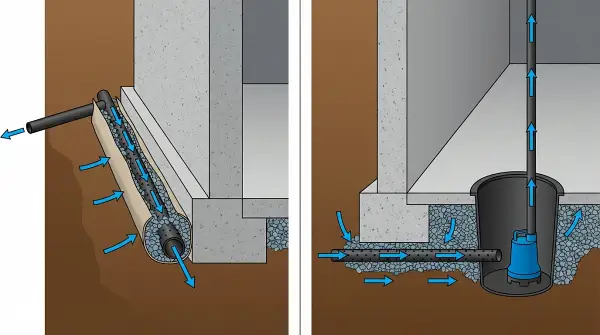
The heart of the system is a 4‑inch perforated PVC or ABS pipe. Perforations allow water to enter from the surrounding soil while keeping sediment out. The pipe usually runs the full perimeter of the foundation footings.
Gravel And Filter Fabric
The pipe sits in a trench filled with washed gravel. A filter fabric (sometimes called a “sock”) wraps around the gravel to keep silt and clay from clogging the system. This combination allows water to flow freely while keeping soil out.
Discharge System
Once the pipe collects the water, it needs to be carried away. In many basements and crawl spaces, the pipe empties into a sump basin. A pump then lifts the water through a discharge line and expels it away from the home. In some installations, the drain pipe slopes directly to a “daylight” outlet or dry well. It is important that the outlet is located far enough from the foundation so water doesn’t cycle back toward the house.
Surface Drainage Components
Subsurface drains work best alongside surface drainage features. Clear gutters and long downspout extensions keep roof runoff from saturating the soil near your home. Proper grading directs rain and snowmelt away from the foundation. These surface components reduce the workload on the drainage system and complement subsurface measures. For more about surface issues, see poor grading around foundation and downspout discharge issues.
How a foundation drain system works
A foundation drain system works in three basic stages: it collects water from saturated soil around the footing, conveys it along a gently sloped pipe, and then discharges it to a safe location, often with the help of a sump pump when gravity alone can’t do the job. The steps below explain how each stage protects your home from excess water.
Collection and filtration
When rain falls or the water table rises, water seeps into the gravel trench around your home. The filter fabric keeps soil out while letting water pass through. The perforated pipe then collects this filtered water.
Conveyance and Slope
The pipe is laid with a gentle slope, about 1/8 inch per foot, so gravity moves the water along. Where gravity alone can’t do the job, the pipe carries water to a sump pit.
Discharge and Removal
At the sump pit, an electric pump lifts the water up and out through a discharge pipe. The pipe should release the water at least several feet from the foundation, or into a dry well, to prevent recirculation. Modern building codes prohibit directing this water into the sanitary sewer.
Why Foundation Drain Systems May Stop Working Properly
Foundation drain systems are designed to move groundwater safely away from the footing before moisture builds around basement walls or crawl spaces. Over time, certain conditions can reduce how effectively the system drains water.
- Hydrostatic pressure from saturated soil
- Clogged or sediment-filled drain tile
- Improper grading or concentrated roof runoff
- Collapsed or damaged drainage pipe sections
- Expansive clay soil movement around the footing
- Drainage discharge points that cannot move water away efficiently
Exterior vs. Interior Foundation Drain Systems
Exterior drain systems are installed around the outside footing when a home is built or during major excavation. They intercept groundwater before it reaches the foundation walls. Interior drain systems (often called interior drain tile) are installed beneath the basement floor along the inside perimeter. They collect water that has already entered and channel it to a sump pump. Interior systems are popular for existing homes because they require less excavation.
Many homes use both types: an exterior drain to block groundwater and an interior system as a backup. If your home lacks an exterior drain or still suffers leaks, installing an interior drain may be the most practical option.
Why You Need a Foundation Drain System
Water is a foundation’s worst enemy. When soils around your home become saturated, water pressure builds up and can push moisture through cracks and pores in concrete. Over time, this pressure can cause bowing walls, uneven floors and expensive structural repairs. A drain system relieves that pressure, protects your home from wet basement walls and discourages mold and pests. In areas with high water tables or clay soils, proper drainage is not optional; it’s essential for the long‑term health of your house.
Installation and Maintenance Considerations
Common Signs a Foundation Drain System May Not Be Working Properly
- Recurring basement seepage after rain
- Musty odors or persistent dampness below grade
- Efflorescence or moisture staining on basement walls
- Standing water near the footing or foundation perimeter
- Water appearing near floor joints or basement corners
When to Install or Upgrade
Consider installing or upgrading your foundation drainage if you notice water pooling near the house, damp or moldy smells in the basement, or cracks in foundation walls or floors. Homes built before the 1950s often lack modern drainage altogether. Properties on slopes, in flood‑prone areas or with high groundwater tables benefit greatly from up‑to‑date drain systems. A trusted waterproofing professional or structural engineer can evaluate your site and recommend the best approach.
Related Questions
Homeowners researching basement moisture often explore related questions about how water behaves around foundations.
Home › Foundation Water Problem Questions › What Is a Foundation Drain System?