
How Do Foundation Drains Work?
Foundation drains, also called drain tile or footing drains, are buried pipe systems installed around or beneath a home’s foundation. They collect rising groundwater and channel it away before it can seep into the basement or crawl space. Understanding how these drains work helps you spot early warning signs and protect your home from costly water damage.
Three Ways to Learn How Foundation Drains Work
Everyone learns differently. Choose the format that works best for you.
- Browse the slide presentation
- Watch the educational video
- Read the complete guide below
Slide Presentation
Educational Video
Foundation drains are perforated drainage pipes installed around or beneath a home’s footing to collect groundwater and direct it away from the foundation before moisture reaches the basement or crawl space.
A properly functioning foundation drain system may help:
- Reduce hydrostatic pressure around below-grade walls
- Redirect groundwater away from the foundation
- Limit basement seepage and dampness
- Reduce moisture buildup near footings and floor joints
Common drainage problems may involve clogged drain tile, poor grading, compacted soil, collapsed pipe sections, or improper discharge routing.
What Are Foundation Drains?
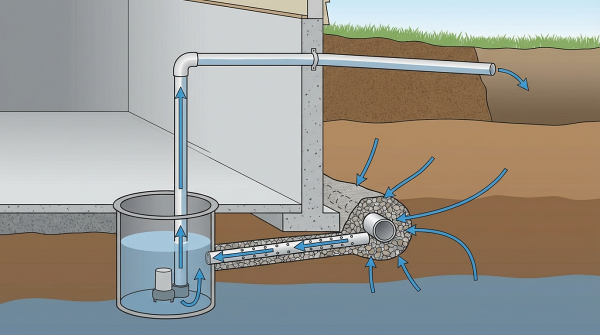
A foundation drain is a perforated pipe system installed around or beneath the footing of a house to collect groundwater and move it off‑site. The pipe—usually PVC or ABS—lies in a trench and is surrounded by gravel to allow water to flow freely and keep soil from clogging it. A filter fabric or “sock” often wraps the gravel to keep fine particles out.
Older homes (pre‑1954) sometimes connected these drains directly to the sanitary sewer; this is now prohibited because it can overload sewers and cause backups. Modern systems direct water to a sump pump basin or a discharge line that drains to your yard or a storm sewer.
How Foundation Drain Systems Work
Water naturally migrates through soil and builds up around the base of a structure. Foundation drains provide a controlled path for that water to escape. The system works in three stages:
Collection and filtration
Groundwater enters the drain through perforations in the pipe. Surrounding gravel filters out soil and debris so the pipe doesn’t clog. A geotextile fabric may encase the gravel to keep fine particles out. Proper grading of the surrounding soil and well‑functioning gutters/downspouts help limit how much water reaches the drain, see poor grading around a foundation and downspout discharge issues for more on these contributors.
Conveyance and slope
Discharge
Water collected in the drain is routed to a sump pit, dry well or daylight outlet. In basements with a sump pit, an electric pump lifts the water through a discharge line that terminates several feet from the foundation. Discharge lines should extend at least 6–10 feet from the house to prevent the water from cycling back to the foundation. Connecting a foundation drain to the sanitary sewer is illegal in most jurisdictions and can cause sewer backups, if you suspect this setup, consult a professional (see do I need a professional?).
Types of Foundation Drainage Systems
Not all drains are the same. The right system depends on soil type, local climate and whether the home is under construction or already built. Common options include:
French drains
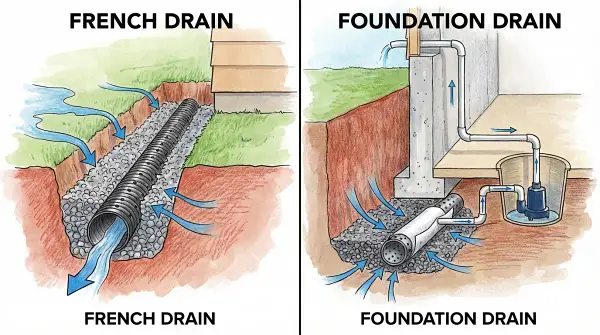
A French drain consists of a perforated pipe laid in a gravel trench wrapped with filter fabric. While French drains are often used in yards to handle surface water, they can also serve as a foundation drain. They intercept water before it reaches the footing and direct it away from the house. Learn more about redirecting runoff in surface runoff & yard drainage.
Footing drains
Footing drains are installed at the base of the footing, typically during construction, to catch water at the lowest point of the foundation. They’re especially useful in areas with high groundwater tables or expansive soils because they keep water from building up against the foundation walls.
DischargeInterior vs. exterior drain tile
Exterior drain tile surrounds the outside perimeter of the foundation below the footing. Interior systems are installed beneath the basement slab along the inside perimeter. Exterior drains stop water before it enters the home, but installation requires significant excavation and is most cost‑effective during construction. Interior drains are less disruptive and can be retrofitted into existing basements by cutting a channel in the slab and connecting the pipe to a sump pit.
Grading & gutter solutions
Foundation drains work best when combined with surface‑water controls. Properly grading soil so it slopes away from the house and keeping gutters and downspouts clear and extended away from the foundation reduces the amount of water the drain must handle. See poor grading around a foundation and downspout discharge issues for details.
Common Foundation Drainage Systems
| System Type | Common Purpose | Typically Installed | Helps Manage |
|---|---|---|---|
| Exterior footing drain | Redirect groundwater away from the foundation | Along the exterior footing | Groundwater and hydrostatic pressure |
| Interior drain tile system | Collect water entering below-grade areas | Along the basement slab edge | Basement seepage and floor joint moisture |
| French drain | Move surface and shallow groundwater away from structures | Yard or perimeter drainage areas | Surface runoff and shallow saturation |
| Sump pump system | Discharge collected drain water away from the home | Sump basin or pit | Collected groundwater and drainage overflow |
Where Does a Foundation Drain Discharge?
A modern foundation drain must discharge to a safe location. In most homes, water flows into a sump basin where an electric pump lifts it through a discharge pipe to the exterior. Some systems drain directly to daylight through an outlet on a downhill slope or to a dry well. Older installations that connected the drain to a sanitary sewer via a palmer valve are now prohibited because they can overload the sewer. If you have such a setup, local codes likely require rerouting to a sump pump or storm drain.
Signs a Foundation Drain May Not Be Working Properly
A properly working drain should keep water away from your basement or crawl space. Warning signs of a clog include:
- Standing water or persistent dampness near the foundation
- A sump pump that runs frequently without lowering the water level
- Water seepage along basement walls or floor joints
- Recurring moisture problems after heavy rain or snowmelt
- Musty odors or humidity developing in below-grade areas
If you notice any of these signs, consult a drainage contractor. Attempting DIY cleaning can lead to additional damage, see do I need a professional? for guidance.
What Happens When a Foundation Drain Stops Working
Most homes with basements or crawl spaces benefit from a foundation drain. If you live in an area with a high groundwater table, heavy rainfall, expansive clay soils, or poor grading, a drain is essential to prevent hydrostatic pressure and moisture intrusion. New homes typically include footing drains by code, but older houses may rely on outdated clay or concrete tiles that clog easily. If your foundation is leaking or you see persistent dampness, an assessment by a drainage professional can determine whether your home needs a retrofitted drain system.
Common Signs a Foundation Drain May Not Be Working Properly
| Observed Condition | Often Associated With | Common Next Step |
|---|---|---|
| Wet basement walls or seepage | Hydrostatic pressure or slow drainage | Evaluate drainage and moisture patterns |
| Standing water near the foundation | Poor grading or overwhelmed runoff control | Check surface drainage around the home |
| Sump pump runs frequently | High groundwater levels or restricted drainage flow | Inspect discharge conditions and drainage performance |
| Musty basement odors or dampness | Persistent moisture accumulation | Monitor indoor humidity and moisture conditions |
| Water problems worsen after heavy rain | Drainage overload or saturated soil | Observe runoff patterns near the foundation |
Foundation Drain vs. French Drain: What’s the Difference?
The terms are sometimes used interchangeably, but there are differences. A foundation drain (or footing drain) is a subsurface system that runs at the base of the footing and is part of the home’s waterproofing. It captures both groundwater and water that seeps down from the surface. A French drain can refer to any perforated pipe in a gravel trench, often installed in yards to channel surface runoff away from low spots. Some homes use a French drain around the perimeter as their exterior footing drain. The key is that both systems rely on a perforated pipe, gravel and proper slope to move water to a safe discharge point.
Related Questions
Homeowners researching basement moisture often explore related questions about how water behaves around foundations.
Home › Foundation Water Problem Questions › How Do Foundation Drains Work?