
Why Does My Basement Smell Musty?
Basements often develop a musty smell when moisture is present, even if no standing water is visible. Because basements sit below ground level, they are naturally more prone to humidity, condensation, and small amounts of water intrusion.
In many homes, a musty odor is one of the first signs that moisture is lingering somewhere in the basement environment. Damp materials, limited airflow, and hidden moisture near foundation walls can all contribute to the smell.
Understanding why the odor develops is the first step toward identifying whether the issue is simply humidity, or a sign that water is entering the structure.
Common Causes of Musty Basement Odors
| Possible Cause | What You May Notice |
|---|---|
| Damp materials in the basement | Earthy or stale odors that linger |
| High indoor humidity | Musty smell without visible water |
| Moisture entering through foundation walls | Damp walls, staining, or persistent odors |
| Water rising through the basement floor | Musty odors accompanied by damp flooring |
| Poor ventilation | Stale air and lingering moisture smells |
“A musty basement smell is often one of the earliest signs that moisture is lingering somewhere in the basement environment, even when standing water is not visible.”
— Foundation Water Guide Editorial Team
Why Basements Develop Musty Odors
A musty smell usually forms when moisture remains trapped in materials or indoor air for extended periods.
Even small amounts of dampness can affect basement environments because the space often contains cool surfaces, porous materials, and limited airflow. When moisture accumulates under these conditions, it may lead to odor-producing microbes such as mildew.
In some homes, this moisture comes from humidity or condensation. In others, it may be connected to how water moves through soil around the foundation. Understanding how water enters a foundation can help explain why basement odors sometimes appear even when no standing water is visible.
Damp Materials in the Basement
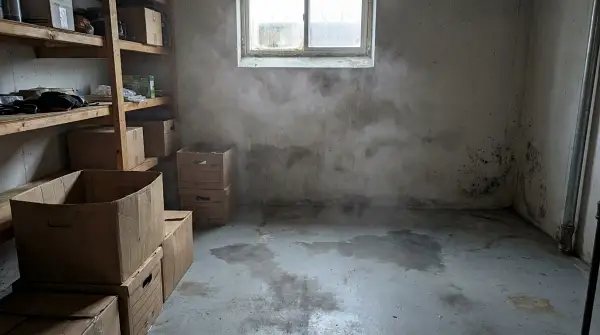
Materials such as wood framing, drywall, carpeting, and stored cardboard boxes can absorb moisture from humid air. When these materials remain damp, they may develop the earthy smell often associated with basement environments.
Even small amounts of moisture exposure can allow odors to build over time, particularly in basements where airflow is limited.
High Humidity in Basement Air
Basements often experience higher humidity levels than upper floors of a home. Cool concrete walls and floors can cause humid air to condense into moisture on surfaces.
When humidity remains elevated, it can create the damp conditions that allow musty odors to develop. These conditions may occur even when water is not visibly entering the basement.
Moisture Entering Through Foundation Walls
Concrete and masonry foundation walls can allow small amounts of moisture to move through them, especially when surrounding soil is saturated.
Over time, this moisture can contribute to a damp basement environment. In some cases it may also appear alongside symptoms such as wet basement walls or occasional seepage.
Water Rising Through the Basement Floor
In certain conditions, groundwater pressure beneath a home may push moisture upward through a basement slab. This is sometimes called hydrostatic pressure.
While the moisture may not always appear as standing water, it can still increase humidity levels and contribute to basement odors. Learn more about surface water vs groundwater and how they influence moisture conditions around foundations.
Can a Wet Basement Make You Sick?
Persistent moisture in a basement can allow mold or mildew to develop, which may affect indoor air quality.
Mold spores exist naturally in most environments, but they tend to grow more easily when moisture is present and organic materials are available. For some individuals, elevated mold levels may trigger allergy-like symptoms such as coughing, congestion, or irritation.
This is why homeowners who notice musty odors sometimes begin investigating whether they have water in the basement or other moisture-related conditions.
When Musty Basement Odors May Indicate a Larger Issue
In many homes, musty basement odors are related to humidity or limited ventilation. In other situations, the smell may be connected to water movement around the home’s foundation.
Conditions that can contribute to ongoing basement moisture include:
• poor grading around the foundation
• downspout discharge problems
• surface runoff and yard drainage issues
• rising groundwater levels or saturated soil conditions
Understanding these factors can help homeowners determine whether a musty odor is simply related to indoor humidity or part of a broader foundation moisture pattern.
If you are unsure whether basement moisture is minor or part of a larger concern, it may also help to review foundation water risk factors or explore how serious a foundation water problem may be.
Related Questions
Homeowners researching basement moisture often explore related questions about how water behaves around foundations.
Frequently Asked Questions About Musty Basement Smells
Can a basement smell musty without visible water?
Yes. Moisture can remain trapped in building materials, carpeting, storage items, or indoor air without creating visible puddles. In many cases, a musty odor develops before homeowners notice obvious signs of water intrusion.
Does a musty basement smell always mean mold?
Why does my basement smell worse after rain?
Can foundation moisture cause a musty smell?
Is a musty basement smell a sign of a larger problem?
Home › Foundation Water Problem Questions › Why Does My Basement Smell Musty?